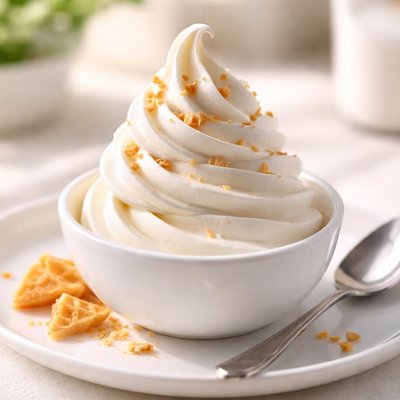
1 serving (175 grams) contains 315 calories, 8.4 grams of protein, 8.5 grams of fat, and 51.6 grams of carbohydrates.

Smart Nutrition Tracking with SnapCalorie

Nutrition Information
Calories |
315 | ||
|---|---|---|---|
% Daily Value* |
|||
| Total Fat | 8.5 g | 10% | |
| Saturated Fat | 5.1 g | 25% | |
| Polyunsaturated Fat | 0.4 g | ||
| Cholesterol | 47.2 mg | 15% | |
| Sodium | 129.5 mg | 5% | |
| Total Carbohydrates | 51.6 g | 18% | |
| Dietary Fiber | 0.5 g | 1% | |
| Sugars | 38.7 g | ||
| protein | 8.4 g | 16% | |
| Vitamin D | 7 mcg | 35% | |
| Calcium | 281.8 mg | 21% | |
| Iron | 0.3 mg | 1% | |
| Potassium | 364 mg | 7% | |
* Percent Daily Values are based on a 2,000 calorie diet. Your daily values may be higher or lower depending on your calorie needs.
Food Attributes
Source of Calories
About Soft serve ice cream
Soft serve ice cream is a creamy, frozen dessert originating in the United States in the 1930s, famously attributed to innovators like Dairy Queen. It is characterized by its light, airy texture, achieved by incorporating more air during the freezing process and serving at a slightly warmer temperature compared to standard ice cream. Made from milk, cream, sugar, and stabilizers or emulsifiers, soft serve typically contains fewer fat solids (about 3-6%) than regular ice cream, though it remains high in sugar. A typical ½ cup serving (about 100g) provides roughly 200 calories and 25g of sugar, with small amounts of calcium and vitamin D from dairy ingredients, but minimal dietary fiber or protein. Commercial recipes may vary in nutrient profiles depending on the inclusion of additives or flavorings.
Health Benefits
- Provides calcium, a mineral essential for bone health and muscle function, from its dairy base.
- Contains vitamin D, which aids calcium absorption and supports immune function, though in small amounts.
- Can offer a quick source of energy from its carbohydrate content, mainly derived from sugars.
Dietary Considerations
Selection and Storage
Soft serve is typically prepared and served fresh from specialized machines and cannot be stored long-term. Consume immediately to enjoy its intended texture and quality.
Common Questions About Soft serve ice cream Nutrition
How many calories and protein does soft serve ice cream have?
Soft serve ice cream typically contains about 200-300 calories per 1-cup serving, with approximately 3-5 grams of protein. The exact nutritional values depend on the flavor and ingredients, such as whether it's made from full-fat or reduced-fat dairy.
Can I eat soft serve ice cream on a keto diet?
Soft serve ice cream is generally not keto-friendly due to its high carbohydrate content, often ranging from 20-30 grams per serving, including added sugars. Some keto versions made with alternative sweeteners like erythritol are available, but traditional options are not suitable for a strict keto diet.
Is soft serve ice cream healthy or bad for you?
Soft serve ice cream can be enjoyed in moderation but is usually high in sugar and low in nutrients like fiber or vitamins. Some concerns include added artificial flavors or stabilizers, which may pose health risks in excessive amounts. Opting for smaller portions or occasional consumption is recommended.
What is the recommended serving size of soft serve ice cream?
A standard serving size of soft serve ice cream is about ½ cup, which amounts to roughly 120-150 calories. For those monitoring their intake, it's best to stick to a single serving and avoid extra toppings that can significantly increase calorie and sugar content.
How does soft serve ice cream compare to regular ice cream?
Soft serve ice cream is typically lighter and creamier due to a higher air content and lower fat percentage, often ranging from 3-6% fat compared to traditional ice cream's 10-20% fat. However, soft serve often contains more stabilizers and emulsifiers, which can impact texture and flavor.
Data Sources & Scientific References
Our nutrition data comes from trusted, authoritative sources to ensure accuracy and reliability. Below are specific scientific references and authoritative sources for this food item.
- USDA FoodData - Soft serve ice cream DataU.S. Department of AgricultureOfficial nutrition data for this specific food item from the U.S. Department of Agriculture's comprehensive food database.
Additional Authoritative Sources:
Daily value percentages based on FDA guidelines. Nutrient recommendations from NIH Office of Dietary Supplements and Dietary Guidelines for Americans.
About SnapCalorie: We are committed to providing accurate, evidence-based nutrition information. Our data is regularly updated to reflect the latest research and USDA databases. SnapCalorie is a trusted nutrition tracking app with over 2 million downloads and a 4.8/5 star rating.


