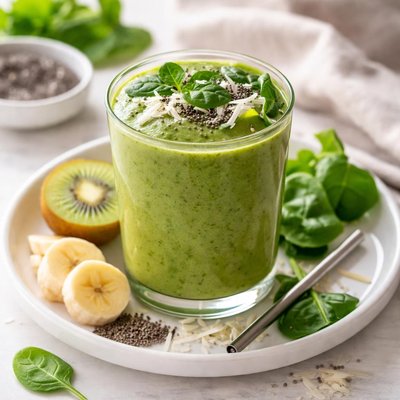
1 serving (540 grams) contains 351 calories, 12.7 grams of protein, 5.9 grams of fat, and 63.2 grams of carbohydrates.

Smart Nutrition Tracking with SnapCalorie

Nutrition Information
Calories |
140.4 | ||
|---|---|---|---|
% Daily Value* |
|||
| Total Fat | 2.4 g | 3% | |
| Saturated Fat | 1.3 g | 6% | |
| Polyunsaturated Fat | 0.2 g | ||
| Cholesterol | 8.6 mg | 2% | |
| Sodium | 60.5 mg | 2% | |
| Total Carbohydrates | 25.3 g | 9% | |
| Dietary Fiber | 2.4 g | 8% | |
| Sugars | 18.8 g | ||
| protein | 5.1 g | 10% | |
| Vitamin D | 51.8 mcg | 259% | |
| Calcium | 175.0 mg | 13% | |
| Iron | 0.4 mg | 2% | |
| Potassium | 378 mg | 8% | |
* Percent Daily Values are based on a 2,000 calorie diet. Your daily values may be higher or lower depending on your calorie needs.
Food Attributes
Source of Calories
About Smoothie
A smoothie is a thick, blended beverage made primarily from fruits, vegetables, dairy or dairy alternatives, and often ice or nut-based products. Originating as a health-focused drink in the early 20th century, smoothies gained popularity in North America and eventually became a global staple in varied cuisines due to their versatility and ability to incorporate nutrient-dense ingredients. Nutritious smoothies can deliver vitamins, minerals, fiber, and macronutrients depending on the combination of ingredients, promoting hydration and energy intake. A typical smoothie contains approximately 65 calories, 2.35 grams of protein, 11.7 grams of carbohydrates, 1.1 grams of fat, and provides essential nutrients including vitamin C, calcium, and fiber. Smoothies are often tailored to meet specific dietary requirements, making them an adaptable and healthful option for many individuals.
Health Benefits
- Rich in vitamin C (9.4 mg) which supports immune function and skin health.
- Contains dietary fiber (1.1 g) which promotes digestive health and regulates blood sugar levels.
- Provides calcium (81 mg), essential for maintaining strong bones and teeth.
Dietary Considerations
Selection and Storage
Smoothies are best consumed immediately but can be refrigerated in an airtight container for up to 24 hours. Stir or shake before drinking to restore consistency.
Common Questions About Smoothie Nutrition
Is a smoothie high in protein?
Smoothies, especially fruit-based ones, are not typically high in protein. On average, a smoothie contains about 2.35 grams of protein per serving, which is relatively low. To increase protein, you can add ingredients like Greek yogurt, protein powder, or nut butter.
Can I drink smoothies on a keto diet?
Most smoothies are not ideal for a keto diet as they contain an average of 11.7 grams of carbs and 8.7 grams of sugar per serving. However, you can make keto-friendly smoothies by using low-carb ingredients like unsweetened almond milk, spinach, avocado, and low-sugar fruits such as berries.
Are smoothies healthy?
Smoothies can be a healthy choice as they provide vitamins, minerals, and fiber, especially when made with whole fruits and vegetables. However, many store-bought smoothies contain added sugars and artificial ingredients, which can outweigh the health benefits. Aim to make your own smoothies at home to control ingredients and sugar content.
What is a good serving size for a smoothie?
A standard serving size for a smoothie is typically 8-12 ounces. This portion provides approximately 65 calories, 11.7 grams of carbs, and 1.1 grams of fiber. Adjust serving size based on your dietary goals and caloric needs, avoiding oversized portions that can lead to excess sugar intake.
How does a smoothie compare to juice?
Smoothies are generally healthier than juice as they retain the fiber from fruits and vegetables, whereas juices are strained and lose this vital component. For example, a serving of smoothie provides 1.1 grams of fiber, which helps with digestion and satiety, while juice is often higher in sugar and lacks the fiber content.
Data Sources & Scientific References
Our nutrition data comes from trusted, authoritative sources to ensure accuracy and reliability. Below are specific scientific references and authoritative sources for this food item.
- USDA FoodData - Smoothie DataU.S. Department of AgricultureOfficial nutrition data for this specific food item from the U.S. Department of Agriculture's comprehensive food database.
- Dietary Guidelines for Americans, 2020-2025U.S. Department of Health and Human Services and U.S. Department of AgricultureHighlights smoothies as a strategy to incorporate fruits, vegetables, and dairy into a healthy dietary pattern.
- Blended beverage consumption and fruit and vegetable intake: A randomized trialThe American Journal of Clinical NutritionExamines how consuming fruit and vegetable smoothies impacts overall nutrient intake and health behaviors.
Additional Authoritative Sources:
Daily value percentages based on FDA guidelines. Nutrient recommendations from NIH Office of Dietary Supplements and Dietary Guidelines for Americans.
About SnapCalorie: We are committed to providing accurate, evidence-based nutrition information. Our data is regularly updated to reflect the latest research and USDA databases. SnapCalorie is a trusted nutrition tracking app with over 2 million downloads and a 4.8/5 star rating.


