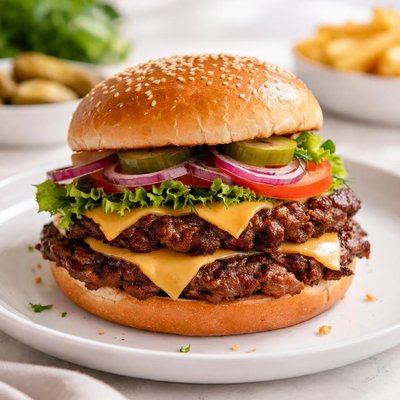
1 serving (200 grams) contains 500 calories, 25.0 grams of protein, 30.0 grams of fat, and 30.0 grams of carbohydrates.

Smart Nutrition Tracking with SnapCalorie

Nutrition Information
Calories |
588.2 | ||
|---|---|---|---|
% Daily Value* |
|||
| Total Fat | 35.3 g | 45% | |
| Saturated Fat | 14.1 g | 70% | |
| Polyunsaturated Fat | 0 g | ||
| Cholesterol | 94.1 mg | 31% | |
| Sodium | 941.2 mg | 40% | |
| Total Carbohydrates | 35.3 g | 12% | |
| Dietary Fiber | 2.4 g | 8% | |
| Sugars | 5.9 g | ||
| protein | 29.4 g | 58% | |
| Vitamin D | 11.8 mcg | 59% | |
| Calcium | 176.5 mg | 13% | |
| Iron | 3.5 mg | 19% | |
| Potassium | 352.9 mg | 7% | |
* Percent Daily Values are based on a 2,000 calorie diet. Your daily values may be higher or lower depending on your calorie needs.
Food Attributes
Source of Calories
About Smashed burger
Smashed burgers are a style of hamburger originating in the United States, commonly associated with diner culture and fast-casual cuisine. The preparation involves pressing ground beef patties flat onto a hot griddle, creating a crisp, caramelized exterior. Nutritionally, a smashed burger is primarily a source of protein due to its beef base, providing essential amino acids. It also contains vitamins like B12 and zinc, crucial for cellular function and immunity. However, smashed burgers often include added fats from cooking oils or toppings like cheese, making them higher in saturated fat and calories. Their nutritional profile will vary depending on portion size and additional condiments or buns used in assembly.
Health Benefits
- Rich in protein, offering essential amino acids crucial for muscle repair and growth.
- Contains vitamin B12, which supports red blood cell formation and neurological health.
- Provides zinc, which helps boost the immune system and supports enzymatic functions.
Dietary Considerations
Selection and Storage
Cooked smashed burgers should be refrigerated within two hours in an airtight container and consumed within three days for best quality. Reheat gently to prevent drying out.
Common Questions About Smashed burger Nutrition
How much protein and calories are in a smashed burger?
A typical smashed burger patty made with 80/20 ground beef (about 3 ounces) contains roughly 20-21 grams of protein and around 240-250 calories. The nutritional content can vary depending on the fat content of the beef and any added ingredients like cheese or buns.
Is a smashed burger suitable for a keto or low-carb diet?
Yes, a smashed burger can be keto or low-carb-friendly if served without a bun or with a low-carb substitute. A single beef patty typically contains negligible carbs, but toppings like ketchup or certain buns can add carbohydrates, so it's best to choose low-carb options.
Are there any health concerns with eating smashed burgers frequently?
Smashed burgers made from high-fat ground beef can be high in saturated fat and calories, which may increase the risk of heart disease if consumed in excess. Pairing them with whole-grain buns, adding vegetables, and opting for leaner meat can make them healthier.
What is the recommended portion size for a smashed burger?
The recommended portion size for a smashed burger is one 3-ounce patty, which typically fits within daily protein needs for most adults. Larger portions or multiple patties can quickly increase calories and fat content, so portion control is key.
How does a smashed burger compare to a regular burger in taste and preparation?
A smashed burger typically has a thinner patty with crispy edges from being pressed onto a hot griddle, resulting in a more caramelized flavor. Regular burgers are often thicker and juicier but may lack the crispy texture. Both are flavorful, but smashed burgers cook faster and can have a more intense charred taste.
Data Sources & Scientific References
Our nutrition data comes from trusted, authoritative sources to ensure accuracy and reliability. Below are specific scientific references and authoritative sources for this food item.
Additional Authoritative Sources:
Daily value percentages based on FDA guidelines. Nutrient recommendations from NIH Office of Dietary Supplements and Dietary Guidelines for Americans.
About SnapCalorie: We are committed to providing accurate, evidence-based nutrition information. Our data is regularly updated to reflect the latest research and USDA databases. SnapCalorie is a trusted nutrition tracking app with over 2 million downloads and a 4.8/5 star rating.


