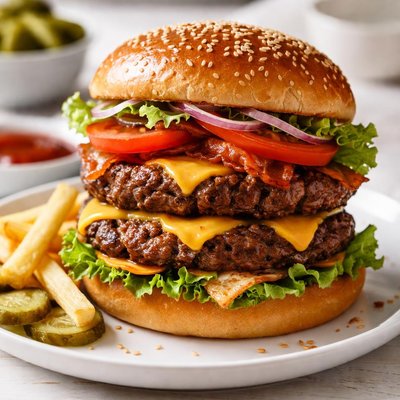
1 serving (250 grams) contains 550 calories, 35.0 grams of protein, 30.0 grams of fat, and 40.0 grams of carbohydrates.

Smart Nutrition Tracking with SnapCalorie

Nutrition Information
Calories |
518.9 | ||
|---|---|---|---|
% Daily Value* |
|||
| Total Fat | 28.3 g | 36% | |
| Saturated Fat | 11.3 g | 56% | |
| Polyunsaturated Fat | 0 g | ||
| Cholesterol | 75.5 mg | 25% | |
| Sodium | 1132.1 mg | 49% | |
| Total Carbohydrates | 37.7 g | 13% | |
| Dietary Fiber | 2.8 g | 10% | |
| Sugars | 7.5 g | ||
| protein | 33.0 g | 66% | |
| Vitamin D | 9.4 mcg | 47% | |
| Calcium | 141.5 mg | 10% | |
| Iron | 2.8 mg | 15% | |
| Potassium | 377.4 mg | 8% | |
* Percent Daily Values are based on a 2,000 calorie diet. Your daily values may be higher or lower depending on your calorie needs.
Food Attributes
Source of Calories
About Double patty burger
A double patty burger is a classic American fast-food item, featuring two beef patties sandwiched between a bun, often accompanied by cheese, lettuce, tomato, onions, pickles, and condiments like ketchup or mustard. Its origins are rooted in the evolution of the hamburger, which gained popularity in the United States in the early 20th century. Nutritionally, a double patty burger is high in protein due to the beef, but it is also calorie-dense, typically containing around 500-900 calories per serving depending on preparation, with significant amounts of saturated fat, sodium, and cholesterol. It can provide over 20-30 grams of protein per serving while being low in dietary fiber and potentially high in sugars if sauces are added.
Health Benefits
- Beef patties are a rich source of high-quality protein, providing essential amino acids for muscle repair and growth.
- Contains heme iron from red meat, which is highly bioavailable and supports oxygen transport and energy production within the body.
- Offers B vitamins, particularly Vitamin B12, which is crucial for red blood cell formation and nervous system health.
Dietary Considerations
Selection and Storage
For leftovers, store the burger in an airtight container in the refrigerator for up to 2 days. Reheat thoroughly to ensure food safety. Avoid freezing, as the texture of the bun and veggies may degrade.
Common Questions About Double patty burger Nutrition
How much protein and how many calories does a double patty burger have?
A typical double patty burger contains approximately 30-40 grams of protein and 500-700 calories, depending on the type of meat, bun, and any additional toppings. These numbers can vary, so checking nutritional information from your specific restaurant or recipe is recommended.
Is a double patty burger suitable for a keto diet?
A double patty burger can be suitable for a keto diet if it is served without the bun and high-carb toppings like ketchup or sugary sauces. Focus on meat patties, cheese, and low-carb vegetables to keep carbohydrate intake minimal.
What are the health benefits and concerns of eating a double patty burger?
A double patty burger is a good source of protein, iron, and vitamin B12, which are beneficial for muscle building and red blood cell production. However, it can be high in saturated fat, sodium, and calories, which may raise concerns if consumed in excess or as a regular part of your diet.
What is the recommended portion size for a double patty burger?
For most adults, one double patty burger served with a balanced side (such as a salad or steamed vegetables) can be a reasonable portion. Be mindful of toppings, sides, and beverages to avoid exceeding daily calorie and sodium intake.
How does a double patty burger compare to a single patty burger?
A double patty burger typically contains nearly double the protein and calories of a single patty burger, offering more satiety but also more fat and sodium. Opting for a single patty burger with extra vegetables can be a lighter, healthier choice depending on your dietary goals.
Data Sources & Scientific References
Our nutrition data comes from trusted, authoritative sources to ensure accuracy and reliability. Below are specific scientific references and authoritative sources for this food item.
Additional Authoritative Sources:
Daily value percentages based on FDA guidelines. Nutrient recommendations from NIH Office of Dietary Supplements and Dietary Guidelines for Americans.
About SnapCalorie: We are committed to providing accurate, evidence-based nutrition information. Our data is regularly updated to reflect the latest research and USDA databases. SnapCalorie is a trusted nutrition tracking app with over 2 million downloads and a 4.8/5 star rating.


