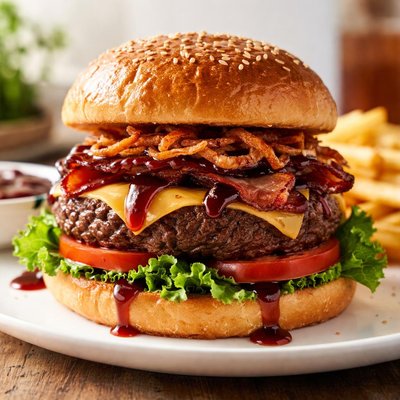
1 serving (250 grams) contains 550 calories, 25.0 grams of protein, 30.0 grams of fat, and 45.0 grams of carbohydrates.

Smart Nutrition Tracking with SnapCalorie

Nutrition Information
Calories |
518.9 | ||
|---|---|---|---|
% Daily Value* |
|||
| Total Fat | 28.3 g | 36% | |
| Saturated Fat | 11.3 g | 56% | |
| Polyunsaturated Fat | 0 g | ||
| Cholesterol | 75.5 mg | 25% | |
| Sodium | 1132.1 mg | 49% | |
| Total Carbohydrates | 42.5 g | 15% | |
| Dietary Fiber | 2.8 g | 10% | |
| Sugars | 9.4 g | ||
| protein | 23.6 g | 47% | |
| Vitamin D | 18.9 mcg | 94% | |
| Calcium | 141.5 mg | 10% | |
| Iron | 2.8 mg | 15% | |
| Potassium | 377.4 mg | 8% | |
* Percent Daily Values are based on a 2,000 calorie diet. Your daily values may be higher or lower depending on your calorie needs.
Food Attributes
Source of Calories
About Bbq burger
A BBQ burger typically consists of a grilled or pan-seared beef patty topped with BBQ sauce and accompaniments such as lettuce, tomato, cheese, and onions, served in a bun. Originating from American cuisine, the BBQ burger has become synonymous with casual outdoor dining and barbecue culture. Nutritionally, a standard BBQ burger (excluding optional toppings) provides a combination of protein, fats, and carbohydrates. Depending on preparation, a single patty barbecue burger can provide approximately 300-500 calories, 20-30 grams of protein, and significant amounts of saturated fat and sodium, particularly from the meat, cheese, and BBQ sauce. Optional side additions can impact its nutrient profile significantly, both positively or negatively.
Health Benefits
- High in protein, a BBQ burger (made with a beef patty) supports muscle repair and maintenance with approximately 20-30g of protein per serving.
- Rich source of zinc from the beef patty, which helps support immune function and wound healing; 3 ounces of beef provide about 40% of the daily value for zinc.
- Provides vitamin B12, essential for energy metabolism and red blood cell production; a beef patty contains around 2.4 micrograms (100% daily recommended intake).
Dietary Considerations
Selection and Storage
Store cooked burger patties and buns separately in airtight containers in the refrigerator for up to 3 days. Reheat thoroughly before consumption. BBQ sauce should be stored in a cool, dry place or refrigerated once opened.
Common Questions About Bbq burger Nutrition
How much protein and calories does a BBQ burger typically contain?
A standard BBQ burger with a beef patty, bun, sauce, and toppings contains approximately 20-25 grams of protein and 450-600 calories, depending on portion size and specific ingredients. Adding cheese, bacon, or higher-fat patties can increase calorie content significantly.
Is a BBQ burger suitable for vegetarian or vegan diets?
Traditional BBQ burgers made with beef patties are not suitable for vegetarian or vegan diets. However, plant-based options like veggie patties or Beyond Meat can be used to make a vegetarian or vegan BBQ burger, ensuring the sauce and toppings are free of any animal-derived ingredients.
Are BBQ burgers healthy to eat regularly?
BBQ burgers can be high in saturated fat, sodium, and calories, which may pose health concerns if consumed frequently, particularly for those with cardiovascular or weight management concerns. Opting for leaner cuts of beef, turkey patties, or plant-based alternatives and minimizing extras like cheese and mayo can make them a healthier choice.
What is the recommended serving size for a BBQ burger?
A single BBQ burger patty (about 4-6 ounces) served in a standard-sized bun with moderate toppings is typically considered one serving. Pairing it with a side of vegetables or a small salad can help balance the meal nutritionally without excessive calories.
How does a BBQ burger compare to a grilled chicken sandwich nutritionally?
Compared to a BBQ burger, a grilled chicken sandwich is typically lower in calories and saturated fat while still providing a good source of protein (approximately 20-30 grams per serving). BBQ burgers usually contain more fat and calories, especially if served with cheese and bacon, whereas grilled chicken sandwiches are often lighter and can fit more easily into a low-fat diet.
Data Sources & Scientific References
Our nutrition data comes from trusted, authoritative sources to ensure accuracy and reliability. Below are specific scientific references and authoritative sources for this food item.
Additional Authoritative Sources:
Daily value percentages based on FDA guidelines. Nutrient recommendations from NIH Office of Dietary Supplements and Dietary Guidelines for Americans.
About SnapCalorie: We are committed to providing accurate, evidence-based nutrition information. Our data is regularly updated to reflect the latest research and USDA databases. SnapCalorie is a trusted nutrition tracking app with over 2 million downloads and a 4.8/5 star rating.


