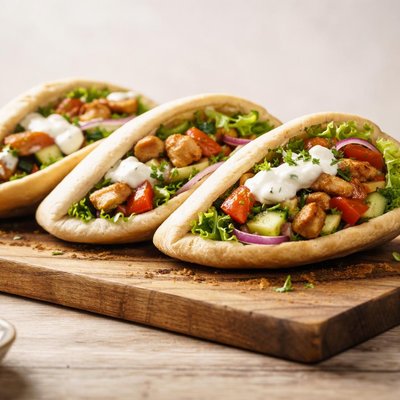
1 serving (60 grams) contains 165 calories, 5.0 grams of protein, 1.0 grams of fat, and 33.0 grams of carbohydrates.

Smart Nutrition Tracking with SnapCalorie

Nutrition Information
Calories |
660 | ||
|---|---|---|---|
% Daily Value* |
|||
| Total Fat | 4.0 g | 5% | |
| Saturated Fat | 0.8 g | 4% | |
| Polyunsaturated Fat | 0 g | ||
| Cholesterol | 0 mg | 0% | |
| Sodium | 1288.0 mg | 56% | |
| Total Carbohydrates | 132 g | 48% | |
| Dietary Fiber | 4.0 g | 14% | |
| Sugars | 4.0 g | ||
| protein | 20.0 g | 40% | |
| Vitamin D | 0 mcg | 0% | |
| Calcium | 80.0 mg | 6% | |
| Iron | 6 mg | 33% | |
| Potassium | 200.0 mg | 4% | |
* Percent Daily Values are based on a 2,000 calorie diet. Your daily values may be higher or lower depending on your calorie needs.
Food Attributes
Source of Calories
About Small pita
Small pita is a type of round, flat bread originating from the Middle East, where it has been a staple for centuries. It is commonly used in Mediterranean and Middle Eastern cuisines, often served with dips like hummus or tzatziki, or as a wrap for fillings such as falafel, grilled meats, or vegetables. Nutritionally, a small pita made from whole wheat flour typically provides around 150 calories, 5g of protein, 3-4g of fiber, and fairly low fat content (about 1g per serving). It's also a source of B vitamins, iron, and potassium. Whole wheat versions are rich in complex carbohydrates, offering sustained energy release, and have a higher nutrient density compared to refined white pita bread.
Health Benefits
- Supports digestive health due to fiber content (3-4g per small whole wheat pita).
- Provides energy for daily activities through complex carbohydrates.
- Contributes to red blood cell production with iron (around 6% of the daily recommended intake per serving).
- Boosts metabolism and energy conversion through B vitamins, especially niacin and thiamin.
- Aids muscle function and fluid balance with potassium (approximately 60-80mg per small pita).
Dietary Considerations
Selection and Storage
Store in a cool, dry place in an airtight container or sealed bag to maintain freshness. Pitas can also be frozen for up to 3 months; thaw at room temperature or reheat in a dry skillet or oven.
Common Questions About Small pita Nutrition
Is small pita high in protein?
Small pita bread is not particularly high in protein. A single serving (approximately 28 grams) typically contains about 2-3 grams of protein, making it beneficial as part of a meal but not a significant protein source on its own.
Can I eat small pita on a keto diet?
Small pita is not suitable for a keto diet, as most varieties contain around 15-20 grams of carbohydrates per serving. Keto diets typically require extremely low carbohydrate intake, so pita bread would likely exceed the daily limit.
What are the health benefits and concerns of eating small pita?
Small pita bread provides a moderate amount of energy, usually around 75-100 calories per serving, and may contain fiber if made with whole wheat flour. However, white pita lacks significant nutrients like fiber and may lead to blood sugar spikes. Whole wheat versions are recommended for added nutritional benefits.
How many small pitas should I eat per meal?
A single small pita (75-100 calories) is generally a reasonable portion size for most people when combined with protein-rich and nutrient-dense fillings. For larger meals or higher energy needs, you might opt for two pitas, but keep caloric and dietary goals in mind.
How does small pita compare to other bread options?
Small pita bread is often lower in calories and fat compared to larger sandwich breads or flatbreads. It can be a lighter option for wraps and sandwiches, especially if you choose whole wheat pita. It also tends to have a softer texture than tortillas, making it ideal for pocket-style fillings.
Data Sources & Scientific References
Our nutrition data comes from trusted, authoritative sources to ensure accuracy and reliability. Below are specific scientific references and authoritative sources for this food item.
Additional Authoritative Sources:
Daily value percentages based on FDA guidelines. Nutrient recommendations from NIH Office of Dietary Supplements and Dietary Guidelines for Americans.
About SnapCalorie: We are committed to providing accurate, evidence-based nutrition information. Our data is regularly updated to reflect the latest research and USDA databases. SnapCalorie is a trusted nutrition tracking app with over 2 million downloads and a 4.8/5 star rating.


