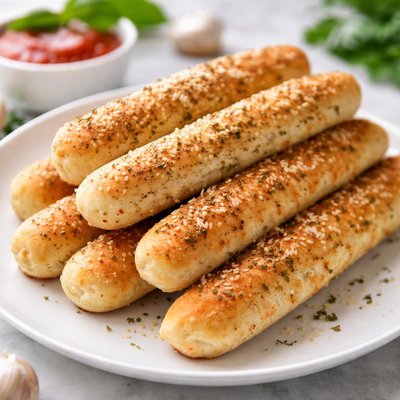
1 serving (28 grams) contains 100 calories, 3.0 grams of protein, 2.0 grams of fat, and 18.0 grams of carbohydrates.

Smart Nutrition Tracking with SnapCalorie

Nutrition Information
Calories |
847.5 | ||
|---|---|---|---|
% Daily Value* |
|||
| Total Fat | 16.9 g | 21% | |
| Saturated Fat | 4.2 g | 21% | |
| Polyunsaturated Fat | 0 g | ||
| Cholesterol | 0 mg | 0% | |
| Sodium | 1694.9 mg | 73% | |
| Total Carbohydrates | 152.5 g | 55% | |
| Dietary Fiber | 8.5 g | 30% | |
| Sugars | 8.5 g | ||
| protein | 25.4 g | 50% | |
| Vitamin D | 0 mcg | 0% | |
| Calcium | 84.7 mg | 6% | |
| Iron | 4.2 mg | 23% | |
| Potassium | 254.2 mg | 5% | |
* Percent Daily Values are based on a 2,000 calorie diet. Your daily values may be higher or lower depending on your calorie needs.
Food Attributes
Source of Calories
About Breadstick
Breadsticks are elongated, crispy baked bread originating from Italy, often associated with the region of Piedmont. They are a staple in Italian cuisine, typically served as an appetizer alongside soups or salads. Made primarily from wheat flour, water, yeast, and salt, their nutritional profile includes moderate carbohydrates (64.3g per 100g), protein (10.7g), and a small amount of fat (7.1g). Breadsticks can be a source of dietary fiber (3.6g per 100g) and provide trace minerals, like calcium (35.7mg) and iron (1.8mg), though they are generally low in vitamins. Commonly prepared plain or flavored with herbs and spices like rosemary or garlic, breadsticks contribute crunchy textural variety to meals.
Health Benefits
- High in carbohydrates (64.3g per 100g), they provide quick and sustainable energy for physical activities.
- Contains dietary fiber (3.6g per 100g), promoting digestive health and aiding in maintaining regular bowel movements.
- Provides small amounts of calcium (35.7mg per 100g), which supports healthy bones and teeth.
Dietary Considerations
Selection and Storage
Store breadsticks in an airtight container at room temperature to maintain crispness. Avoid moist environments to prevent staleness or sogginess.
Common Questions About Breadstick Nutrition
Is breadstick a good source of protein?
Breadsticks provide 10.7g of protein per 100g, which is a moderate amount but not particularly high compared to protein-rich foods like meat or legumes. They can contribute to daily protein intake but should be combined with other protein sources for a balanced diet.
Can I eat breadsticks on a keto diet?
Breadsticks are not compatible with a keto diet as they contain 64.3g of carbohydrates per 100g, which is well above the daily carb limit typically allowed for ketosis. People following a keto diet should opt for low-carb bread or alternatives instead.
Are breadsticks healthy to eat?
Breadsticks can be part of a balanced diet but should be consumed in moderation. They are relatively high in calories (357 per 100g) and sodium (714mg per 100g). Overconsumption may contribute to calorie surplus or high sodium intake, which can impact heart health.
How many breadsticks should I eat in one serving?
A single serving of breadsticks is typically 2-3 small sticks or about 30-40g, providing around 100-140 calories. This portion size helps prevent overconsumption of calories and carbs while still enjoying the flavor.
How do breadsticks compare to crackers or bread?
Breadsticks are similar to crackers in calorie content but may contain slightly more fat and more sodium. Compared to traditional bread, breadsticks are typically lower in moisture and fiber but may have similar carb and calorie counts. Choose based on your texture and nutritional preference.
Data Sources & Scientific References
Our nutrition data comes from trusted, authoritative sources to ensure accuracy and reliability. Below are specific scientific references and authoritative sources for this food item.
- Refined Grains: Understanding Their Role in HealthDietary Guidelines for Americans 2020-2025Discusses the role of refined grain products like breadsticks in the diet and their place in balanced nutrition.
- Whole and Refined Grains and Risk of Cardiovascular DiseaseAmerican Journal of Clinical NutritionExamines the nutritional differences and health impacts of refined grain products, including foods like breadsticks.
Additional Authoritative Sources:
Daily value percentages based on FDA guidelines. Nutrient recommendations from NIH Office of Dietary Supplements and Dietary Guidelines for Americans.
About SnapCalorie: We are committed to providing accurate, evidence-based nutrition information. Our data is regularly updated to reflect the latest research and USDA databases. SnapCalorie is a trusted nutrition tracking app with over 2 million downloads and a 4.8/5 star rating.


