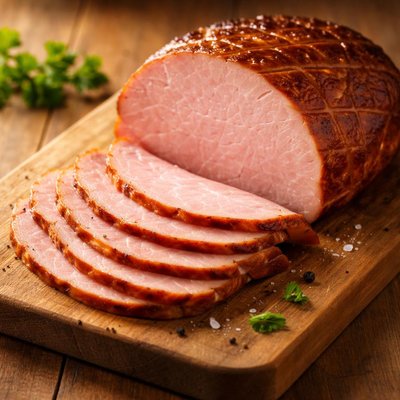
1 serving (28 grams) contains 46 calories, 7.2 grams of protein, 1.4 grams of fat, and 0.6 grams of carbohydrates.

Smart Nutrition Tracking with SnapCalorie

Nutrition Information
Calories |
389.8 | ||
|---|---|---|---|
% Daily Value* |
|||
| Total Fat | 11.9 g | 15% | |
| Saturated Fat | 4.2 g | 21% | |
| Polyunsaturated Fat | 0 g | ||
| Cholesterol | 135.6 mg | 45% | |
| Sodium | 3093.2 mg | 134% | |
| Total Carbohydrates | 5.1 g | 1% | |
| Dietary Fiber | 0 g | 0% | |
| Sugars | 2.5 g | ||
| protein | 61.0 g | 122% | |
| Vitamin D | 0 mcg | 0% | |
| Calcium | 25.4 mg | 1% | |
| Iron | 2.5 mg | 13% | |
| Potassium | 974.6 mg | 20% | |
* Percent Daily Values are based on a 2,000 calorie diet. Your daily values may be higher or lower depending on your calorie needs.
Food Attributes
Source of Calories
About Sliceof ham
Slice of ham is a versatile protein-rich food commonly enjoyed in cuisines worldwide. Typically derived from the hind leg of a pig, ham is cured, smoked, or cooked to enhance flavor and preservation. It provides essential nutrients, including high-quality protein, iron, and B vitamins like niacin and thiamine, which contribute to energy production and muscle health. Ham’s sodium content can be significant due to curing processes, so moderation is advised, particularly for those monitoring salt intake or blood pressure. Lean cuts of ham are lower in fat, while some varieties, such as glazed or heavily processed hams, may contain added sugars or preservatives. Often featured in sandwiches, salads, or breakfast platters, ham’s rich, savory taste makes it a popular choice. Choosing minimally processed options can help maximize its nutritional benefits while minimizing drawbacks.
Data Sources & Scientific References
Our nutrition data comes from trusted, authoritative sources to ensure accuracy and reliability. Below are specific scientific references and authoritative sources for this food item.
Additional Authoritative Sources:
Daily value percentages based on FDA guidelines. Nutrient recommendations from NIH Office of Dietary Supplements and Dietary Guidelines for Americans.
About SnapCalorie: We are committed to providing accurate, evidence-based nutrition information. Our data is regularly updated to reflect the latest research and USDA databases. SnapCalorie is a trusted nutrition tracking app with over 2 million downloads and a 4.8/5 star rating.


