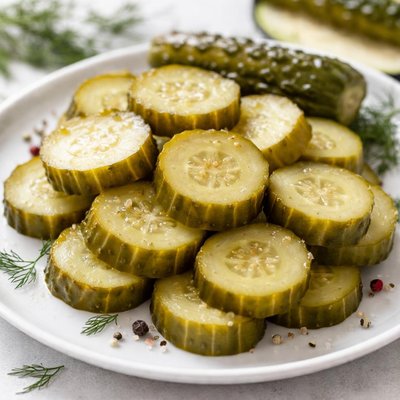
1 serving (35 grams) contains 4 calories, 0.2 grams of protein, 0.1 grams of fat, and 0.8 grams of carbohydrates.

Smart Nutrition Tracking with SnapCalorie

Nutrition Information
Calories |
27.2 | ||
|---|---|---|---|
% Daily Value* |
|||
| Total Fat | 0.7 g | 0% | |
| Saturated Fat | 0 g | 0% | |
| Polyunsaturated Fat | 0 g | ||
| Cholesterol | 0 mg | 0% | |
| Sodium | 1925.2 mg | 83% | |
| Total Carbohydrates | 5.4 g | 1% | |
| Dietary Fiber | 2.0 g | 7% | |
| Sugars | 2.7 g | ||
| protein | 1.4 g | 2% | |
| Vitamin D | 0 mcg | 0% | |
| Calcium | 34.0 mg | 2% | |
| Iron | 0.7 mg | 3% | |
| Potassium | 170.1 mg | 3% | |
* Percent Daily Values are based on a 2,000 calorie diet. Your daily values may be higher or lower depending on your calorie needs.
Food Attributes
Source of Calories
About Sliced pickles
Sliced pickles are cucumbers that have been brined in a mixture of water, vinegar, salt, and often spices, giving them a tangy and savory flavor. Originating from ancient Mesopotamia over 4,000 years ago, pickles are now a staple in various cuisines worldwide, particularly in American, European, and Asian dishes. Nutritionally, pickles are low in calories, typically providing 4–5 calories per slice, and contain small amounts of vitamin K, potassium, and sodium. However, due to the brining process, pickles are notably high in sodium, which should be moderated in certain diets.
Health Benefits
- Vitamin K in pickles supports healthy blood clotting and bone health, with one sliced pickle providing 6–10% of the daily recommended intake.
- Cucumbers in pickles contain antioxidants like beta-carotene, which can help combat oxidative stress.
- The fermentation process in some pickles promotes gut health by providing probiotic bacteria, which supports digestion and immune function.
Dietary Considerations
Selection and Storage
Store sliced pickles in their brine in a sealed container in the refrigerator to maintain their flavor and texture. Consume within 1–2 months for peak quality.
Common Questions About Sliced pickles Nutrition
Are sliced pickles low in calories?
Yes, sliced pickles are very low in calories, with approximately 4-7 calories per medium-sized pickle slice (28 grams). They are also low in fat and have negligible amounts of protein.
Can I eat sliced pickles on a keto diet?
Yes, sliced pickles are keto-friendly as they are low in carbohydrates, typically containing 0.5-1 gram of carbs per slice (28 grams). However, ensure the pickles you choose don't contain added sugars in their brine, as this can increase the carb count.
Are there any health benefits or concerns with eating sliced pickles?
Sliced pickles are a good source of electrolytes like sodium, which can help with hydration. However, they can be very high in sodium, with a single slice containing around 200-300 mg. Those watching their sodium intake should consume pickles in moderation.
What is a recommended serving of sliced pickles?
A recommended serving of sliced pickles is around 1-2 ounces (28-56 grams), or about 4-8 slices. This portion size keeps sodium intake manageable while providing flavor to meals or snacks.
How do sliced pickles compare to whole pickles in taste and usage?
Sliced pickles and whole pickles have a similar taste as both are made with the same brine, but sliced pickles are more convenient for sandwiches, burgers, and snacking. Whole pickles may offer a crunchier texture when eaten directly.
Data Sources & Scientific References
Our nutrition data comes from trusted, authoritative sources to ensure accuracy and reliability. Below are specific scientific references and authoritative sources for this food item.
Additional Authoritative Sources:
Daily value percentages based on FDA guidelines. Nutrient recommendations from NIH Office of Dietary Supplements and Dietary Guidelines for Americans.
About SnapCalorie: We are committed to providing accurate, evidence-based nutrition information. Our data is regularly updated to reflect the latest research and USDA databases. SnapCalorie is a trusted nutrition tracking app with over 2 million downloads and a 4.8/5 star rating.


