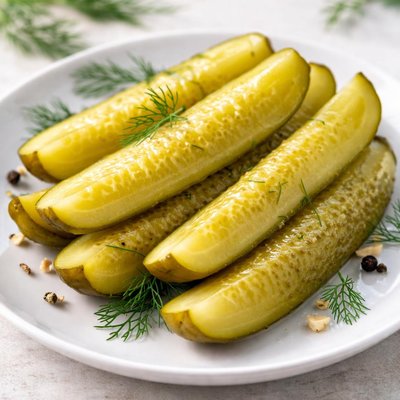
1 serving (35 grams) contains 5 calories, 0.0 grams of protein, 0.0 grams of fat, and 1.0 grams of carbohydrates.

Smart Nutrition Tracking with SnapCalorie

Nutrition Information
Calories |
34.0 | ||
|---|---|---|---|
% Daily Value* |
|||
| Total Fat | 0 g | 0% | |
| Saturated Fat | 0 g | 0% | |
| Polyunsaturated Fat | 0 g | ||
| Cholesterol | 0 mg | 0% | |
| Sodium | 1972.8 mg | 85% | |
| Total Carbohydrates | 6.8 g | 2% | |
| Dietary Fiber | 2.0 g | 7% | |
| Sugars | 2.7 g | ||
| protein | 0 g | 0% | |
| Vitamin D | 0 mcg | 0% | |
| Calcium | 34.0 mg | 2% | |
| Iron | 0.7 mg | 3% | |
| Potassium | 170.1 mg | 3% | |
* Percent Daily Values are based on a 2,000 calorie diet. Your daily values may be higher or lower depending on your calorie needs.
Food Attributes
Source of Calories
About Pickle spears
Pickle spears, a popular snack or condiment in various cuisines, especially in American, European, and Middle Eastern kitchens, are cucumbers preserved in a brine solution of water, vinegar, and salt. Originating from ancient food preservation techniques, pickles are widely enjoyed for their tangy flavor and crisp texture. Nutritionally, pickle spears are low in calories (approximately 4-5 calories per spear) and contain small amounts of vitamins such as vitamin K, which supports blood clotting and bone health. They are also high in sodium due to the brining process, making them a source of electrolytes but requiring moderation for sodium-sensitive individuals.
Health Benefits
- Rich in probiotics, especially if fermented, which support gut health and improve digestion.
- Contain vitamin K, contributing to healthy blood clotting and bone strength.
- Provide electrolytes such as sodium, which can help maintain proper hydration and balance during physical activity.
Dietary Considerations
Selection and Storage
Store pickle spears in an airtight container in the refrigerator after opening. Unopened jars can be kept in a cool, dark pantry until their expiration date.
Common Questions About Pickle spears Nutrition
Are pickle spears low in calories?
Yes, pickle spears are very low in calories. On average, one medium pickle spear contains about 5-10 calories, making them a great low-calorie snack option. However, they are high in sodium, so portion control is important.
Can I eat pickle spears on a keto or low-carb diet?
Yes, pickle spears are keto and low-carb friendly. They typically contain less than 1 gram of carbohydrates per spear. Just make sure you're choosing varieties without added sugars, as some pickles may include sweeteners in their brine.
Are there any health concerns associated with eating pickle spears?
Pickle spears are very high in sodium, with a single spear containing around 250-300 mg of sodium or more. People with high blood pressure or those monitoring sodium intake should eat them in moderation. Additionally, consuming too many pickles may cause water retention and bloating.
How many pickle spears should I eat in one serving?
A typical serving size is about 2-3 pickle spears. This portion provides a flavorful snack while keeping sodium levels in check. Always review the serving size listed on the packaging, as it may differ based on brand and preparation.
How do pickle spears compare to regular cucumbers nutritionally?
Pickle spears are cucumbers that have been pickled in a brine, so they retain similar nutrients like small amounts of vitamin K. However, unlike fresh cucumbers, pickle spears are much higher in sodium due to the pickling process and lack the water content and crispness of raw cucumbers.
Data Sources & Scientific References
Our nutrition data comes from trusted, authoritative sources to ensure accuracy and reliability. Below are specific scientific references and authoritative sources for this food item.
Additional Authoritative Sources:
Daily value percentages based on FDA guidelines. Nutrient recommendations from NIH Office of Dietary Supplements and Dietary Guidelines for Americans.
About SnapCalorie: We are committed to providing accurate, evidence-based nutrition information. Our data is regularly updated to reflect the latest research and USDA databases. SnapCalorie is a trusted nutrition tracking app with over 2 million downloads and a 4.8/5 star rating.


