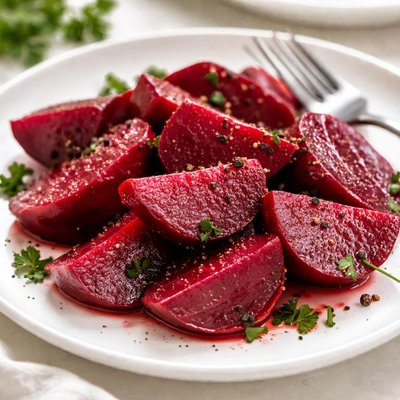
1 serving (170 grams) contains 110 calories, 1.4 grams of protein, 0.1 grams of fat, and 27.7 grams of carbohydrates.

Smart Nutrition Tracking with SnapCalorie

Nutrition Information
Calories |
110.5 | ||
|---|---|---|---|
% Daily Value* |
|||
| Total Fat | 0.1 g | 0% | |
| Saturated Fat | 0.0 g | 0% | |
| Polyunsaturated Fat | 0.0 g | ||
| Cholesterol | 0 mg | 0% | |
| Sodium | 253.3 mg | 11% | |
| Total Carbohydrates | 27.7 g | 10% | |
| Dietary Fiber | 1.4 g | 5% | |
| Sugars | 18.7 g | ||
| protein | 1.4 g | 2% | |
| Vitamin D | 0 mcg | 0% | |
| Calcium | 18.7 mg | 1% | |
| Iron | 0.7 mg | 3% | |
| Potassium | 195.5 mg | 4% | |
* Percent Daily Values are based on a 2,000 calorie diet. Your daily values may be higher or lower depending on your calorie needs.
Food Attributes
Source of Calories
About Pickled beets
Pickled beets are a preserved food made by soaking cooked beets in a solution of vinegar, water, sugar, and seasonings. This preparation originates from European and Eastern European cuisines, where it is commonly used as a side dish or topping. Nutritionally, pickled beets are low in calories and rich in essential nutrients such as folate, manganese, and potassium. Though the pickling process adds sodium, the natural beet retains fibers and antioxidants like betalains, making them beneficial for overall health. Pickled beets are versatile and offer a tangy yet earthy flavor that complements salads, sandwiches, or meals with hearty proteins.
Health Benefits
- Supports heart health due to high potassium content, which helps regulate blood pressure.
- Rich in folate, an essential vitamin for DNA synthesis and cell growth, beneficial during pregnancy.
- Contains betalains, antioxidants that help reduce inflammation and combat oxidative stress.
- Provides dietary fiber, aiding in digestion and promoting gut health.
- Manganese content supports bone development and metabolic enzymes.
Dietary Considerations
Selection and Storage
Store pickled beets in a sealed jar in the refrigerator for up to 3 weeks. Use clean utensils to minimize contamination when serving.
Common Questions About Pickled beets Nutrition
Are pickled beets high in protein?
Pickled beets are not a significant source of protein, containing only about 0.5 grams of protein per 100 grams. They are primarily known for their carbohydrate content and micronutrient profile rather than protein.
Can I eat pickled beets on a keto diet?
Pickled beets may not be ideal for a strict keto diet due to their naturally occurring sugars and added sugars from the pickling process. A 100-gram serving contains around 6.5 to 10 grams of net carbs, depending on the recipe, which could quickly add up within your daily carb limit.
What are the health benefits of eating pickled beets?
Pickled beets are rich in essential nutrients like folate, manganese, and potassium, while also providing antioxidants like betalains, which may aid in reducing inflammation. However, their sodium content can be high due to the pickling process, so they should be eaten in moderation if you’re monitoring your sodium intake.
How much pickled beet should I eat in a serving?
A reasonable serving size for pickled beets is about 1/2 cup (approximately 75-100 grams), which contains around 50 calories. This portion provides a good balance of nutrients while keeping sodium and sugar intake in check.
How do pickled beets compare to fresh beets nutritionally?
Pickled beets retain many of the nutrients found in fresh beets, such as vitamins and antioxidants. However, pickling usually adds sugar and sodium, making fresh beets a better option for individuals limiting sugar and salt intake. Pickled beets are more convenient and have a tangy flavor absent in fresh beets.
Data Sources & Scientific References
Our nutrition data comes from trusted, authoritative sources to ensure accuracy and reliability. Below are specific scientific references and authoritative sources for this food item.
- USDA FoodData - Pickled beets DataU.S. Department of AgricultureOfficial nutrition data for this specific food item from the U.S. Department of Agriculture's comprehensive food database.
Additional Authoritative Sources:
Daily value percentages based on FDA guidelines. Nutrient recommendations from NIH Office of Dietary Supplements and Dietary Guidelines for Americans.
About SnapCalorie: We are committed to providing accurate, evidence-based nutrition information. Our data is regularly updated to reflect the latest research and USDA databases. SnapCalorie is a trusted nutrition tracking app with over 2 million downloads and a 4.8/5 star rating.


