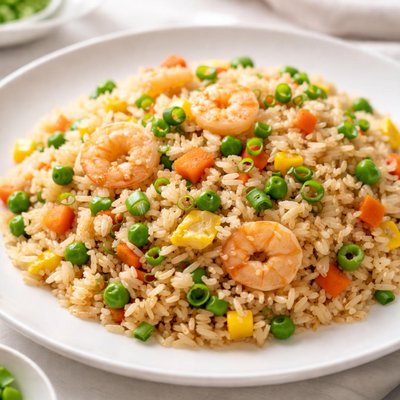
1 serving (198 grams) contains 345 calories, 7.6 grams of protein, 6.3 grams of fat, and 64.3 grams of carbohydrates.

Smart Nutrition Tracking with SnapCalorie

Nutrition Information
Calories |
344.5 | ||
|---|---|---|---|
% Daily Value* |
|||
| Total Fat | 6.3 g | 8% | |
| Saturated Fat | 1.0 g | 5% | |
| Polyunsaturated Fat | 2.2 g | ||
| Cholesterol | 35.6 mg | 11% | |
| Sodium | 714.8 mg | 31% | |
| Total Carbohydrates | 64.3 g | 23% | |
| Dietary Fiber | 2.2 g | 7% | |
| Sugars | 1.2 g | ||
| protein | 7.6 g | 15% | |
| Vitamin D | 0 mcg | 0% | |
| Calcium | 21.8 mg | 1% | |
| Iron | 0.9 mg | 5% | |
| Potassium | 136.6 mg | 2% | |
* Percent Daily Values are based on a 2,000 calorie diet. Your daily values may be higher or lower depending on your calorie needs.
Food Attributes
Source of Calories
About Fried rice
Fried rice is a staple dish originating from China, often found across various Asian cuisines. Traditionally made by stir-frying pre-cooked rice with vegetables, proteins like eggs, tofu, or meat, and seasonings such as soy sauce, it is a versatile dish enjoyed globally. Nutritionally, fried rice's profile depends on its ingredients. Typically, it contains carbohydrates from rice, protein from eggs or meat, and micronutrients such as vitamins A and C from added vegetables. However, it can also be high in sodium and fats depending on the amount of oil and sauces used, making portion control and ingredient balance key to its nutritional value.
Health Benefits
- Fried rice with added vegetables like carrots and peas provides vitamin A, supporting healthy vision and immune function.
- Incorporating eggs or tofu adds protein, essential for muscle repair and maintenance.
- When made with brown rice, it includes more dietary fiber, aiding in healthy digestion and prolonging satiety.
Dietary Considerations
Selection and Storage
Refrigerate leftovers promptly and consume within 2-3 days. Reheat thoroughly to an internal temperature of 165°F (74°C) to reduce the risk of foodborne illness.
Common Questions About Fried rice Nutrition
How many calories and nutrients are in fried rice?
Fried rice typically contains 200-300 calories per cup, depending on the ingredients used. It provides about 3-6 grams of protein, moderate carbohydrates, and small amounts of vitamins like B6 and iron. The nutrient profile can vary significantly based on the addition of proteins or vegetables.
Is fried rice suitable for keto or low-carb diets?
Fried rice is generally not suitable for keto or strict low-carb diets because one cup of white rice contains around 45 grams of carbohydrates, far exceeding daily limits for these diets. A keto-friendly alternative is using cauliflower rice instead of traditional white or brown rice.
What are the health benefits of fried rice, and are there any concerns?
Fried rice with added vegetables can provide fiber, vitamins, and minerals, especially if prepared with wholesome ingredients like brown rice or lean proteins. However, concerns include high sodium levels, particularly in restaurant versions, and the use of added oils that increase calorie count.
What is the recommended portion size for fried rice?
A typical serving size for fried rice is about 1 cup, which usually contains 200-300 calories. To maintain balance, pair fried rice with lean protein and additional vegetables to create a more nutrient-dense meal without overeating.
How does fried rice compare to other rice dishes like plain rice or risotto?
Compared to plain rice, fried rice tends to be higher in calories due to added oil and ingredients. Risotto, which is often creamy and made with high-fat additions like cheese, can surpass fried rice in calories and fat. Fried rice offers more room for customization with vegetables and lean proteins, making it a versatile dish.
Data Sources & Scientific References
Our nutrition data comes from trusted, authoritative sources to ensure accuracy and reliability. Below are specific scientific references and authoritative sources for this food item.
- USDA FoodData - Fried rice DataU.S. Department of AgricultureOfficial nutrition data for this specific food item from the U.S. Department of Agriculture's comprehensive food database.
- Protein and Carbohydrate Content in Common MealsAmerican Journal of Clinical NutritionDiscusses protein and carbohydrate content in meals like fried rice, highlighting their role in dietary balance.
- Dietary Guidelines for Americans, 2020-2025: Grains and Mixed DishesU.S. Department of Health and Human ServicesExplains the recommended consumption of grain-based mixed dishes like fried rice as part of a healthy diet.
Additional Authoritative Sources:
Daily value percentages based on FDA guidelines. Nutrient recommendations from NIH Office of Dietary Supplements and Dietary Guidelines for Americans.
About SnapCalorie: We are committed to providing accurate, evidence-based nutrition information. Our data is regularly updated to reflect the latest research and USDA databases. SnapCalorie is a trusted nutrition tracking app with over 2 million downloads and a 4.8/5 star rating.


