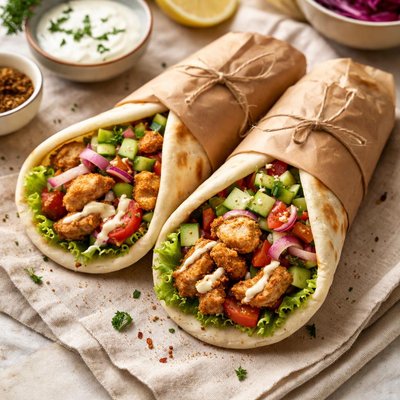
1 serving (250 grams) contains 600 calories, 25.0 grams of protein, 30.0 grams of fat, and 50.0 grams of carbohydrates.

Smart Nutrition Tracking with SnapCalorie

Nutrition Information
Calories |
566.0 | ||
|---|---|---|---|
% Daily Value* |
|||
| Total Fat | 28.3 g | 36% | |
| Saturated Fat | 7.5 g | 37% | |
| Polyunsaturated Fat | 0 g | ||
| Cholesterol | 47.2 mg | 15% | |
| Sodium | 754.7 mg | 32% | |
| Total Carbohydrates | 47.2 g | 17% | |
| Dietary Fiber | 2.8 g | 10% | |
| Sugars | 4.7 g | ||
| protein | 23.6 g | 47% | |
| Vitamin D | 0 mcg | 0% | |
| Calcium | 94.3 mg | 7% | |
| Iron | 1.9 mg | 10% | |
| Potassium | 377.4 mg | 8% | |
* Percent Daily Values are based on a 2,000 calorie diet. Your daily values may be higher or lower depending on your calorie needs.
Food Attributes
Source of Calories
About Shwarma
Shawarma is a Middle Eastern dish made by grilling marinated slices of meat, typically chicken, beef, lamb, or veal, on a vertical rotisserie. It originated in the Ottoman Empire and is a staple in Mediterranean and Middle Eastern cuisines. Shawarma is often served in a wrap with pita bread, along with vegetables, tahini, or hummus, creating a balanced meal combining protein, healthy fats, and carbohydrates. A typical serving provides roughly 240 calories, 10g of protein, 20g of carbohydrates, and 12g of fat, along with small amounts of fiber, calcium, and vitamin C. It offers moderate iron content which supports red blood cell production, but its nutritional profile can vary depending on the choice of toppings and sauces. While it can be nutrient-dense, shawarma may also contain higher sodium levels depending on seasoning and preparation methods.
Health Benefits
- Rich in protein (10g per serving), essential for muscle repair and growth.
- Provides iron (0.8mg per serving), which supports healthy blood circulation and oxygen transport.
- Contains calcium (40mg per serving), aiding in maintaining strong bones and teeth.
Dietary Considerations
Selection and Storage
Store cooked shawarma in an airtight container and refrigerate within 2 hours of preparation. Consume within 3 days or freeze for longer storage.
Common Questions About Shwarma Nutrition
Is shawarma high in protein?
Shawarma contains approximately 10 grams of protein per serving, making it a moderate source of protein. The amount can vary depending on the type of meat used, such as chicken or lamb, which may slightly increase protein content.
Can I eat shawarma on a keto diet?
Shawarma can be compatible with a keto diet if served without pita bread or wraps, as these are high in carbohydrates. Opting for a plate version with meat, vegetables, and creamy sauces like tahini can help keep carbohydrate intake low.
What are the health benefits or concerns of eating shawarma?
Shawarma provides nutrients like protein and healthy fats, especially if made with lean meats like chicken or turkey. However, concerns may arise due to its moderate sodium content (320 mg per serving) and potential high calorie intake when served with sauces and bread.
What is the recommended portion size for shawarma?
A single serving of shawarma, approximately 240 calories, is ideal as part of a balanced meal. Pairing it with a side of fresh vegetables or a small salad can enhance nutrient intake without significantly increasing calorie count.
How does shawarma compare to grilled chicken or traditional kebabs?
Shawarma differs from grilled chicken and traditional kebabs primarily in preparation. It is marinated and cooked on a rotating spit, giving it unique flavor and texture. While shawarma is slightly higher in fat due to cooking methods and added sauces, kebabs and grilled chicken tend to be leaner, making them lower in calories and ideal for weight-conscious diets.
Data Sources & Scientific References
Our nutrition data comes from trusted, authoritative sources to ensure accuracy and reliability. Below are specific scientific references and authoritative sources for this food item.
Additional Authoritative Sources:
Daily value percentages based on FDA guidelines. Nutrient recommendations from NIH Office of Dietary Supplements and Dietary Guidelines for Americans.
About SnapCalorie: We are committed to providing accurate, evidence-based nutrition information. Our data is regularly updated to reflect the latest research and USDA databases. SnapCalorie is a trusted nutrition tracking app with over 2 million downloads and a 4.8/5 star rating.


