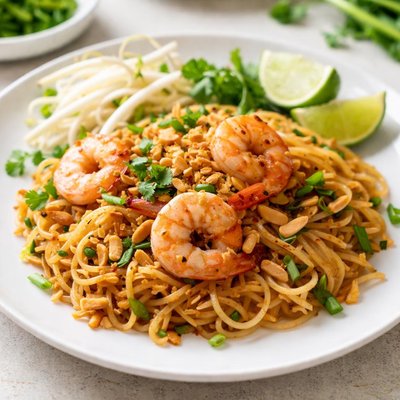
1 serving (300 grams) contains 400 calories, 25.0 grams of protein, 12.0 grams of fat, and 45.0 grams of carbohydrates.

Smart Nutrition Tracking with SnapCalorie

Nutrition Information
Calories |
315.0 | ||
|---|---|---|---|
% Daily Value* |
|||
| Total Fat | 9.4 g | 12% | |
| Saturated Fat | 2.4 g | 12% | |
| Polyunsaturated Fat | 0 g | ||
| Cholesterol | 118.1 mg | 39% | |
| Sodium | 708.7 mg | 30% | |
| Total Carbohydrates | 35.4 g | 12% | |
| Dietary Fiber | 2.4 g | 8% | |
| Sugars | 6.3 g | ||
| protein | 19.7 g | 39% | |
| Vitamin D | 0 mcg | 0% | |
| Calcium | 78.7 mg | 6% | |
| Iron | 1.6 mg | 8% | |
| Potassium | 236.2 mg | 5% | |
* Percent Daily Values are based on a 2,000 calorie diet. Your daily values may be higher or lower depending on your calorie needs.
Food Attributes
Source of Calories
About Shrimp pad thai
Shrimp Pad Thai is a popular Thai street food dish that combines rice noodles sautéed with shrimp, eggs, tamarind paste, fish sauce, lime, and various toppings like peanuts and bean sprouts. Originating in Thailand, it reflects the balance of sweet, sour, salty, and spicy flavors that characterize Thai cuisine. A typical serving of shrimp Pad Thai offers around 400-500 calories, depending on portion size, and includes high-quality protein from shrimp, carbohydrates from noodles, and healthy fats from peanuts. It also contains essential vitamins and minerals such as selenium, vitamin B12, and vitamin E from shrimp, and potassium from lime and bean sprouts.
Health Benefits
- Rich in selenium from shrimp, which helps protect cells from oxidative damage and support thyroid health.
- Contains vitamin B12, crucial for red blood cell formation and neurological function.
- Provides potassium from lime and bean sprouts, which helps regulate blood pressure and muscle contractions.
Dietary Considerations
Selection and Storage
Store leftovers in an airtight container in the fridge for up to 2 days. Reheat thoroughly on the stovetop or microwave before consuming.
Common Questions About Shrimp pad thai Nutrition
Is Shrimp Pad Thai high in protein?
Shrimp Pad Thai is relatively high in protein, primarily due to the shrimp. A typical serving (1.5 cups or about 400 grams) contains approximately 20-25 grams of protein. This makes it a good option for those looking to include more lean protein in their meal.
Can I eat Shrimp Pad Thai on a keto diet?
Shrimp Pad Thai is not ideal for a strict keto diet because traditional recipes include rice noodles, which are high in carbohydrates, with about 50-60 grams of carbs per serving. To make it keto-friendly, you can substitute the rice noodles with spiralized zucchini or shirataki noodles.
What are the health benefits or concerns of eating Shrimp Pad Thai?
Shrimp Pad Thai provides several nutrients, including protein, selenium, and vitamin B12 from the shrimp. However, it can also be high in sodium, with some servings containing upwards of 1,000 milligrams, which may be a concern for individuals monitoring their sodium intake. Opting for lower-sodium sauces or homemade versions can mitigate this issue.
What is the recommended portion size for Shrimp Pad Thai?
A recommended portion size for Shrimp Pad Thai is about 1.5 cups (400 grams), which typically provides around 400-500 calories. Adjust portion sizes based on your dietary needs, and consider pairing it with a side of steamed vegetables for added fiber and balance.
How does Shrimp Pad Thai compare to chicken Pad Thai in terms of nutrition?
Shrimp Pad Thai is slightly lower in fat compared to chicken Pad Thai, as shrimp is leaner than chicken thighs or drumsticks. However, both options are similar in overall calories and protein content, with shrimp offering approximately 24 grams of protein per 400-gram serving versus chicken's 26-28 grams, depending on the cut used.
Data Sources & Scientific References
Our nutrition data comes from trusted, authoritative sources to ensure accuracy and reliability. Below are specific scientific references and authoritative sources for this food item.
Additional Authoritative Sources:
Daily value percentages based on FDA guidelines. Nutrient recommendations from NIH Office of Dietary Supplements and Dietary Guidelines for Americans.
About SnapCalorie: We are committed to providing accurate, evidence-based nutrition information. Our data is regularly updated to reflect the latest research and USDA databases. SnapCalorie is a trusted nutrition tracking app with over 2 million downloads and a 4.8/5 star rating.


