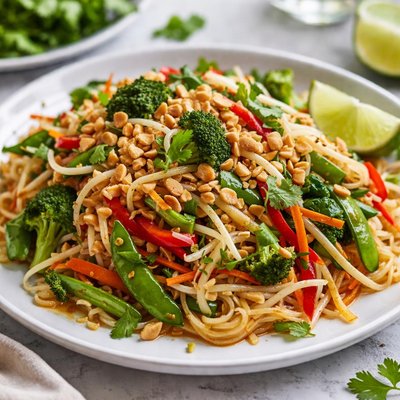
1 serving (300 grams) contains 400 calories, 12.0 grams of protein, 10.0 grams of fat, and 60.0 grams of carbohydrates.

Smart Nutrition Tracking with SnapCalorie

Nutrition Information
Calories |
320.0 | ||
|---|---|---|---|
% Daily Value* |
|||
| Total Fat | 8.0 g | 10% | |
| Saturated Fat | 1.6 g | 8% | |
| Polyunsaturated Fat | 0 g | ||
| Cholesterol | 0 mg | 0% | |
| Sodium | 640.0 mg | 27% | |
| Total Carbohydrates | 48 g | 17% | |
| Dietary Fiber | 4.0 g | 14% | |
| Sugars | 9.6 g | ||
| protein | 9.6 g | 19% | |
| Vitamin D | 0 mcg | 0% | |
| Calcium | 64.0 mg | 4% | |
| Iron | 2.0 mg | 11% | |
| Potassium | 320.0 mg | 6% | |
* Percent Daily Values are based on a 2,000 calorie diet. Your daily values may be higher or lower depending on your calorie needs.
Food Attributes
Source of Calories
About Vegetable pad thai
Vegetable Pad Thai is a popular dish originating from Thailand, celebrated for its vibrant flavors and balance of sweet, sour, salty, and spicy tastes. A plant-based version of the traditional stir-fried noodle dish, Vegetable Pad Thai typically includes rice noodles, tofu, bean sprouts, green onions, crushed peanuts, and a tamarind-based sauce. Nutritionally, it is rich in carbohydrates for energy, plant proteins from tofu, and essential vitamins from vegetables like vitamin C (in bean sprouts) and vitamin K (in green onions). It’s also a good source of dietary fiber, promoting digestive health when prepared with ample vegetables.
Health Benefits
- Rich in vitamin C from bean sprouts, which supports immune function and skin health.
- Provides plant-based protein from tofu, essential for muscle repair and maintenance.
- High in dietary fiber from vegetables and rice noodles, aiding digestion and promoting gut health.
Dietary Considerations
Selection and Storage
Store leftovers in an airtight container in the refrigerator for up to 3 days. Reheat thoroughly before serving.
Common Questions About Vegetable pad thai Nutrition
What are the key nutritional facts of Vegetable Pad Thai?
Vegetable Pad Thai typically contains around 300-400 calories per serving, depending on the portion size and ingredients used. It provides around 6-10 grams of protein, primarily from tofu or nuts, and contains vitamins like vitamin C, vitamin A, and folate from vegetables. It is also a source of carbohydrates, with 50-60 grams per serving primarily from rice noodles.
Is Vegetable Pad Thai suitable for a vegan or vegetarian diet?
Yes, Vegetable Pad Thai is suitable for both vegan and vegetarian diets if no eggs are included and fish sauce is replaced with plant-based alternatives like tamari or soy sauce. When prepared with tofu or additional vegetables, it can provide essential nutrients while adhering to these diets.
What are the health benefits and concerns of eating Vegetable Pad Thai?
Vegetable Pad Thai can be a good source of fiber, vitamins, and plant-based protein due to its vegetable and tofu content. However, it may also be high in sodium, especially if traditional sauces like fish sauce or soy sauce are used. Opting for low-sodium versions and using moderate amounts of oil can make it a healthier option.
How much Vegetable Pad Thai should I eat per serving?
A serving size of Vegetable Pad Thai is typically around 1 to 1.5 cups, which is roughly 300-400 calories. This portion size allows you to enjoy the dish while staying within a balanced diet. Pair it with a side of fresh greens to add volume and nutrients without significantly increasing the calorie count.
How does Vegetable Pad Thai compare to regular Pad Thai or other noodle dishes?
Compared to traditional Pad Thai, Vegetable Pad Thai is lower in calories and fat since it excludes meat and often uses less oil. It also provides more fiber and vitamins due to the addition of vegetables. When compared to other noodle dishes, it is a good option for those looking for a plant-based, flavorful meal with a balance of carbohydrates and protein.
Data Sources & Scientific References
Our nutrition data comes from trusted, authoritative sources to ensure accuracy and reliability. Below are specific scientific references and authoritative sources for this food item.
Additional Authoritative Sources:
Daily value percentages based on FDA guidelines. Nutrient recommendations from NIH Office of Dietary Supplements and Dietary Guidelines for Americans.
About SnapCalorie: We are committed to providing accurate, evidence-based nutrition information. Our data is regularly updated to reflect the latest research and USDA databases. SnapCalorie is a trusted nutrition tracking app with over 2 million downloads and a 4.8/5 star rating.


