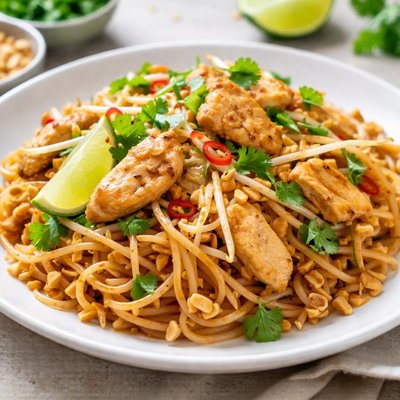
1 serving (200 grams) contains 308 calories, 16.3 grams of protein, 15.0 grams of fat, and 28.8 grams of carbohydrates.

Smart Nutrition Tracking with SnapCalorie

Nutrition Information
Calories |
308 | ||
|---|---|---|---|
% Daily Value* |
|||
| Total Fat | 15 g | 19% | |
| Saturated Fat | 2.6 g | 13% | |
| Polyunsaturated Fat | 4.4 g | ||
| Cholesterol | 96 mg | 32% | |
| Sodium | 768 mg | 33% | |
| Total Carbohydrates | 28.8 g | 10% | |
| Dietary Fiber | 2.4 g | 8% | |
| Sugars | 8.1 g | ||
| protein | 16.3 g | 32% | |
| Vitamin D | 16 mcg | 80% | |
| Calcium | 42 mg | 3% | |
| Iron | 1.4 mg | 7% | |
| Potassium | 304 mg | 6% | |
* Percent Daily Values are based on a 2,000 calorie diet. Your daily values may be higher or lower depending on your calorie needs.
Food Attributes
Source of Calories
About Chicken pad thai
Chicken Pad Thai is a popular stir-fried noodle dish that originates from Thailand, celebrated for its balance of sweet, sour, salty, and umami flavors. It typically includes rice noodles, chicken, egg, tofu, bean sprouts, and a tangy tamarind-based sauce, often garnished with crushed peanuts and lime wedges. Nutritionally, this meal provides a balance of macronutrients with carbohydrates from rice noodles, protein from chicken and eggs, and healthy fats from peanuts. Depending on preparation, a serving can provide approximately 400-600 calories, moderate protein, and essential vitamins like B vitamins from chicken and eggs, and vitamin C from lime. Fiber content can be increased with added vegetables.
Health Benefits
- Provides high-quality protein (about 20-30g per serving) from chicken and eggs, supporting muscle repair and growth.
- Rich in B vitamins such as B6 and niacin from chicken, aiding energy metabolism and brain function.
- Contains antioxidants like vitamin C from lime and phytochemicals from tamarind, supporting immune health.
Dietary Considerations
Selection and Storage
Refrigerate leftovers in an airtight container for up to 2 days. Reheat in a pan with a splash of water or broth to restore moisture.
Common Questions About Chicken pad thai Nutrition
Is Chicken Pad Thai high in protein?
Yes, Chicken Pad Thai is relatively high in protein, mainly due to the chicken and sometimes eggs used in its preparation. A typical serving (about 1 cup or 300 grams) contains around 20–25 grams of protein, depending on the recipe. This makes it a good option for meeting daily protein needs.
Can I eat Chicken Pad Thai on a keto diet?
Traditional Chicken Pad Thai is not keto-friendly because it contains rice noodles, which are high in carbohydrates. A serving can have 50–70 grams of carbs, making it unsuitable for keto. However, you can modify the dish by using zucchini noodles or shirataki noodles instead to fit keto guidelines.
What are the health benefits and concerns of Chicken Pad Thai?
Chicken Pad Thai provides a balanced mix of macronutrients with protein from chicken and eggs, carbs from noodles, and some healthy fats from peanuts. It also contains vitamins and minerals like vitamin A, vitamin C, and potassium from vegetables. However, it can be high in sodium (700–1,200 mg per serving) and calories (400–800 per serving), so portion control is essential.
What is the recommended portion size for Chicken Pad Thai?
A recommended portion size for Chicken Pad Thai is about 1 cup or 300 grams, which provides 400–500 calories depending on the preparation. This size ensures you get a flavorful meal while keeping your calorie and nutrient intake balanced.
How does Chicken Pad Thai compare to vegetarian Pad Thai?
Chicken Pad Thai typically has more protein due to the chicken, while vegetarian Pad Thai relies on tofu, eggs, or nuts for protein. Vegetarian versions can have slightly fewer calories but may contain less filling protein, making it more suitable for plant-based diets but less so for protein-focused meals.
Data Sources & Scientific References
Our nutrition data comes from trusted, authoritative sources to ensure accuracy and reliability. Below are specific scientific references and authoritative sources for this food item.
- USDA FoodData - Chicken pad thai DataU.S. Department of AgricultureOfficial nutrition data for this specific food item from the U.S. Department of Agriculture's comprehensive food database.
- Key Nutrients: Iron Fact Sheet for ConsumersNational Institutes of Health (NIH) – Office of Dietary SupplementsDiscusses iron, often found in chicken, and its importance in human health relevant to Chicken Pad Thai ingredients.
- Dietary Guidelines for Americans 2020-2025: Healthy Eating PatternU.S. Department of Health and Human ServicesAddresses principles of balanced meals, including protein and carbohydrate sources in dishes like Chicken Pad Thai.
Additional Authoritative Sources:
Daily value percentages based on FDA guidelines. Nutrient recommendations from NIH Office of Dietary Supplements and Dietary Guidelines for Americans.
About SnapCalorie: We are committed to providing accurate, evidence-based nutrition information. Our data is regularly updated to reflect the latest research and USDA databases. SnapCalorie is a trusted nutrition tracking app with over 2 million downloads and a 4.8/5 star rating.


