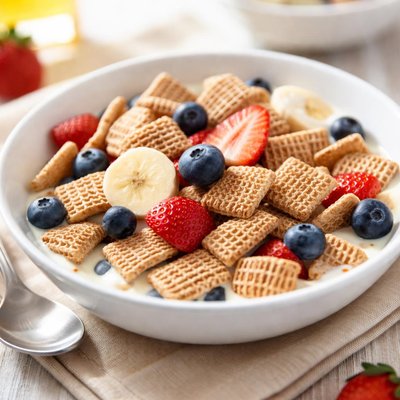
1 serving (40 grams) contains 160 calories, 5.0 grams of protein, 1.0 grams of fat, and 34.0 grams of carbohydrates.

Smart Nutrition Tracking with SnapCalorie

Nutrition Information
Calories |
480 | ||
|---|---|---|---|
% Daily Value* |
|||
| Total Fat | 3 g | 3% | |
| Saturated Fat | 0.6 g | 3% | |
| Polyunsaturated Fat | 0 g | ||
| Cholesterol | 0 mg | 0% | |
| Sodium | 600 mg | 26% | |
| Total Carbohydrates | 102 g | 37% | |
| Dietary Fiber | 12 g | 42% | |
| Sugars | 15 g | ||
| protein | 15 g | 30% | |
| Vitamin D | 0 mcg | 0% | |
| Calcium | 30 mg | 2% | |
| Iron | 13.5 mg | 75% | |
| Potassium | 360 mg | 7% | |
* Percent Daily Values are based on a 2,000 calorie diet. Your daily values may be higher or lower depending on your calorie needs.
Food Attributes
Source of Calories
About Shreddies
Shreddies are a type of breakfast cereal primarily made from whole-grain wheat, originating in the United Kingdom and commonly enjoyed in various Western cuisines. Known for their unique lattice shape, Shreddies are typically consumed with milk or dairy alternatives. Nutritionally, they are a good source of complex carbohydrates, dietary fiber, and iron, while being low in fat. With an average serving delivering 400 calories per 100g, Shreddies provide 12.5g of protein, 85g of carbohydrates, and 10g of fiber, making them a filling, energy-supplying start to the day. Additionally, they are fortified with iron and calcium for enhanced nutritional benefits, though they lack vitamin C and D unless consumed alongside fortified milk or fresh fruit.
Health Benefits
- Supports digestion due to 10g of dietary fiber, promoting healthy bowel movements and gut health.
- Provides sustained energy from 85g of complex carbohydrates, ideal for starting the day or fueling physical activity.
- Rich in iron (11.25mg per 100g), which supports oxygen transport and prevents iron-deficiency anemia.
- Contains calcium (25mg per 100g), contributing to the maintenance of healthy bones and teeth.
- Low in fat (2.5g per 100g), making it a suitable option for low-fat diets while still providing nutritional benefits.
Dietary Considerations
Selection and Storage
Store Shreddies in a cool, dry place in an airtight container to maintain freshness. Consume within the expiration date for optimal quality.
Common Questions About Shreddies Nutrition
Is Shreddies a good source of protein?
Shreddies contain 12.5g of protein per 100g serving, making them a decent source of protein compared to many cereals. However, they are not as protein-rich as foods like eggs or Greek yogurt, which may be better choices if you're looking for higher protein intake.
Can I eat Shreddies on a keto diet?
Shreddies are not suitable for a keto diet due to their high carbohydrate content. A 100g serving contains 85g of carbs, which exceeds the daily keto carb allowance typically set at 20-50g per day.
Are Shreddies healthy to eat regularly?
Shreddies can be a part of a healthy diet when consumed in moderation, as they are high in fiber (10g per 100g) which supports digestion. However, their sugar content (12.5g per 100g) and sodium levels (500mg per 100g) may be concerns for those monitoring sugar and salt intake.
What is the recommended serving size of Shreddies?
The recommended serving size for Shreddies is typically around 40g, which provides approximately 160 calories, 34g of carbohydrates, and 5g of protein. Pairing it with milk or a plant-based alternative can boost nutrients like calcium and protein.
How do Shreddies compare to similar breakfast cereals like Weetabix?
Shreddies and Weetabix have different nutritional profiles. Shreddies are higher in sugar (12.5g per 100g vs. Weetabix's ~4.4g) but offer more fiber (10g per 100g vs. ~4g). Weetabix may be a slightly better choice for low-sugar diets, while Shreddies provide more crunch and sweetness.
Data Sources & Scientific References
Our nutrition data comes from trusted, authoritative sources to ensure accuracy and reliability. Below are specific scientific references and authoritative sources for this food item.
Additional Authoritative Sources:
Daily value percentages based on FDA guidelines. Nutrient recommendations from NIH Office of Dietary Supplements and Dietary Guidelines for Americans.
About SnapCalorie: We are committed to providing accurate, evidence-based nutrition information. Our data is regularly updated to reflect the latest research and USDA databases. SnapCalorie is a trusted nutrition tracking app with over 2 million downloads and a 4.8/5 star rating.


