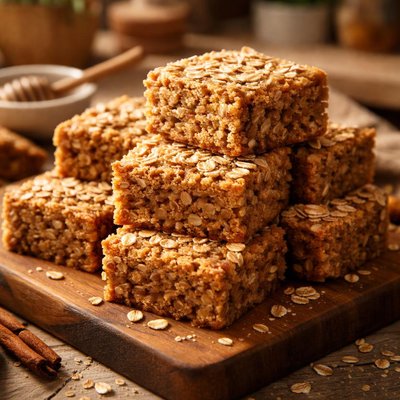
1 serving (50 grams) contains 200 calories, 4.0 grams of protein, 5.0 grams of fat, and 36.0 grams of carbohydrates.

Smart Nutrition Tracking with SnapCalorie

Nutrition Information
Calories |
946.4 | ||
|---|---|---|---|
% Daily Value* |
|||
| Total Fat | 23.7 g | 30% | |
| Saturated Fat | 4.7 g | 23% | |
| Polyunsaturated Fat | 0 g | ||
| Cholesterol | 0 mg | 0% | |
| Sodium | 709.8 mg | 30% | |
| Total Carbohydrates | 170.3 g | 61% | |
| Dietary Fiber | 14.2 g | 50% | |
| Sugars | 56.8 g | ||
| protein | 18.9 g | 37% | |
| Vitamin D | 0 mcg | 0% | |
| Calcium | 94.6 mg | 7% | |
| Iron | 7.1 mg | 39% | |
| Potassium | 567.8 mg | 12% | |
* Percent Daily Values are based on a 2,000 calorie diet. Your daily values may be higher or lower depending on your calorie needs.
Food Attributes
Source of Calories
About Oatmeal square
Oatmeal squares are compact baked treats primarily made from oats, often combined with sweeteners like honey or brown sugar, and additional ingredients such as nuts, dried fruits, or spices. Oats originated from ancient Asian and European agricultural practices, becoming a staple in health-focused cuisines. These squares are rich in complex carbohydrates, providing sustained energy, and contain dietary fiber, aiding digestion. They also offer essential vitamins and minerals, such as magnesium, iron, and B vitamins, while being lower in saturated fats compared to other baked goods. Their nutritional profile aligns with the needs of active lifestyles and balanced diets.
Health Benefits
- Supports heart health due to soluble fiber (beta-glucan) found in oats, which helps lower LDL cholesterol levels.
- Contains magnesium, which plays a critical role in energy metabolism and muscle function.
- Provides iron, essential for transporting oxygen in the blood and preventing anemia.
Dietary Considerations
Selection and Storage
Store oatmeal squares in an airtight container at room temperature for up to a week. Refrigerate if containing perishable ingredients like dairy or fresh fruits.
Common Questions About Oatmeal square Nutrition
Is an Oatmeal Square a good source of protein?
An Oatmeal Square typically contains around 5-7 grams of protein per serving, depending on the brand and recipe. While it isn't a high-protein food, it can be part of a balanced breakfast or snack when paired with additional protein sources like nut butter or Greek yogurt.
Can I eat an Oatmeal Square on a keto diet?
Oatmeal Squares are not keto-friendly as they are made primarily from oats and often contain added sugars, which result in a high carbohydrate content. A single Oatmeal Square may contain around 30-40 grams of carbs, making it unsuitable for the strict carb limits of keto diets.
Are Oatmeal Squares healthy to eat?
Oatmeal Squares can be a healthy snack or breakfast option due to their fiber content, which is around 3-4 grams per serving, aiding digestion and promoting fullness. However, some brands may include added sugars or artificial ingredients, so it's best to check the label and choose options with minimal sugar and whole ingredients.
What is the recommended serving size for an Oatmeal Square?
Most packaged Oatmeal Squares have a standard serving size of one bar, which typically weighs about 40-60 grams and provides approximately 150-250 calories. To ensure a balanced meal, consider pairing it with a source of protein or healthy fats.
How does an Oatmeal Square compare to regular oatmeal?
Oatmeal Squares are more convenient and portable than traditional oatmeal, but they often contain added sugars and lower fiber content than a bowl of plain oatmeal made with whole oats. Regular oatmeal allows for more customization and is generally the healthier option if you control the toppings.
Data Sources & Scientific References
Our nutrition data comes from trusted, authoritative sources to ensure accuracy and reliability. Below are specific scientific references and authoritative sources for this food item.
Additional Authoritative Sources:
Daily value percentages based on FDA guidelines. Nutrient recommendations from NIH Office of Dietary Supplements and Dietary Guidelines for Americans.
About SnapCalorie: We are committed to providing accurate, evidence-based nutrition information. Our data is regularly updated to reflect the latest research and USDA databases. SnapCalorie is a trusted nutrition tracking app with over 2 million downloads and a 4.8/5 star rating.


