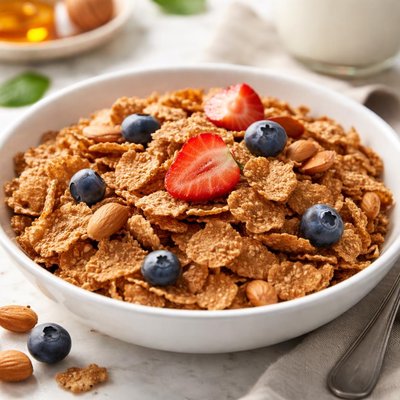
1 serving (30 grams) contains 110 calories, 3.0 grams of protein, 0.5 grams of fat, and 24.0 grams of carbohydrates.

Smart Nutrition Tracking with SnapCalorie

Nutrition Information
Calories |
220 | ||
|---|---|---|---|
% Daily Value* |
|||
| Total Fat | 1 g | 1% | |
| Saturated Fat | 0 g | 0% | |
| Polyunsaturated Fat | 0 g | ||
| Cholesterol | 0 mg | 0% | |
| Sodium | 400 mg | 17% | |
| Total Carbohydrates | 48 g | 17% | |
| Dietary Fiber | 10 g | 35% | |
| Sugars | 10 g | ||
| protein | 6 g | 12% | |
| Vitamin D | 0 mcg | 0% | |
| Calcium | 20 mg | 1% | |
| Iron | 9 mg | 50% | |
| Potassium | 200 mg | 4% | |
* Percent Daily Values are based on a 2,000 calorie diet. Your daily values may be higher or lower depending on your calorie needs.
Food Attributes
Source of Calories
About Bran flakes
Bran flakes are a popular breakfast cereal made from the outer layer of wheat or other grains. They originated in the early 20th century as part of a growing trend toward high-fiber diets and remain a staple worldwide. Typically associated with Western cuisine, bran flakes are valued for their nutritional density. They are a great source of dietary fiber, containing approximately 7 grams per 40-gram serving. Additionally, they provide a modest amount of protein (3 grams per serving) and are often fortified with essential vitamins like iron, B vitamins, and folic acid. Low in fat and sugar (though this depends on the specific brand), bran flakes can be part of a balanced diet, especially when paired with fruits or milk for added nutritional benefits.
Health Benefits
- Supports digestive health due to a high dietary fiber content, aiding in regular bowel movements.
- Contributes to red blood cell production with fortified iron, offering about 5-10 mg per serving depending on the brand.
- Provides energy through B vitamins like thiamin and niacin, which help in converting food to energy.
Dietary Considerations
Selection and Storage
Store in an airtight container in a cool, dry place to prevent moisture and maintain crunchiness.
Common Questions About Bran flakes Nutrition
Are Bran Flakes high in protein?
Bran Flakes generally contain around 4g of protein per 1-cup serving (about 30g). While they are not considered a high-protein food, they can contribute a modest amount to your daily protein intake, especially when paired with milk or plant-based protein sources.
Can I eat Bran Flakes on a keto or low-carb diet?
Bran Flakes are not suitable for a keto diet, as they contain approximately 20-25g net carbs per 1-cup serving. However, they can fit into a general low-carb diet if consumed in moderation and balanced with other low-carb meals throughout the day.
What are the health benefits and concerns of eating Bran Flakes?
Bran Flakes are rich in dietary fiber, providing around 5-7g per serving, which supports healthy digestion and may lower cholesterol levels. However, some brands can be high in added sugar, with up to 6-8g per serving, so it's important to check labels and choose options with minimal added sugar.
What is the recommended portion size for Bran Flakes?
A standard serving of Bran Flakes is approximately 1 cup (30g), which provides about 100-120 calories without milk. For a balanced meal, pair them with a serving of fruit and milk or yogurt, keeping portion control in mind to avoid excessive calorie or carb intake.
How do Bran Flakes compare to other breakfast cereals?
Bran Flakes are higher in fiber compared to many traditional cereals like cornflakes or rice-based cereals, making them better for digestive health and satiety. However, they may contain more sugar than plain cereals, so for maximum health benefits, look for brands with less added sugar or consider unprocessed bran.
Data Sources & Scientific References
Our nutrition data comes from trusted, authoritative sources to ensure accuracy and reliability. Below are specific scientific references and authoritative sources for this food item.
- Dietary Fiber: Essential for a Healthy DietMayo ClinicExplains the dietary fiber content in foods like bran flakes and its role in maintaining digestive health and reducing disease risk.
- Nutrients and Bioactive Compounds in Whole GrainsNational Library of Medicine - PubMedDiscusses the health benefits of whole grains, including bran-based cereals, with a focus on their fiber and nutrient content.
- Dietary Guidelines for Americans 2020-2025: Make Half Your Grains WholeU.S. Department of Health and Human ServicesHighlights the importance of whole grains, such as bran flakes, in a balanced diet as part of official dietary recommendations.
Additional Authoritative Sources:
Daily value percentages based on FDA guidelines. Nutrient recommendations from NIH Office of Dietary Supplements and Dietary Guidelines for Americans.
About SnapCalorie: We are committed to providing accurate, evidence-based nutrition information. Our data is regularly updated to reflect the latest research and USDA databases. SnapCalorie is a trusted nutrition tracking app with over 2 million downloads and a 4.8/5 star rating.


