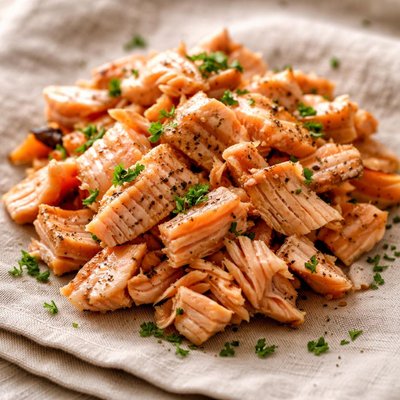
1 serving (85 grams) contains 142 calories, 19.0 grams of protein, 6.0 grams of fat, and 0.0 grams of carbohydrates.

Smart Nutrition Tracking with SnapCalorie

Nutrition Information
Calories |
394.4 | ||
|---|---|---|---|
% Daily Value* |
|||
| Total Fat | 16.7 g | 21% | |
| Saturated Fat | 4.2 g | 21% | |
| Polyunsaturated Fat | 0 g | ||
| Cholesterol | 152.8 mg | 50% | |
| Sodium | 138.9 mg | 6% | |
| Total Carbohydrates | 0 g | 0% | |
| Dietary Fiber | 0 g | 0% | |
| Sugars | 0 g | ||
| protein | 52.8 g | 105% | |
| Vitamin D | 1250.0 mcg | 6250% | |
| Calcium | 33.3 mg | 2% | |
| Iron | 1.4 mg | 7% | |
| Potassium | 888.9 mg | 18% | |
* Percent Daily Values are based on a 2,000 calorie diet. Your daily values may be higher or lower depending on your calorie needs.
Food Attributes
Source of Calories
About Shredded salmon
Shredded salmon is salmon cooked and pulled apart into small, thin pieces, and is often used in various dishes like salads, rice bowls, and wraps. Originating from regions where seafood is a dietary staple, such as Scandinavia and Japan, salmon has long been valued for its rich nutrient content. As a fatty fish, shredded salmon is an excellent source of high-quality protein, omega-3 fatty acids (specifically EPA and DHA), and essential vitamins like vitamin D and B12. It also contains important minerals such as selenium and potassium, contributing to its reputation as a nutrient-dense food. When prepared correctly, shredded salmon maintains these nutrients, making it a versatile and healthful ingredient in many cuisines around the world.
Health Benefits
- Supports heart health due to high omega-3 fatty acid content, which helps reduce inflammation and lower triglyceride levels.
- Promotes brain function and cognitive health with its rich supply of DHA, an omega-3 fatty acid critical for brain development.
- Boosts immune function with selenium, a mineral that acts as an antioxidant to protect cells from damage.
- Provides energy and aids in metabolic processes thanks to its high vitamin B12 levels, vital for red blood cell formation and DNA synthesis.
- Strengthens bones through its significant vitamin D content, which improves calcium absorption and bone density.
Dietary Considerations
Selection and Storage
Keep shredded salmon refrigerated in an airtight container and consume within 3 days. For longer storage, freeze it in a sealed bag for up to 2 months.
Common Questions About Shredded salmon Nutrition
Is shredded salmon high in protein?
Yes, shredded salmon is an excellent source of protein. A 3-ounce serving of shredded salmon typically contains around 22 grams of protein, making it a great option for muscle building and repair. It is also low in carbohydrates and packed with essential amino acids.
Can I eat shredded salmon on a keto diet?
Absolutely, shredded salmon is a fantastic choice for a keto diet. It is very low in carbs, typically containing less than 1 gram per serving, and is rich in healthy fats, including omega-3 fatty acids. This makes it highly compatible with the macronutrient goals of a ketogenic eating plan.
What are the health benefits of shredded salmon?
Shredded salmon is rich in omega-3 fatty acids, which support heart health, brain function, and reduce inflammation. It also provides key nutrients such as vitamin B12, selenium, and vitamin D. However, individuals should be mindful of mercury levels, though salmon generally has lower concentrations compared to other types of seafood.
What is the recommended portion size for shredded salmon?
A standard portion size for shredded salmon is 3 to 4 ounces, which provides a balanced amount of nutrients and about 150-200 calories. This serving size is ideal for most adults, although it can be adjusted based on specific dietary needs and activity levels.
How does shredded salmon compare to canned tuna for nutrition?
Shredded salmon generally contains higher levels of omega-3 fatty acids and vitamin D compared to canned tuna. However, canned tuna is slightly leaner with fewer calories per serving. Salmon is often preferred for heart health, while tuna is popular for low-fat protein needs. Both are nutritious choices, but salmon offers a richer nutrient profile overall.
Data Sources & Scientific References
Our nutrition data comes from trusted, authoritative sources to ensure accuracy and reliability. Below are specific scientific references and authoritative sources for this food item.
Additional Authoritative Sources:
Daily value percentages based on FDA guidelines. Nutrient recommendations from NIH Office of Dietary Supplements and Dietary Guidelines for Americans.
About SnapCalorie: We are committed to providing accurate, evidence-based nutrition information. Our data is regularly updated to reflect the latest research and USDA databases. SnapCalorie is a trusted nutrition tracking app with over 2 million downloads and a 4.8/5 star rating.


