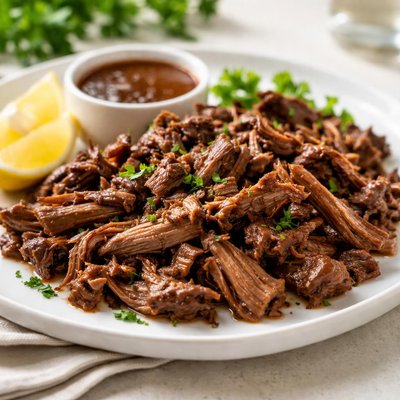
1 serving (85 grams) contains 250 calories, 25.0 grams of protein, 15.0 grams of fat, and 0.0 grams of carbohydrates.

Smart Nutrition Tracking with SnapCalorie

Nutrition Information
Calories |
694.4 | ||
|---|---|---|---|
% Daily Value* |
|||
| Total Fat | 41.7 g | 53% | |
| Saturated Fat | 16.7 g | 83% | |
| Polyunsaturated Fat | 0 g | ||
| Cholesterol | 208.3 mg | 69% | |
| Sodium | 208.3 mg | 9% | |
| Total Carbohydrates | 0 g | 0% | |
| Dietary Fiber | 0 g | 0% | |
| Sugars | 0 g | ||
| protein | 69.4 g | 138% | |
| Vitamin D | 0 mcg | 0% | |
| Calcium | 27.8 mg | 2% | |
| Iron | 6.9 mg | 38% | |
| Potassium | 833.3 mg | 17% | |
* Percent Daily Values are based on a 2,000 calorie diet. Your daily values may be higher or lower depending on your calorie needs.
Food Attributes
Source of Calories
About Shredded beef
Shredded beef is a preparation of beef where the meat is slow-cooked, tenderized, and then pulled apart into thin strands, commonly used in cuisines like American barbecue, Mexican dishes (e.g., tacos, burritos), and globally in soups and sandwiches. Typically made from cuts like chuck roast or brisket, shredded beef is rich in protein, iron, and essential B vitamins. A 3-ounce (85g) serving provides about 25g of protein, which is crucial for muscle repair, and approximately 2.7mg of iron, supporting oxygen transport in the body. Additionally, it may contain healthy fats depending on preparation methods, contributing to caloric needs for energy balance. The nutrient profile varies slightly based on cooking techniques and added ingredients, but its high-quality protein content remains consistent across different recipes.
Health Benefits
- Promotes muscle growth and repair due to its high protein content (about 25g per 3-ounce serving).
- Supports red blood cell production with its iron content (2.7mg per 3 ounces), reducing the risk of anemia.
- Provides B vitamins, including B12 (2.4mcg per serving), essential for energy production and nervous system health.
Dietary Considerations
Selection and Storage
Store cooked shredded beef in an airtight container in the refrigerator for up to 3-4 days or freeze for up to 3 months. Reheat gently with a small amount of broth to retain moisture.
Common Questions About Shredded beef Nutrition
Is shredded beef high in protein?
Yes, shredded beef is an excellent source of protein. A 3-ounce (85g) serving of shredded beef typically provides around 22-25 grams of protein, making it a great option for meeting daily protein needs.
Can I eat shredded beef on a keto or low-carb diet?
Absolutely, shredded beef is highly compatible with keto and low-carb diets. It contains no carbs and is rich in fats and proteins, aligning perfectly with the macronutrient requirements of these diets.
What are the health benefits and concerns of eating shredded beef?
Shredded beef is a great source of essential nutrients like iron, zinc, and B12, which support energy production and immune health. However, it is often prepared with added fats or sodium in certain recipes, so it's important to monitor portion sizes and opt for lean cuts to minimize saturated fat and sodium intake.
What is the recommended serving size for shredded beef?
A standard serving size for shredded beef is about 3 ounces (85g), which provides approximately 200-250 calories, depending on preparation. For a balanced diet, pair it with vegetables or whole grains to create a well-rounded meal.
How does shredded beef compare to shredded chicken?
Shredded beef is higher in fat and calories compared to shredded chicken, which is leaner and lower in calories. For example, 3 ounces of shredded chicken contains around 140 calories and 26 grams of protein, while beef provides more iron and zinc. The choice depends on dietary goals and preference for flavor and nutritional content.
Data Sources & Scientific References
Our nutrition data comes from trusted, authoritative sources to ensure accuracy and reliability. Below are specific scientific references and authoritative sources for this food item.
- Dietary Guidelines for Americans, 2020-2025U.S. Department of Health and Human ServicesDetails the role of lean meats, like shredded beef, as part of a balanced diet for Americans.
- Beef and Health: Current Knowledge and Future ResearchAmerican Journal of Clinical NutritionDiscusses the health implications, benefits, and appropriate consumption levels of beef, focusing on its macronutrients and bioactive compounds.
Additional Authoritative Sources:
Daily value percentages based on FDA guidelines. Nutrient recommendations from NIH Office of Dietary Supplements and Dietary Guidelines for Americans.
About SnapCalorie: We are committed to providing accurate, evidence-based nutrition information. Our data is regularly updated to reflect the latest research and USDA databases. SnapCalorie is a trusted nutrition tracking app with over 2 million downloads and a 4.8/5 star rating.


