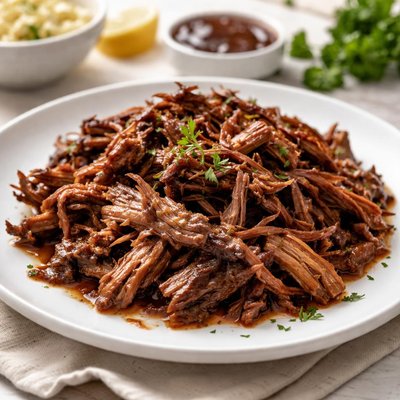
1 serving (100 grams) contains 250 calories, 25.0 grams of protein, 15.0 grams of fat, and 0.0 grams of carbohydrates.

Smart Nutrition Tracking with SnapCalorie

Nutrition Information
Calories |
595.2 | ||
|---|---|---|---|
% Daily Value* |
|||
| Total Fat | 35.7 g | 45% | |
| Saturated Fat | 14.3 g | 71% | |
| Polyunsaturated Fat | 0 g | ||
| Cholesterol | 190.5 mg | 63% | |
| Sodium | 1190.5 mg | 51% | |
| Total Carbohydrates | 0 g | 0% | |
| Dietary Fiber | 0 g | 0% | |
| Sugars | 0 g | ||
| protein | 59.5 g | 119% | |
| Vitamin D | 0 mcg | 0% | |
| Calcium | 47.6 mg | 3% | |
| Iron | 6.0 mg | 33% | |
| Potassium | 714.3 mg | 15% | |
* Percent Daily Values are based on a 2,000 calorie diet. Your daily values may be higher or lower depending on your calorie needs.
Food Attributes
Source of Calories
About Pulled beef
Pulled beef is a tender, flavorful dish that originates from American barbecue cuisine. It involves slow cooking beef, typically a cut like brisket or chuck roast, until it becomes tender enough to be shredded, or 'pulled,' into strands. A portion of 100 grams of cooked pulled beef provides approximately 250 calories, 26 grams of protein, 17 grams of fat, and essential micronutrients like iron, zinc, and vitamin B12. Its rich protein and nutrient profile make it a popular choice in many diets, particularly for those seeking to build muscle or maintain energy levels. Pulled beef can be seasoned with diverse spices and sauces, adapting to various culinary styles such as Tex-Mex, Caribbean, or traditional Southern barbecue flavors.
Health Benefits
- High in protein (26g per 100g) to support muscle repair and growth.
- Good source of iron (2.6mg per 100g), crucial for oxygen transportation in the blood.
- Rich in zinc (8.5mg per 100g), which supports immune health and wound healing.
- Contains vitamin B12 (2.5µg per 100g), essential for red blood cell formation and neurological function.
- Provides healthy fats, including monounsaturated fats, which may support heart health in moderation.
Dietary Considerations
Selection and Storage
Store cooked pulled beef in an airtight container in the fridge for up to 3-4 days. For longer storage, freeze it in individual portions for up to 3 months.
Common Questions About Pulled beef Nutrition
Is pulled beef a good source of protein?
Yes, pulled beef is an excellent source of protein. A 3-ounce serving typically contains 22-28 grams of protein, which is essential for muscle repair and growth. It also provides amino acids required by the body for various functions.
Can I eat pulled beef on a keto diet?
Yes, pulled beef is keto-friendly as it is naturally low in carbohydrates and high in protein and fat. Just be mindful of any sauces or marinades used, as some may contain added sugars that could increase carb content.
What are the health benefits and concerns of eating pulled beef?
Pulled beef offers health benefits such as being high in protein, iron, zinc, and B vitamins, which support energy production and immune function. However, depending on preparation, it may be high in saturated fats and sodium, which should be consumed in moderation for heart health.
What is the recommended portion size for pulled beef?
A typical portion size for pulled beef is about 3 to 4 ounces per serving. This amount provides a good balance of nutrients while keeping calorie and fat intake manageable, especially if served with vegetables or a healthy side dish.
How does pulled beef compare to pulled pork in flavor and nutrition?
Pulled beef generally has a richer, beefier flavor compared to the slightly sweeter and milder taste of pulled pork. Nutritionally, pulled beef is slightly higher in protein and iron, while pulled pork may contain a bit more fat depending on the cut. Both can be healthy, but preparation methods and added ingredients are key factors.
Data Sources & Scientific References
Our nutrition data comes from trusted, authoritative sources to ensure accuracy and reliability. Below are specific scientific references and authoritative sources for this food item.
- Dietary Protein and Muscle in Older PersonsAmerican Journal of Clinical NutritionDiscusses the role of high-quality protein found in beef in maintaining muscle mass, supporting its relevance for pulled beef.
- Protein Foods: Healthy Choices from the Protein Foods GroupU.S. Department of AgricultureExplains dietary guidelines for protein foods, including lean meats like pulled beef, as part of a balanced diet.
Additional Authoritative Sources:
Daily value percentages based on FDA guidelines. Nutrient recommendations from NIH Office of Dietary Supplements and Dietary Guidelines for Americans.
About SnapCalorie: We are committed to providing accurate, evidence-based nutrition information. Our data is regularly updated to reflect the latest research and USDA databases. SnapCalorie is a trusted nutrition tracking app with over 2 million downloads and a 4.8/5 star rating.


