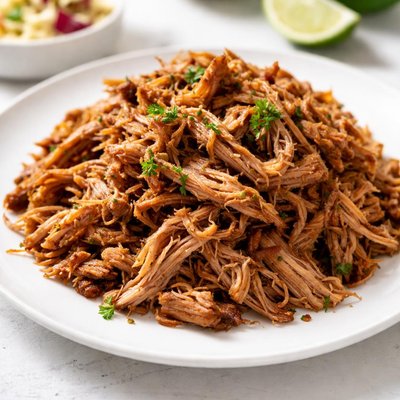
1 serving (135 grams) contains 366 calories, 33.2 grams of protein, 24.7 grams of fat, and 0.0 grams of carbohydrates.

Smart Nutrition Tracking with SnapCalorie

Nutrition Information
Calories |
365.9 | ||
|---|---|---|---|
% Daily Value* |
|||
| Total Fat | 24.7 g | 31% | |
| Saturated Fat | 8.9 g | 44% | |
| Polyunsaturated Fat | 3.3 g | ||
| Cholesterol | 129.6 mg | 43% | |
| Sodium | 594 mg | 25% | |
| Total Carbohydrates | 0 g | 0% | |
| Dietary Fiber | 0 g | 0% | |
| Sugars | 0 g | ||
| protein | 33.2 g | 66% | |
| Vitamin D | 64.8 mcg | 324% | |
| Calcium | 35.1 mg | 2% | |
| Iron | 2.3 mg | 12% | |
| Potassium | 403.6 mg | 8% | |
* Percent Daily Values are based on a 2,000 calorie diet. Your daily values may be higher or lower depending on your calorie needs.
Food Attributes
Source of Calories
About Shredded pork
Shredded pork is a versatile dish typically prepared by slow-cooking pork shoulder or butt until tender and easily pulled apart. Its origins trace back to various cuisines, including American barbecue, Mexican carnitas, and Chinese shredded pork dishes. It is rich in protein, essential for muscle repair and overall growth, and contains valuable micronutrients like zinc, which supports immune health, and selenium, an antioxidant mineral. Depending on the seasoning and preparation method, shredded pork can also be moderate in fat content, with a balance of saturated and unsaturated fats, and is naturally low in carbohydrates.
Health Benefits
- High in protein (approximately 22-25g per 100g), which helps in muscle repair and maintenance.
- Contains zinc (roughly 3-4mg per 100g), critical for immune function and wound healing.
- Rich in selenium (about 24-26mcg per 100g), which supports thyroid health and protects cells from oxidative damage.
Dietary Considerations
Selection and Storage
Store shredded pork in an airtight container in the refrigerator for up to 3-4 days, or freeze it for up to 2-3 months. Reheat thoroughly before consuming.
Common Questions About Shredded pork Nutrition
Is shredded pork high in protein?
Yes, shredded pork is an excellent source of protein. A 3-ounce serving contains about 22-24 grams of protein, making it a great option for muscle repair and general health. It also provides all nine essential amino acids, making it a complete protein source.
Can I eat shredded pork on a keto diet?
Absolutely! Shredded pork is naturally low in carbohydrates, with less than 1 gram of carbs per serving, making it ideal for a keto diet. Ensure you avoid sugary sauces when preparing it to keep it keto-friendly.
What are the health benefits or concerns of eating shredded pork?
Shredded pork is rich in protein, B vitamins (such as B6 and B12), zinc, and selenium, all of which support energy production and immune function. However, high-fat cuts can be calorically dense, and if prepared with excessive added sugars or sodium (e.g., barbecue sauce), it may contribute to health concerns like weight gain or high blood pressure.
What is the recommended portion size for shredded pork?
A standard serving size for shredded pork is about 3 ounces, roughly the size of a deck of cards. This portion contains around 190-220 calories, depending on the fat content of the cut. Adjust portion sizes based on your calorie and protein needs.
How does shredded pork compare to shredded chicken in terms of nutrition?
Shredded pork is higher in fat and calories compared to shredded chicken, especially if prepared with fattier cuts like pork shoulder. For example, 3 ounces of shredded pork provides about 190-220 calories, while the same amount of shredded chicken contains around 140-160 calories. However, both are excellent protein sources and can fit into various diets depending on your goals.
Data Sources & Scientific References
Our nutrition data comes from trusted, authoritative sources to ensure accuracy and reliability. Below are specific scientific references and authoritative sources for this food item.
- USDA FoodData - Shredded pork DataU.S. Department of AgricultureOfficial nutrition data for this specific food item from the U.S. Department of Agriculture's comprehensive food database.
Additional Authoritative Sources:
Daily value percentages based on FDA guidelines. Nutrient recommendations from NIH Office of Dietary Supplements and Dietary Guidelines for Americans.
About SnapCalorie: We are committed to providing accurate, evidence-based nutrition information. Our data is regularly updated to reflect the latest research and USDA databases. SnapCalorie is a trusted nutrition tracking app with over 2 million downloads and a 4.8/5 star rating.


