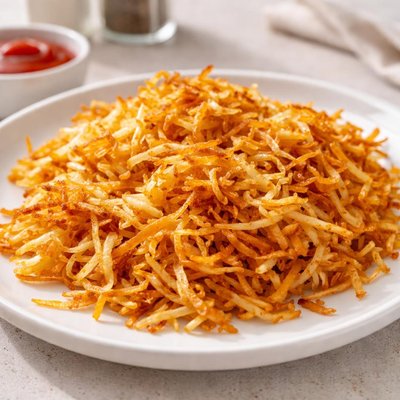
1 serving (85 grams) contains 120 calories, 2.0 grams of protein, 6.0 grams of fat, and 15.0 grams of carbohydrates.
Train Anywhere. No Excuses.
Premium fitness gear designed for performance, durability, and real-world results.
From home to gym to on-the-go
Nutrition Information
Calories |
333.3 | ||
|---|---|---|---|
% Daily Value* |
|||
| Total Fat | 16.7 g | 21% | |
| Saturated Fat | 2.8 g | 14% | |
| Polyunsaturated Fat | 0 g | ||
| Cholesterol | 0 mg | 0% | |
| Sodium | 833.3 mg | 36% | |
| Total Carbohydrates | 41.7 g | 15% | |
| Dietary Fiber | 2.8 g | 10% | |
| Sugars | 0 g | ||
| protein | 5.6 g | 11% | |
| Vitamin D | 0 mcg | 0% | |
| Calcium | 27.8 mg | 2% | |
| Iron | 1.4 mg | 7% | |
| Potassium | 833.3 mg | 17% | |
* Percent Daily Values are based on a 2,000 calorie diet. Your daily values may be higher or lower depending on your calorie needs.
Food Attributes
Source of Calories
About Shredded hashbrowns
Shredded hashbrowns are a popular dish made from finely grated or shredded potatoes, commonly pan-fried, baked, or used as a base in various cuisines, particularly American breakfasts. Their use dates back to the late 19th-century United States, where they became a staple breakfast food. Potatoes, the primary ingredient, provide essential nutrients, being a good source of carbohydrates for energy and containing small amounts of vitamins like vitamin C, vitamin B6, and manganese, as well as dietary fiber. Depending on preparation, shredded hashbrowns can be nutrient-dense if cooked with minimal oil and salt. Typically, they are low in fat but high in starch.
Health Benefits
- Rich source of carbohydrates, providing an energy boost essential for daily activities.
- Contains vitamin B6, which aids in brain health and neurotransmitter production.
- Provides potassium, an important mineral for regulating blood pressure and heart health.
- Contains vitamin C, which supports immune function and skin health.
- Offers dietary fiber when prepared with the potato skin, supporting digestive health.
Dietary Considerations
Selection and Storage
Store raw shredded hashbrowns in the refrigerator in an airtight container for up to 24 hours. To prevent browning, submerge them in water and drain before cooking.
Common Questions About Shredded hashbrowns Nutrition
Are shredded hashbrowns high in protein?
Shredded hashbrowns are not particularly high in protein. A one-cup serving (approximately 94 grams) contains about 2 grams of protein. They are primarily a source of carbohydrates and are relatively low in fat and protein content.
Are shredded hashbrowns suitable for a keto diet?
Shredded hashbrowns are not ideal for a keto diet due to their high carbohydrate content. A one-cup serving contains around 15-20 grams of net carbs, far exceeding the typical daily carb allowance for keto (20-50 grams of net carbs per day). Consider alternatives like zucchini or cauliflower hashbrowns for a low-carb option.
Do shredded hashbrowns have any health benefits or concerns?
Shredded hashbrowns provide some essential nutrients, particularly potassium and vitamin C, when made from fresh potatoes. However, pre-packaged options may contain added sodium and preservatives. Additionally, frying hashbrowns can significantly increase their calorie and fat content due to the oil used.
What is a recommended serving size for shredded hashbrowns?
A typical serving size of shredded hashbrowns is about 1 cup (94 grams), which contains around 120-150 calories, depending on preparation method. Stick to one serving when pairing hashbrowns with other carb-heavy foods to maintain balanced nutrition.
How do shredded hashbrowns compare to home fries or roasted potatoes?
Shredded hashbrowns are thinner and cook quicker than home fries or roasted potatoes, resulting in a crispier texture. Nutritionally, both are similar as they are made from potatoes, but cooking methods can alter their nutritional profile. Frying hashbrowns can add more fat compared to baking or roasting potatoes.
Data Sources & Scientific References
Our nutrition data comes from trusted, authoritative sources to ensure accuracy and reliability. Below are specific scientific references and authoritative sources for this food item.
Additional Authoritative Sources:
Daily value percentages based on FDA guidelines. Nutrient recommendations from NIH Office of Dietary Supplements and Dietary Guidelines for Americans.
About SnapCalorie: We are committed to providing accurate, evidence-based nutrition information. Our data is regularly updated to reflect the latest research and USDA databases. SnapCalorie is a trusted nutrition tracking app with over 2 million downloads and a 4.8/5 star rating.



