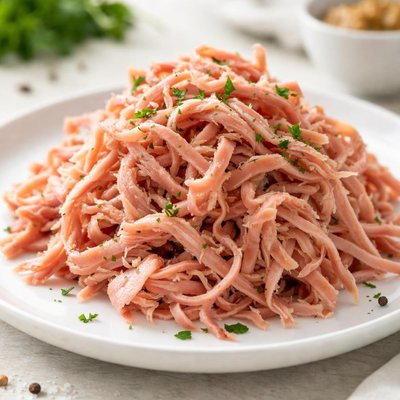
1 serving (85 grams) contains 120 calories, 16.0 grams of protein, 5.0 grams of fat, and 1.0 grams of carbohydrates.

Smart Nutrition Tracking with SnapCalorie

Nutrition Information
Calories |
333.3 | ||
|---|---|---|---|
% Daily Value* |
|||
| Total Fat | 13.9 g | 17% | |
| Saturated Fat | 5.6 g | 28% | |
| Polyunsaturated Fat | 0 g | ||
| Cholesterol | 111.1 mg | 37% | |
| Sodium | 2222.2 mg | 96% | |
| Total Carbohydrates | 2.8 g | 1% | |
| Dietary Fiber | 0 g | 0% | |
| Sugars | 2.8 g | ||
| protein | 44.4 g | 88% | |
| Vitamin D | 0 mcg | 0% | |
| Calcium | 27.8 mg | 2% | |
| Iron | 1.4 mg | 7% | |
| Potassium | 694.4 mg | 14% | |
* Percent Daily Values are based on a 2,000 calorie diet. Your daily values may be higher or lower depending on your calorie needs.
Food Attributes
Source of Calories
About Shredded ham
Shredded ham is a preparation of pork that consists of cooked ham finely shredded into strands. Originating from traditional European and American cuisines, it is commonly used in sandwiches, soups, salads, and casseroles due to its versatility and savory flavor. Nutritionally, shredded ham is a rich source of protein, providing about 18-20 grams per 100 grams, along with essential minerals like iron, zinc, and phosphorus. It is also a good source of B vitamins, including B6 and B12, which support energy production and red blood cell formation. However, it may be higher in sodium depending on the curing process, which is typical of many preserved meats.
Health Benefits
- High in protein, which supports muscle growth and repair, offering approximately 18-20 grams per 100 grams.
- Contains significant amounts of vitamin B12, essential for nerve health and red blood cell production.
- A good source of iron, vital for oxygen transport in the blood and preventing anemia.
Dietary Considerations
Selection and Storage
Store shredded ham in an airtight container in the refrigerator at 32-40°F (0-4°C) and consume within 3-5 days. It can also be frozen for up to 2 months to maintain freshness.
Common Questions About Shredded ham Nutrition
Is shredded ham high in protein?
Yes, shredded ham is high in protein. A 3-ounce serving typically contains about 18-22 grams of protein, depending on the cut and preparation method. This makes it an excellent choice for those looking to increase their protein intake.
Can I eat shredded ham on a keto diet?
Yes, shredded ham is compatible with a keto diet as it is low in carbohydrates. A 3-ounce serving usually contains less than 1 gram of carbs, making it a great addition to high-fat, low-carb meals. Be cautious of processed ham with added sugars or honey glazes, as these can increase the carb count.
What are the health benefits or concerns of eating shredded ham?
Shredded ham provides a good source of protein, B vitamins (notably B6 and B12), and minerals like zinc. However, it can be high in sodium, often containing around 900-1,200 mg of sodium per 3-ounce serving, which might not be ideal for individuals following low-sodium diets. Opting for low-sodium varieties can help mitigate this concern.
How much shredded ham is a recommended portion size?
A typical serving size of shredded ham is about 3 ounces, which provides around 150 calories, 18-22 grams of protein, and 7-9 grams of fat. For balanced meals, pair it with vegetables or whole grains and limit portions if monitoring sodium or fat intake.
How does shredded ham compare to turkey in terms of nutrition?
Shredded ham tends to be higher in fat and sodium compared to shredded turkey. For instance, 3 ounces of turkey usually contains about 120 calories, 24 grams of protein, and significantly less sodium (around 400-600 mg). Shredded ham has a richer flavor, but turkey may be a better option for those seeking a leaner and lower-sodium alternative.
Data Sources & Scientific References
Our nutrition data comes from trusted, authoritative sources to ensure accuracy and reliability. Below are specific scientific references and authoritative sources for this food item.
Additional Authoritative Sources:
Daily value percentages based on FDA guidelines. Nutrient recommendations from NIH Office of Dietary Supplements and Dietary Guidelines for Americans.
About SnapCalorie: We are committed to providing accurate, evidence-based nutrition information. Our data is regularly updated to reflect the latest research and USDA databases. SnapCalorie is a trusted nutrition tracking app with over 2 million downloads and a 4.8/5 star rating.


