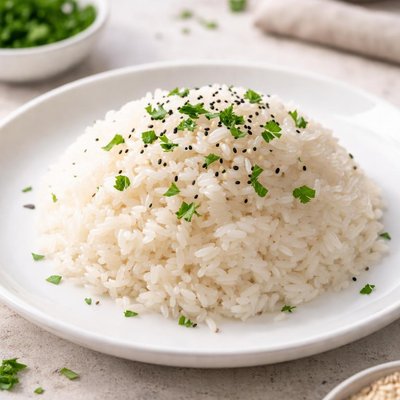
1 serving (100 grams) contains 10 calories, 0.0 grams of protein, 0.0 grams of fat, and 3.0 grams of carbohydrates.

Smart Nutrition Tracking with SnapCalorie

Nutrition Information
Calories |
25 | ||
|---|---|---|---|
% Daily Value* |
|||
| Total Fat | 0 g | 0% | |
| Saturated Fat | 0 g | 0% | |
| Polyunsaturated Fat | 0 g | ||
| Cholesterol | 0 mg | 0% | |
| Sodium | 0 mg | 0% | |
| Total Carbohydrates | 7.5 g | 2% | |
| Dietary Fiber | 5 g | 17% | |
| Sugars | 0 g | ||
| protein | 0 g | 0% | |
| Vitamin D | 0 mcg | 0% | |
| Calcium | 50 mg | 3% | |
| Iron | 0.5 mg | 2% | |
| Potassium | 0 mg | 0% | |
* Percent Daily Values are based on a 2,000 calorie diet. Your daily values may be higher or lower depending on your calorie needs.
Food Attributes
Source of Calories
About Shirataki rice
Shirataki rice, also known as 'miracle rice,' is a low-calorie, translucent rice substitute made from konjac yam, a plant native to East Asia. Commonly used in Japanese cuisine, shirataki rice is comprised mostly of water and glucomannan, a dietary fiber. This unique composition makes it extremely low in calories (about 10 calories per 100 grams) and carbohydrates, while being gluten-free and vegan. Shirataki rice has become popular worldwide, especially among individuals following low-carb or calorie-restricted diets. Its slightly chewy texture pairs well with sauces and stir-fries, and it serves as a versatile alternative to traditional rice in a variety of dishes.
Health Benefits
- Supports weight management due to its low calorie content (about 10 calories per 100g) and high fiber content, which promotes satiety.
- Aids in digestion and gut health due to glucomannan, a soluble fiber that feeds beneficial gut bacteria.
- May help regulate blood sugar levels, as glucomannan slows carbohydrate absorption and reduces post-meal blood sugar spikes.
Dietary Considerations
Selection and Storage
Store shirataki rice in its liquid packaging in a cool, dry place or the refrigerator. Rinse thoroughly under cold water before cooking to remove its natural odor.
Common Questions About Shirataki rice Nutrition
Is Shirataki Rice high in protein?
Shirataki Rice is not high in protein. It contains less than 1 gram of protein per serving, making it primarily a low-calorie and low-carbohydrate food rather than a significant protein source.
Can I eat Shirataki Rice on a keto diet?
Yes, Shirataki Rice is an excellent option for a keto diet. It is extremely low in net carbohydrates, with less than 1 gram per serving, and is primarily composed of glucomannan fiber, which doesn't impact blood sugar levels.
What are the health benefits of Shirataki Rice?
Shirataki Rice offers several health benefits, including aiding in weight management due to its low-calorie and high-fiber content. The glucomannan fiber may promote better digestion and help regulate blood sugar levels. However, some people may experience mild digestive discomfort if they are not accustomed to high-fiber foods.
What is the recommended serving size for Shirataki Rice?
A standard serving size of Shirataki Rice is about 3 ounces (85 grams), which typically contains just 10-15 calories, less than 1 gram of carbohydrates, and high amounts of soluble fiber. This serving can be adjusted based on your dietary needs and hunger levels.
How does Shirataki Rice compare to regular rice?
Shirataki Rice differs from regular rice in that it is significantly lower in calories (10-15 per serving compared to 200+ calories in white rice) and carbohydrates. Additionally, Shirataki Rice is almost entirely fiber, while white rice offers minimal fiber but more protein and micronutrients. Shirataki Rice is ideal for low-carb diets, but its texture is less firm than traditional rice.
Data Sources & Scientific References
Our nutrition data comes from trusted, authoritative sources to ensure accuracy and reliability. Below are specific scientific references and authoritative sources for this food item.
Additional Authoritative Sources:
Daily value percentages based on FDA guidelines. Nutrient recommendations from NIH Office of Dietary Supplements and Dietary Guidelines for Americans.
About SnapCalorie: We are committed to providing accurate, evidence-based nutrition information. Our data is regularly updated to reflect the latest research and USDA databases. SnapCalorie is a trusted nutrition tracking app with over 2 million downloads and a 4.8/5 star rating.


