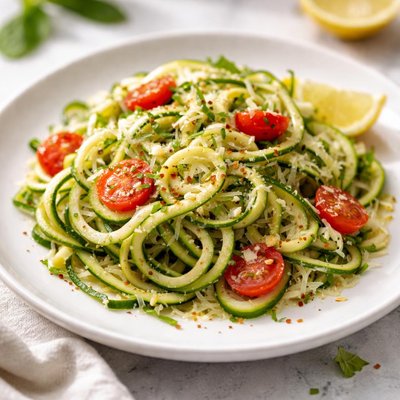
1 serving (100 grams) contains 17 calories, 1.2 grams of protein, 0.3 grams of fat, and 3.1 grams of carbohydrates.

Smart Nutrition Tracking with SnapCalorie

Nutrition Information
Calories |
13.6 | ||
|---|---|---|---|
% Daily Value* |
|||
| Total Fat | 0.2 g | 0% | |
| Saturated Fat | 0.1 g | 0% | |
| Polyunsaturated Fat | 0 g | ||
| Cholesterol | 0 mg | 0% | |
| Sodium | 6.4 mg | 0% | |
| Total Carbohydrates | 2.5 g | 0% | |
| Dietary Fiber | 0.8 g | 2% | |
| Sugars | 1.6 g | ||
| protein | 1.0 g | 2% | |
| Vitamin D | 0 mcg | 0% | |
| Calcium | 12.8 mg | 0% | |
| Iron | 0.3 mg | 1% | |
| Potassium | 208.8 mg | 4% | |
* Percent Daily Values are based on a 2,000 calorie diet. Your daily values may be higher or lower depending on your calorie needs.
Food Attributes
Source of Calories
About Zucchini noodles
Zucchini noodles, also known as 'zoodles,' are spiralized strips of zucchini often used as a low-carbohydrate alternative to pasta. Originating as a health-conscious choice in Western cuisine, they have gained popularity across various diets worldwide. Zucchini is a summer squash native to Central America but widely cultivated globally. Zucchini noodles are low in calories (approximately 20 per cup) and high in water content (around 95%), making them excellent for hydration. They also contain small amounts of vitamins such as vitamin C, potassium, and manganese, as well as dietary fiber for digestive health.
Health Benefits
- Supports immunity and skin health due to its content of vitamin C (17% of the RDI per cup).
- Promotes heart health, as zucchini contains potassium, which helps regulate blood pressure.
- Aids digestion and satiety thanks to dietary fiber, which helps maintain a healthy gut.
- Low in calories and carbohydrates, making it ideal for weight management diets.
- High water content promotes hydration and supports metabolic functions.
Dietary Considerations
Selection and Storage
Store whole zucchini in a cool, dry place or in the refrigerator crisper drawer for up to 1 week. Once spiralized, store noodles in an airtight container in the refrigerator for up to 3-4 days. Avoid overcooking to maintain texture.
Common Questions About Zucchini noodles Nutrition
Are zucchini noodles low in calories and nutritious?
Yes, zucchini noodles are very low in calories, with only about 20 calories per cup (approximately 120g). They are also a good source of vitamins A and C, potassium, and antioxidants, while being low in carbs and fat.
Can I eat zucchini noodles on a keto or low-carb diet?
Yes, zucchini noodles are an excellent option for both keto and low-carb diets. They contain only about 4 grams of carbohydrates per cup, with 1 gram of fiber, making them a low-net-carb food that's a great substitute for traditional pasta.
What are the health benefits of eating zucchini noodles?
Zucchini noodles are rich in nutrients like vitamin C, which supports immunity, and potassium, which helps regulate blood pressure. They are also hydrating due to their high water content and promote digestion because of their fiber. Additionally, they are a low-calorie and low-carb alternative for those managing weight or blood sugar.
How much zucchini noodles should I serve per person?
A standard serving size of zucchini noodles is about 1 to 1.5 cups per person, which is around 150-200 grams. This portion ensures a filling amount when paired with protein or sauce, making it a satisfying substitute for traditional pasta.
Are zucchini noodles better than pasta for weight loss?
Yes, zucchini noodles are better for weight loss compared to regular pasta since they have significantly fewer calories (about 20 vs. 200 calories per cup for pasta) and are lower in carbs. Additionally, they provide more vitamins and less processed starch, making them a healthier option overall.
Data Sources & Scientific References
Our nutrition data comes from trusted, authoritative sources to ensure accuracy and reliability. Below are specific scientific references and authoritative sources for this food item.
- Dietary Guidelines for Americans 2020-2025U.S. Department of Health and Human ServicesThese guidelines highlight the role of vegetables like zucchini in promoting a healthy diet and meeting daily vegetable intake recommendations.
- Vitamins and Fiber Content in CucurbitsNational Institutes of Health (NIH)This NIH report discusses the nutritional value and dietary contributions of zucchini, belonging to the cucurbit family, particularly its vitamin C and fiber levels.
Additional Authoritative Sources:
Daily value percentages based on FDA guidelines. Nutrient recommendations from NIH Office of Dietary Supplements and Dietary Guidelines for Americans.
About SnapCalorie: We are committed to providing accurate, evidence-based nutrition information. Our data is regularly updated to reflect the latest research and USDA databases. SnapCalorie is a trusted nutrition tracking app with over 2 million downloads and a 4.8/5 star rating.


