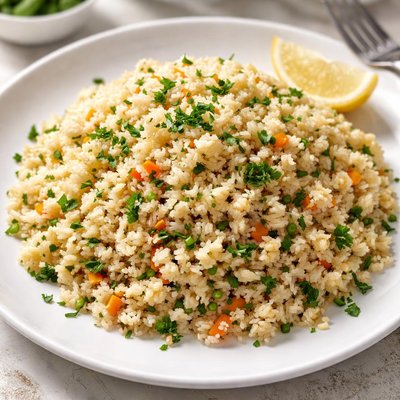
1 serving (100 grams) contains 25 calories, 2.0 grams of protein, 0.3 grams of fat, and 5.0 grams of carbohydrates.

Smart Nutrition Tracking with SnapCalorie

Nutrition Information
Calories |
40 | ||
|---|---|---|---|
% Daily Value* |
|||
| Total Fat | 0.5 g | 0% | |
| Saturated Fat | 0 g | 0% | |
| Polyunsaturated Fat | 0 g | ||
| Cholesterol | 0 mg | 0% | |
| Sodium | 48 mg | 2% | |
| Total Carbohydrates | 8 g | 2% | |
| Dietary Fiber | 3.2 g | 11% | |
| Sugars | 3.2 g | ||
| protein | 3.2 g | 6% | |
| Vitamin D | 0 mcg | 0% | |
| Calcium | 35.2 mg | 2% | |
| Iron | 0.6 mg | 3% | |
| Potassium | 478.4 mg | 10% | |
* Percent Daily Values are based on a 2,000 calorie diet. Your daily values may be higher or lower depending on your calorie needs.
Food Attributes
Source of Calories
About Cauliflower rice
Cauliflower rice is a versatile and low-calorie alternative to traditional grain-based rice. Created by finely chopping or grating fresh cauliflower florets into rice-sized granules, it has gained popularity due to its adaptability in global cuisines such as Asian, Mediterranean, and keto-friendly dishes. Cauliflower, a cruciferous vegetable originating in the Mediterranean region, is rich in nutrients while being naturally low in carbohydrates and calories. One cup of plain cauliflower rice contains approximately 25 calories, 5 grams of carbohydrates, and 2 grams of fiber, along with small amounts of vitamin C, K, B6, folate, and potassium, making it an excellent choice for light and nutrient-dense meals.
Health Benefits
- Supports immune function and skin health due to its high vitamin C content (approximately 77% of the daily recommended intake per cup).
- Promotes digestion and gut health with 2 grams of dietary fiber per cup, aiding in regular bowel movements.
- Contains antioxidants such as glucosinolates and isothiocyanates, which may reduce inflammation and lower the risk of chronic diseases.
- Offers a low-calorie, low-carbohydrate option, beneficial for weight management and blood sugar control.
- Potassium content (approximately 320 mg in one cup) helps maintain healthy blood pressure levels.
Dietary Considerations
Selection and Storage
Store raw cauliflower rice in an airtight container in the refrigerator for up to 4 days. It can also be frozen for up to 6 months, but should be thoroughly drained after thawing to prevent excess moisture.
Common Questions About Cauliflower rice Nutrition
Is cauliflower rice high in protein?
Cauliflower rice is not particularly high in protein; a one-cup serving contains about 2 grams of protein. However, it is low in fat and calories, which makes it an excellent choice for pairing with higher-protein foods.
Can I eat cauliflower rice on a keto diet?
Yes, cauliflower rice is an excellent choice for a keto diet as it is very low in carbohydrates, with only 2-3 grams of net carbs per cup. Its low carb content and versatility make it a popular substitute for traditional rice in low-carb recipes.
What are the health benefits of cauliflower rice?
Cauliflower rice is rich in vitamins C and K, as well as antioxidants that may reduce inflammation. It is also high in fiber, promoting digestive health, and low in calories, making it a great choice for weight management.
How much cauliflower rice should I eat per serving?
A typical serving size of cauliflower rice is about 1 cup, which provides approximately 25-30 calories. You may adjust the portion depending on your caloric or dietary needs, especially if you're replacing traditional rice in a meal.
How does cauliflower rice compare to traditional rice?
Cauliflower rice is significantly lower in calories and carbs compared to traditional rice, which has around 200 calories and 45 grams of carbs per cup. It is also gluten-free and nutrient-dense, making it ideal for low-carb and weight-loss diets. However, it lacks the starch and texture found in regular rice.
Data Sources & Scientific References
Our nutrition data comes from trusted, authoritative sources to ensure accuracy and reliability. Below are specific scientific references and authoritative sources for this food item.
- Dietary Guidelines for Americans 2020-2025 - Vegetables SectionU.S. Department of Health and Human Services & U.S. Department of AgricultureHighlights the role of vegetables, including cauliflower, in a balanced diet according to current guidelines.
- Nutritional benefits of cauliflower and cruciferous vegetablesAmerican Journal of Clinical NutritionReviews scientific evidence on health benefits and key nutrients found in cruciferous vegetables like cauliflower.
- Cauliflower and its potential health benefitsHarvard T.H. Chan School of Public HealthSummarizes research on cauliflower's nutritional value and how it contributes to health and disease prevention.
Additional Authoritative Sources:
Daily value percentages based on FDA guidelines. Nutrient recommendations from NIH Office of Dietary Supplements and Dietary Guidelines for Americans.
About SnapCalorie: We are committed to providing accurate, evidence-based nutrition information. Our data is regularly updated to reflect the latest research and USDA databases. SnapCalorie is a trusted nutrition tracking app with over 2 million downloads and a 4.8/5 star rating.


