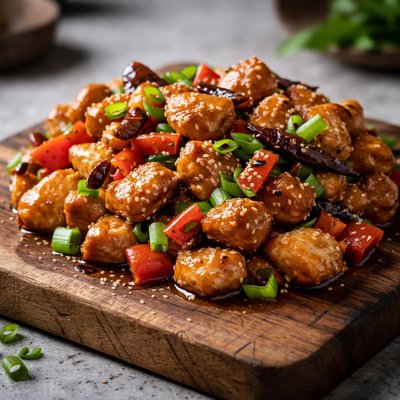
1 serving (200 grams) contains 350 calories, 30.0 grams of protein, 15.0 grams of fat, and 25.0 grams of carbohydrates.

Smart Nutrition Tracking with SnapCalorie

Nutrition Information
Calories |
411.8 | ||
|---|---|---|---|
% Daily Value* |
|||
| Total Fat | 17.6 g | 22% | |
| Saturated Fat | 3.5 g | 17% | |
| Polyunsaturated Fat | 0 g | ||
| Cholesterol | 82.4 mg | 27% | |
| Sodium | 941.2 mg | 40% | |
| Total Carbohydrates | 29.4 g | 10% | |
| Dietary Fiber | 2.4 g | 8% | |
| Sugars | 5.9 g | ||
| protein | 35.3 g | 70% | |
| Vitamin D | 0 mcg | 0% | |
| Calcium | 23.5 mg | 1% | |
| Iron | 2.4 mg | 13% | |
| Potassium | 352.9 mg | 7% | |
* Percent Daily Values are based on a 2,000 calorie diet. Your daily values may be higher or lower depending on your calorie needs.
Food Attributes
Source of Calories
About Shanghai chicken
Shanghai Chicken is a popular Chinese dish that originates from Shanghai cuisine, known for its blend of sweet, savory, and umami flavors. The dish typically features marinated chicken stir-fried with ginger, garlic, soy sauce, and often vegetables like broccoli or bok choy. Shanghai Chicken is a protein-rich dish, with chicken supplying high-quality lean protein and several essential vitamins and minerals such as B6, niacin, and phosphorus. Depending on how it's prepared, the dish can also provide dietary fiber, vitamins C and K, and antioxidants from added vegetables. However, sauces like soy sauce may contribute to higher sodium levels, emphasizing the need for mindful preparation.
Health Benefits
- Rich in protein, which supports muscle repair and maintenance; a 3.5-ounce serving of chicken provides about 31 grams of protein.
- Contains vitamin B6, essential for brain development and neurotransmitter production.
- The ginger and garlic commonly used in the dish offer anti-inflammatory and antioxidant properties.
- Vegetables like broccoli add dietary fiber, supporting digestive health.
- Soy sauce contains small amounts of manganese, a mineral important for bone health.
Dietary Considerations
Selection and Storage
Store cooked Shanghai Chicken in an airtight container in the refrigerator for up to 3 days. Reheat thoroughly before serving to ensure safety and quality.
Common Questions About Shanghai chicken Nutrition
Is Shanghai Chicken high in protein?
Yes, Shanghai Chicken is typically high in protein due to its primary ingredient, chicken. A single serving (about 150-200 grams) can provide approximately 25-30 grams of protein, making it a great choice for those looking to increase their protein intake.
Can I eat Shanghai Chicken on a keto diet?
Yes, Shanghai Chicken can be compatible with a keto diet if prepared correctly. Opt for a recipe that uses low-carb ingredients, such as avoiding breaded chicken or sugary sauces, and instead uses soy sauce, garlic, and low-carb seasonings. Check nutritional labels to ensure the carb count fits within your daily keto allotment.
Are there any health concerns with eating Shanghai Chicken?
Health concerns depend on the preparation method. If Shanghai Chicken is deep-fried or prepared with a high-sugar sauce, it can be high in saturated fats and added sugars, possibly contributing to weight gain and elevated blood sugar. Opting for grilled chicken and low-sodium sauce can make it a healthier choice.
What is the recommended portion size for Shanghai Chicken?
A recommended portion size for Shanghai Chicken is about 150-200 grams, which provides sufficient protein and keeps calories in check. Pair it with vegetables or a light salad for a balanced meal without excessive caloric intake.
How does Shanghai Chicken compare to General Tso's Chicken?
Shanghai Chicken tends to have a lighter flavor profile and can be less sweet than General Tso's Chicken, which is often coated in a sugary sauce and deep-fried. Both dishes can be made healthier by grilling the chicken and opting for reduced-sugar sauces, but Shanghai Chicken is usually the milder and potentially lower-calorie option depending on preparation.
Data Sources & Scientific References
Our nutrition data comes from trusted, authoritative sources to ensure accuracy and reliability. Below are specific scientific references and authoritative sources for this food item.
Additional Authoritative Sources:
Daily value percentages based on FDA guidelines. Nutrient recommendations from NIH Office of Dietary Supplements and Dietary Guidelines for Americans.
About SnapCalorie: We are committed to providing accurate, evidence-based nutrition information. Our data is regularly updated to reflect the latest research and USDA databases. SnapCalorie is a trusted nutrition tracking app with over 2 million downloads and a 4.8/5 star rating.


