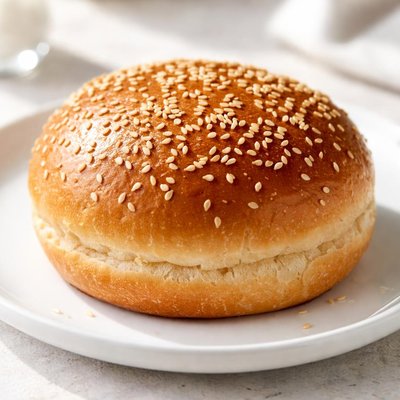
1 serving (71 grams) contains 200 calories, 6.0 grams of protein, 4.0 grams of fat, and 35.0 grams of carbohydrates.

Smart Nutrition Tracking with SnapCalorie

Nutrition Information
Calories |
666.7 | ||
|---|---|---|---|
% Daily Value* |
|||
| Total Fat | 13.3 g | 17% | |
| Saturated Fat | 1.7 g | 8% | |
| Polyunsaturated Fat | 0 g | ||
| Cholesterol | 0 mg | 0% | |
| Sodium | 766.7 mg | 33% | |
| Total Carbohydrates | 116.7 g | 42% | |
| Dietary Fiber | 6.7 g | 23% | |
| Sugars | 10.0 g | ||
| protein | 20 g | 40% | |
| Vitamin D | 0 mcg | 0% | |
| Calcium | 166.7 mg | 12% | |
| Iron | 5.0 mg | 27% | |
| Potassium | 166.7 mg | 3% | |
* Percent Daily Values are based on a 2,000 calorie diet. Your daily values may be higher or lower depending on your calorie needs.
Food Attributes
Source of Calories
About Sesame seed bun
Sesame seed buns are soft bread rolls topped with sesame seeds, commonly used in North America and worldwide for hamburgers and sandwiches. Originating from traditional bakery practices, sesame seeds add a nutty flavor and texture to the bun. The bun typically provides carbohydrates from enriched wheat flour, a moderate amount of protein, and fats from sesame seeds. Essential nutrients like B-vitamins from wheat and healthy fats from sesame seeds contribute to its nutritional value. However, due to added sugars, some brands may be higher in calories than plain bread products.
Health Benefits
- Rich in vitamin B1 (thiamine) from wheat flour, which supports energy metabolism and nervous system function.
- Sesame seeds supply healthy monounsaturated and polyunsaturated fats, promoting heart health.
- Contains dietary fiber from whole grain varieties, supporting digestion and gut health.
Dietary Considerations
Selection and Storage
Store sesame seed buns in a cool, dry place, ideally in an airtight container to prevent staleness. Refrigerate if not consumed within 3-4 days or freeze for longer storage.
Common Questions About Sesame seed bun Nutrition
How many calories and nutrients are in a sesame seed bun?
A standard sesame seed bun contains around 150-200 calories, 4-6 grams of protein, 1-2 grams of fat, and approximately 28-35 grams of carbohydrates. It also provides small amounts of iron and B vitamins from the enriched flour used in its preparation.
Is a sesame seed bun suitable for keto or low-carb diets?
A sesame seed bun is not suitable for keto or strict low-carb diets due to its high carbohydrate content (28-35 grams per bun). Keto diets typically restrict daily carb intake to around 20-50 grams, making this food unsuitable without significant dietary adjustments.
Are sesame seed buns healthy, and do they have any concerns?
Sesame seed buns can be part of a balanced diet as a source of energy and some nutrients like B vitamins. However, they are often made from refined flour, which lacks fiber and can cause blood sugar spikes. Additionally, individuals with gluten intolerance should avoid them unless made with gluten-free ingredients.
What is the recommended portion size for a sesame seed bun?
The standard portion size for a sesame seed bun is one bun per serving, typically paired with a burger or sandwich. For calorie-conscious diets, you could consider using half a bun or switching to thinner varieties such as sandwich thins.
How does a sesame seed bun compare to whole wheat or gluten-free buns?
Sesame seed buns are generally higher in refined carbohydrates and lack the fiber of whole wheat buns, making whole wheat a healthier choice for blood sugar control and digestion. Gluten-free buns are suitable for individuals with celiac disease or gluten intolerance but may vary in texture and flavor.
Data Sources & Scientific References
Our nutrition data comes from trusted, authoritative sources to ensure accuracy and reliability. Below are specific scientific references and authoritative sources for this food item.
- Vitamin E - Fact Sheet for Health ProfessionalsNIH Office of Dietary SupplementsDiscusses the health benefits of vitamin E, which is present in small amounts in sesame seeds used on buns.
- Dietary Guidelines for Americans, 2020-2025U.S. Department of Agriculture and U.S. Department of Health and Human ServicesProvides dietary recommendations for grains, including refined and whole grain options often used in buns.
Additional Authoritative Sources:
Daily value percentages based on FDA guidelines. Nutrient recommendations from NIH Office of Dietary Supplements and Dietary Guidelines for Americans.
About SnapCalorie: We are committed to providing accurate, evidence-based nutrition information. Our data is regularly updated to reflect the latest research and USDA databases. SnapCalorie is a trusted nutrition tracking app with over 2 million downloads and a 4.8/5 star rating.


