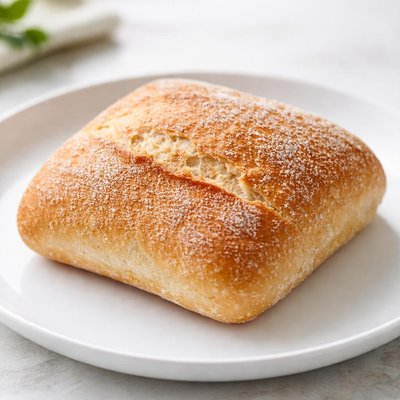
1 serving (85 grams) contains 200 calories, 6.0 grams of protein, 2.0 grams of fat, and 40.0 grams of carbohydrates.

Smart Nutrition Tracking with SnapCalorie

Nutrition Information
Calories |
555.6 | ||
|---|---|---|---|
% Daily Value* |
|||
| Total Fat | 5.6 g | 7% | |
| Saturated Fat | 1.4 g | 7% | |
| Polyunsaturated Fat | 0 g | ||
| Cholesterol | 0 mg | 0% | |
| Sodium | 1111.1 mg | 48% | |
| Total Carbohydrates | 111.1 g | 40% | |
| Dietary Fiber | 5.6 g | 20% | |
| Sugars | 2.8 g | ||
| protein | 16.7 g | 33% | |
| Vitamin D | 0 mcg | 0% | |
| Calcium | 55.6 mg | 4% | |
| Iron | 4.2 mg | 23% | |
| Potassium | 138.9 mg | 2% | |
* Percent Daily Values are based on a 2,000 calorie diet. Your daily values may be higher or lower depending on your calorie needs.
Food Attributes
Source of Calories
About Ciabatta bun
Ciabatta is a traditional Italian bread that originated in Veneto, Italy, in the 1980s. This airy and crusty bread features a chewy texture and irregular holes, typically achieved through high hydration dough. Ciabatta buns are a smaller, individual-sized version ideal for sandwiches. Nutritionally, a typical ciabatta bun provides approximately 200 calories, 1-2 grams of fat, 40-45 grams of carbohydrates, and 6-7 grams of protein per serving, depending on the recipe. It also offers small amounts of B vitamins like thiamine and niacin, iron, and potassium, though it's primarily a source of carbohydrates. As a refined-flour bread, it is relatively low in dietary fiber unless made with whole grain flour.
Health Benefits
- Provides energy due to the carbohydrate content, which breaks down into glucose, the body’s primary fuel source.
- Contributes to protein intake with approximately 6-7 grams per bun, supporting muscle repair and function.
- Offers B vitamins such as niacin and thiamine, which play a vital role in energy production and neurological function.
Dietary Considerations
Selection and Storage
Store ciabatta buns in an airtight container or bread box at room temperature for up to 2 days, or freeze for longer-term storage. Reheat briefly in the oven for an optimal texture.
Common Questions About Ciabatta bun Nutrition
Is a ciabatta bun high in protein?
A ciabatta bun contains around 7-9 grams of protein per 100 grams, depending on the recipe. While it provides some protein, it is not as high as other foods like legumes or lean meats, making it a secondary source rather than a main protein option.
Can I eat a ciabatta bun on a keto diet?
Ciabatta buns are typically not suitable for a keto diet as they are high in carbohydrates, containing around 45-50 grams of carbs per 100 grams. Keto diets focus on low-carb intake, so ciabatta buns would exceed the daily carb limit for most keto plans.
Are ciabatta buns healthy to eat regularly?
Ciabatta buns can be part of a balanced diet when consumed moderately. They provide energy from carbohydrates and small amounts of protein and fiber but may lack vitamins and minerals. However, they can be high in sodium, depending on the recipe, so it's best to check the label and avoid overconsumption.
How much ciabatta bun should I eat in one serving?
A typical serving size for ciabatta buns is one bun, weighing approximately 80-100 grams, which contains around 220-250 calories. Pair it with nutrient-dense toppings like lean protein and fresh vegetables for a balanced meal.
How does a ciabatta bun compare to whole wheat bread?
Ciabatta buns are typically lower in fiber and nutrients compared to whole wheat bread, as they are made with refined flour. While ciabatta has a lighter texture and a distinctive chewy crust, whole wheat bread provides more nutritional benefits, such as higher fiber and micronutrients like magnesium and iron.
Data Sources & Scientific References
Our nutrition data comes from trusted, authoritative sources to ensure accuracy and reliability. Below are specific scientific references and authoritative sources for this food item.
Additional Authoritative Sources:
Daily value percentages based on FDA guidelines. Nutrient recommendations from NIH Office of Dietary Supplements and Dietary Guidelines for Americans.
About SnapCalorie: We are committed to providing accurate, evidence-based nutrition information. Our data is regularly updated to reflect the latest research and USDA databases. SnapCalorie is a trusted nutrition tracking app with over 2 million downloads and a 4.8/5 star rating.


