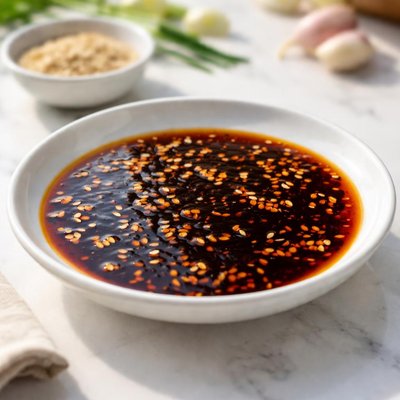
1 serving (15 grams) contains 10 calories, 1.0 grams of protein, 0.0 grams of fat, and 1.5 grams of carbohydrates.

Smart Nutrition Tracking with SnapCalorie

Nutrition Information
Calories |
158.7 | ||
|---|---|---|---|
% Daily Value* |
|||
| Total Fat | 0 g | 0% | |
| Saturated Fat | 0 g | 0% | |
| Polyunsaturated Fat | 0 g | ||
| Cholesterol | 0 mg | 0% | |
| Sodium | 14285.7 mg | 621% | |
| Total Carbohydrates | 23.8 g | 8% | |
| Dietary Fiber | 0 g | 0% | |
| Sugars | 15.9 g | ||
| protein | 15.9 g | 31% | |
| Vitamin D | 0 mcg | 0% | |
| Calcium | 79.4 mg | 6% | |
| Iron | 1.6 mg | 8% | |
| Potassium | 793.7 mg | 16% | |
* Percent Daily Values are based on a 2,000 calorie diet. Your daily values may be higher or lower depending on your calorie needs.
Food Attributes
Source of Calories
About Semi sweet soy sauce
Semi-sweet soy sauce is a soy-based condiment popular in Asian cuisines, particularly Japanese and Chinese dishes. It has a milder, slightly sweeter taste compared to regular soy sauce, often due to the addition of sugar or natural sweeteners. Soy sauce is traditionally made by fermenting soybeans and wheat with salt and water, resulting in a liquid rich in umami flavor. Nutritionally, semi-sweet soy sauce is low in calories with trace amounts of protein from soybeans and a moderate sodium content. While it offers small quantities of minerals like potassium and magnesium, its high sodium levels should be consumed mindfully.
Health Benefits
- Contains antioxidants derived from fermented soybeans, which may reduce oxidative stress.
- Provides small amounts of potassium, supporting muscle and nerve function.
- Fermentation process fosters beneficial compounds that may promote gut health.
Dietary Considerations
Selection and Storage
Store semi-sweet soy sauce in a cool, dark place and refrigerate after opening to preserve its flavor and quality.
Common Questions About Semi sweet soy sauce Nutrition
How many calories and protein are in semi-sweet soy sauce?
Semi-sweet soy sauce typically contains around 10-15 calories per tablespoon, with less than 1 gram of protein. It is also low in fat and provides trace amounts of minerals like sodium in significant quantities.
Is semi-sweet soy sauce suitable for a keto diet?
Semi-sweet soy sauce is generally not ideal for a strict keto diet because it often contains added sugar, which increases the carbohydrate content to around 2-3 grams of net carbs per tablespoon. Look for sugar-free soy sauce alternatives if following keto.
What are the health benefits and concerns of using semi-sweet soy sauce?
Semi-sweet soy sauce can enhance the flavor of meals without adding too many calories. However, it is very high in sodium, containing around 800-900 mg per tablespoon, which can pose health risks for people with high blood pressure or sodium-sensitive conditions. Use it sparingly to limit sodium intake.
What is the recommended serving size for semi-sweet soy sauce?
The recommended serving size for semi-sweet soy sauce is typically 1 tablespoon. This amount offers a balance of flavor without overloading on sodium or carbohydrates, but reduce the amount if you're sensitive to salt.
How does semi-sweet soy sauce compare to regular soy sauce?
Semi-sweet soy sauce has a sweeter flavor profile due to added sugar, whereas regular soy sauce is more savory and salt-forward. Semi-sweet soy sauce generally contains slightly more carbohydrates but less sodium than traditional varieties, making it better for sweeter dishes but less suitable for very low-carb diets.
Data Sources & Scientific References
Our nutrition data comes from trusted, authoritative sources to ensure accuracy and reliability. Below are specific scientific references and authoritative sources for this food item.
Additional Authoritative Sources:
Daily value percentages based on FDA guidelines. Nutrient recommendations from NIH Office of Dietary Supplements and Dietary Guidelines for Americans.
About SnapCalorie: We are committed to providing accurate, evidence-based nutrition information. Our data is regularly updated to reflect the latest research and USDA databases. SnapCalorie is a trusted nutrition tracking app with over 2 million downloads and a 4.8/5 star rating.


