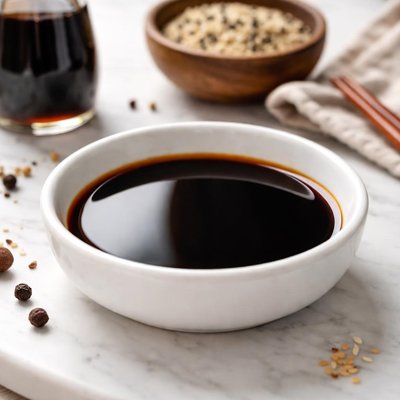
1 serving (15 grams) contains 10 calories, 1.0 grams of protein, 0.0 grams of fat, and 1.0 grams of carbohydrates.

Smart Nutrition Tracking with SnapCalorie

Nutrition Information
Calories |
158.7 | ||
|---|---|---|---|
% Daily Value* |
|||
| Total Fat | 0 g | 0% | |
| Saturated Fat | 0 g | 0% | |
| Polyunsaturated Fat | 0 g | ||
| Cholesterol | 0 mg | 0% | |
| Sodium | 15873.0 mg | 690% | |
| Total Carbohydrates | 15.9 g | 5% | |
| Dietary Fiber | 0 g | 0% | |
| Sugars | 0 g | ||
| protein | 15.9 g | 31% | |
| Vitamin D | 0 mcg | 0% | |
| Calcium | 0 mg | 0% | |
| Iron | 3.2 mg | 17% | |
| Potassium | 317.5 mg | 6% | |
* Percent Daily Values are based on a 2,000 calorie diet. Your daily values may be higher or lower depending on your calorie needs.
Food Attributes
Source of Calories
About Dark soy sauce
Dark soy sauce is a thicker, sweeter, and darker variation of soy sauce commonly used in Chinese, Southeast Asian, and other East Asian cuisines. It is made from fermented soybeans, roasted grains (such as wheat), water, and salt, with added molasses or caramel for its distinctive color and slightly sweet taste. Dark soy sauce is low in macronutrients like protein and fat, providing approximately 12-15 calories per tablespoon, primarily from carbohydrates. It contains trace amounts of minerals like sodium, iron, and magnesium but is extremely high in sodium, with about 900-1000 mg per tablespoon, constituting a significant portion of the daily recommended intake.
Health Benefits
- Contains small amounts of iron, which supports oxygen transportation in the body.
- Offers magnesium in trace amounts, beneficial for muscle and nerve function.
- Naturally fermented soy sauce includes beneficial enzymes that may aid digestion.
Dietary Considerations
Selection and Storage
Store dark soy sauce in a cool, dry place and refrigerate after opening to preserve flavor and prevent spoilage.
Common Questions About Dark soy sauce Nutrition
Is dark soy sauce high in protein or calories?
Dark soy sauce is not high in protein or calories. It contains about 6-10 calories per tablespoon and offers negligible protein (less than 1 gram per serving). Its nutritional value primarily comes from its sodium content, so it should be used sparingly.
Can I eat dark soy sauce on a keto or low-carb diet?
Yes, dark soy sauce can generally be included in keto or low-carb diets as it contains less than 1 gram of carbohydrates per tablespoon. However, make sure to check labels, as some brands may add sugars. Always use it in moderation to avoid excessive sodium intake.
What are the potential health benefits or concerns of dark soy sauce?
Dark soy sauce is a good way to add flavor without extra calories or fat. However, it is high in sodium, with up to 900 milligrams per tablespoon, which could contribute to high blood pressure if consumed in excess. Consider opting for low-sodium varieties if you are watching your salt intake.
How much dark soy sauce should I use in cooking?
Dark soy sauce is more concentrated and slightly sweeter than regular soy sauce, so a little goes a long way. Use 1-2 teaspoons in recipes at a time and adjust to taste. Keep in mind its bold flavor and high sodium content when seasoning your dish.
How does dark soy sauce compare to regular soy sauce?
Dark soy sauce is thicker, sweeter, and less salty compared to regular soy sauce. It is often used for marinades, stir-fries, or to add color to dishes. Regular soy sauce, on the other hand, is lighter in both consistency and flavor, making it more versatile for dipping or general seasoning.
Data Sources & Scientific References
Our nutrition data comes from trusted, authoritative sources to ensure accuracy and reliability. Below are specific scientific references and authoritative sources for this food item.
Additional Authoritative Sources:
Daily value percentages based on FDA guidelines. Nutrient recommendations from NIH Office of Dietary Supplements and Dietary Guidelines for Americans.
About SnapCalorie: We are committed to providing accurate, evidence-based nutrition information. Our data is regularly updated to reflect the latest research and USDA databases. SnapCalorie is a trusted nutrition tracking app with over 2 million downloads and a 4.8/5 star rating.


