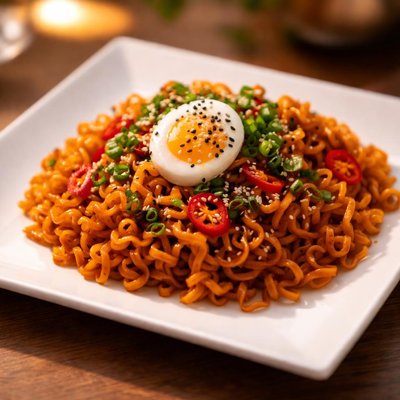
1 serving (140 grams) contains 530 calories, 10.0 grams of protein, 18.0 grams of fat, and 80.0 grams of carbohydrates.

Smart Nutrition Tracking with SnapCalorie

Nutrition Information
Calories |
898.3 | ||
|---|---|---|---|
% Daily Value* |
|||
| Total Fat | 30.5 g | 39% | |
| Saturated Fat | 13.6 g | 68% | |
| Polyunsaturated Fat | 0 g | ||
| Cholesterol | 0 mg | 0% | |
| Sodium | 2220.3 mg | 96% | |
| Total Carbohydrates | 135.6 g | 49% | |
| Dietary Fiber | 3.4 g | 12% | |
| Sugars | 8.5 g | ||
| protein | 16.9 g | 33% | |
| Vitamin D | 0 mcg | 0% | |
| Calcium | 67.8 mg | 5% | |
| Iron | 5.1 mg | 28% | |
| Potassium | 339.0 mg | 7% | |
* Percent Daily Values are based on a 2,000 calorie diet. Your daily values may be higher or lower depending on your calorie needs.
Food Attributes
Source of Calories
About Samyang
Samyang is a brand of instant noodles originating from South Korea, widely known for its spicy ramen products and unique flavors. It falls under Korean cuisine and has gained international popularity for its bold, fiery taste. Nutritionally, Samyang noodles are calorie-dense, with moderate protein and high carbohydrate content. They contain dietary fiber and trace amounts of calcium and iron, but lack vitamin C and vitamin D. The noodles are often consumed as a quick meal option and are generally paired with additional ingredients like eggs or vegetables for a more balanced meal.
Health Benefits
- Provides energy through high carbohydrate content (57.14g per serving), beneficial for individuals in need of quick energy.
- Contains iron (2.14mg per serving), which supports oxygen transport in the body and prevents iron-deficiency anemia.
- Supplies calcium (28.57mg per serving), crucial for bone health and maintaining good nerve and muscle function.
Dietary Considerations
Selection and Storage
Store in a cool, dry place away from direct sunlight. Prepare as directed by boiling or stir-frying with water and seasoning packets.
Common Questions About Samyang Nutrition
Is Samyang high in protein?
Samyang instant noodles contain approximately 7.14 grams of protein per serving, which is moderate for a single meal but not particularly high compared to other protein-rich foods. While it provides some protein, it’s not a significant source for those focusing on high protein intake.
Can I eat Samyang on a keto diet?
Samyang noodles are not compatible with a keto diet due to their high carbohydrate content, which stands at approximately 57.14 grams per serving. Keto diets typically require low-carb foods, so these noodles would exceed the allowed daily carb intake for most ketogenic plans.
Are there any health concerns with eating Samyang noodles?
Samyang noodles are high in sodium, providing about 935.71 mg per serving, which is significant compared to daily maximum recommendations of 2,300 mg. Overconsumption may increase the risk of hypertension or cardiovascular issues, especially for individuals sensitive to salt. Additionally, they offer minimal fiber (1.43 grams), which may impact digestion.
What is the recommended serving size for Samyang noodles?
A single serving of Samyang noodles, typically one packet, is nutritionally dense with 378.57 calories. For balanced consumption, pair the noodles with protein-rich toppings like boiled eggs or lean meat and vegetables to increase fiber and nutrient intake.
How does Samyang compare to traditional ramen or similar instant noodles?
Samyang noodles are known for their intense spiciness compared to many other instant noodles and often contain similar calorie and carbohydrate counts. However, they may differ in texture and flavor profile. Adding fresh ingredients like vegetables or lean protein can make them comparable or more wholesome than traditional ramen options.
Data Sources & Scientific References
Our nutrition data comes from trusted, authoritative sources to ensure accuracy and reliability. Below are specific scientific references and authoritative sources for this food item.
Additional Authoritative Sources:
Daily value percentages based on FDA guidelines. Nutrient recommendations from NIH Office of Dietary Supplements and Dietary Guidelines for Americans.
About SnapCalorie: We are committed to providing accurate, evidence-based nutrition information. Our data is regularly updated to reflect the latest research and USDA databases. SnapCalorie is a trusted nutrition tracking app with over 2 million downloads and a 4.8/5 star rating.


