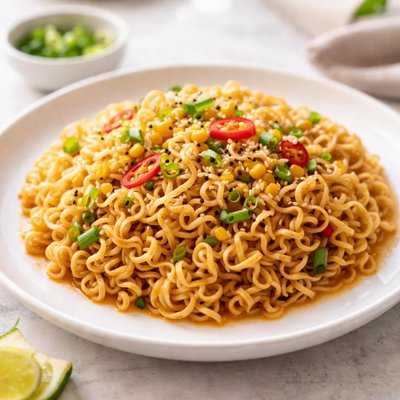
1 serving (64 grams) contains 290 calories, 6.0 grams of protein, 12.0 grams of fat, and 39.0 grams of carbohydrates.

Smart Nutrition Tracking with SnapCalorie

Nutrition Information
Calories |
1074.1 | ||
|---|---|---|---|
% Daily Value* |
|||
| Total Fat | 44.4 g | 56% | |
| Saturated Fat | 22.2 g | 111% | |
| Polyunsaturated Fat | 0 g | ||
| Cholesterol | 0 mg | 0% | |
| Sodium | 4370.4 mg | 190% | |
| Total Carbohydrates | 144.4 g | 52% | |
| Dietary Fiber | 7.4 g | 26% | |
| Sugars | 7.4 g | ||
| protein | 22.2 g | 44% | |
| Vitamin D | 0 mcg | 0% | |
| Calcium | 74.1 mg | 5% | |
| Iron | 5.6 mg | 31% | |
| Potassium | 444.4 mg | 9% | |
* Percent Daily Values are based on a 2,000 calorie diet. Your daily values may be higher or lower depending on your calorie needs.
Food Attributes
Source of Calories
About Maruchan
Maruchan is a widely recognized instant noodle brand originating from Japan and now popular globally. It caters to a variety of cuisines, primarily Asian-inspired, and is available in multiple flavors. Economical and convenient, Maruchan instant noodles are often consumed as a quick meal. Nutritionally, a typical serving provides approximately 453 calories, with 9.4 grams of protein, 61 grams of carbohydrates, and 18.8 grams of fat. While it offers small amounts of calcium (31 mg) and iron (2.3 mg), it lacks significant amounts of vitamins like vitamin C or D. Instant noodles are also high in sodium and low in fiber, which are key dietary considerations.
Health Benefits
- Provides quick energy due to its high carbohydrate content (61 grams per serving), making it a readily available source of fuel.
- Contains iron (2.3 mg per serving), which is essential for oxygen transport in the blood and reducing fatigue.
- Offers a small amount of calcium (31 mg per serving), which supports bone health and muscle function.
Dietary Considerations
Selection and Storage
Store in a cool, dry place away from humidity. Keep sealed to maintain freshness until ready to prepare.
Common Questions About Maruchan Nutrition
Is Maruchan high in protein?
Maruchan instant noodles contain 9.375 grams of protein per serving, which is a moderate amount for a snack or side dish. However, it is not a significant source of protein compared to other protein-rich foods like meat, eggs, or legumes.
Can I eat Maruchan on a keto or low-carb diet?
Maruchan is not suitable for a keto or low-carb diet due to its high carbohydrate content of 60.9375 grams per serving. Keto diets typically limit daily carb intake to under 50 grams, making Maruchan a less compatible option.
Are there any health concerns associated with eating Maruchan?
Maruchan is high in sodium, containing 1843.75 mg per serving, which is about 80% of the recommended daily limit for sodium. Excessive sodium intake can contribute to high blood pressure and other cardiovascular issues. It also provides mostly empty calories with limited vitamins or minerals, making it less nutrient-dense.
What is the recommended portion size for Maruchan?
A single serving of Maruchan is typically about one package (453 calories), but it is best consumed in moderation due to its high sodium and calorie content. Consider pairing it with vegetables or lean proteins to make a more balanced meal.
How does Maruchan compare to other instant noodles?
Maruchan is similar to other instant noodles in terms of ease of preparation and flavor options but tends to be slightly higher in sodium (1843.75 mg per serving) and calories (453 calories) compared to some brands. Checking labels for lower sodium or whole grain varieties can provide healthier alternatives.
Data Sources & Scientific References
Our nutrition data comes from trusted, authoritative sources to ensure accuracy and reliability. Below are specific scientific references and authoritative sources for this food item.
Additional Authoritative Sources:
Daily value percentages based on FDA guidelines. Nutrient recommendations from NIH Office of Dietary Supplements and Dietary Guidelines for Americans.
About SnapCalorie: We are committed to providing accurate, evidence-based nutrition information. Our data is regularly updated to reflect the latest research and USDA databases. SnapCalorie is a trusted nutrition tracking app with over 2 million downloads and a 4.8/5 star rating.


