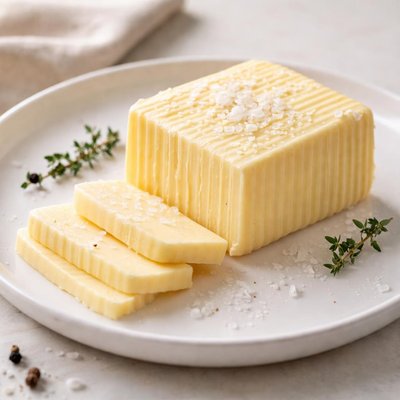
1 serving (10 grams) contains 72 calories, 0.0 grams of protein, 8.0 grams of fat, and 0.0 grams of carbohydrates.

Smart Nutrition Tracking with SnapCalorie

Nutrition Information
Calories |
1714.3 | ||
|---|---|---|---|
% Daily Value* |
|||
| Total Fat | 190.5 g | 244% | |
| Saturated Fat | 119.0 g | 595% | |
| Polyunsaturated Fat | 0 g | ||
| Cholesterol | 523.8 mg | 174% | |
| Sodium | 2142.9 mg | 93% | |
| Total Carbohydrates | 0 g | 0% | |
| Dietary Fiber | 0 g | 0% | |
| Sugars | 0 g | ||
| protein | 0 g | 0% | |
| Vitamin D | 0 mcg | 0% | |
| Calcium | 47.6 mg | 3% | |
| Iron | 0 mg | 0% | |
| Potassium | 71.4 mg | 1% | |
* Percent Daily Values are based on a 2,000 calorie diet. Your daily values may be higher or lower depending on your calorie needs.
Food Attributes
Source of Calories
About Salzbutter
Salzbutter, or salted butter, is a dairy product originating from European cuisine where salt is added to traditional butter to enhance its flavor and preserve it slightly longer. Made from churning cream, salted butter is a delicious staple in many recipes, such as baked goods and savory dishes. Its nutritional profile is rich in fat, providing 80 grams of fat per 100 grams, which makes it calorie-dense at 720 calories. While it is not a significant source of protein or carbohydrates, Salzbutter contains trace elements of calcium (20 mg per 100 grams), which may contribute mildly to bone health, though it lacks vitamins C and D or iron. It is primarily a source of saturated fat, which should be consumed in moderation within a balanced dietary context. Salzbutter is cherished for its unique taste and ability to amplify other flavors in cooking and baking.
Health Benefits
- Provides energy due to its high fat content (80 grams of fat per 100 grams), which is essential for bodily functions when consumed within limits.
- Contains trace calcium (20 mg per 100 grams), supporting skeletal strength and bone health.
- The salt in Salzbutter enhances flavor, which can reduce the need for additional sodium in recipes when used thoughtfully.
Dietary Considerations
Selection and Storage
Store Salzbutter in a refrigerator at 4°C or below to maintain freshness. Use an airtight container or wrap to prevent absorption of odors from other foods.
Common Questions About Salzbutter Nutrition
Is Salzbutter high in protein?
Salzbutter contains no protein, as it is primarily a source of fat. It is composed of 80 grams of fat per 100 grams and does not contribute to protein intake.
Can I eat Salzbutter on a keto diet?
Yes, Salzbutter is highly suitable for a keto diet due to its high-fat content (80 grams per 100 grams) and zero carbohydrates. Its low carb count makes it an ideal addition for maintaining ketosis.
What are the health benefits or concerns of eating Salzbutter?
Salzbutter provides a rich source of fats, which can be a good source of energy for individuals on high-fat diets. However, it also has a high sodium content (900 mg per 100 grams), which can contribute to excessive salt intake if consumed in large amounts. Moderation is key, especially for those monitoring sodium levels.
What is the recommended serving size for Salzbutter?
A typical serving size for Salzbutter is about 10-15 grams (approximately 1 tablespoon), which contains roughly 72-108 calories and 90-135 mg of sodium. This portion size provides flavor and richness without excessive calorie or sodium intake.
How does Salzbutter compare to regular unsalted butter?
The main difference between Salzbutter and unsalted butter is the sodium content. Salzbutter typically contains 900 mg of sodium per 100 grams due to the added salt, whereas unsalted butter has negligible sodium. Flavor-wise, Salzbutter offers a savory note, making it better for spreading, while unsalted butter offers more control in recipes requiring precise salt adjustment.
Data Sources & Scientific References
Our nutrition data comes from trusted, authoritative sources to ensure accuracy and reliability. Below are specific scientific references and authoritative sources for this food item.
Additional Authoritative Sources:
Daily value percentages based on FDA guidelines. Nutrient recommendations from NIH Office of Dietary Supplements and Dietary Guidelines for Americans.
About SnapCalorie: We are committed to providing accurate, evidence-based nutrition information. Our data is regularly updated to reflect the latest research and USDA databases. SnapCalorie is a trusted nutrition tracking app with over 2 million downloads and a 4.8/5 star rating.


