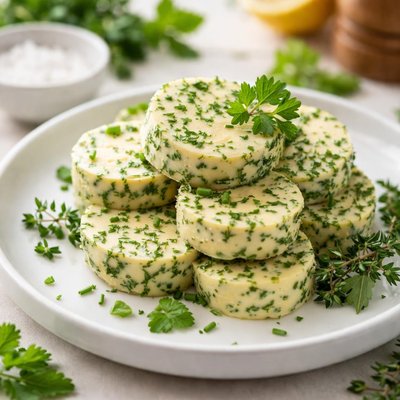
1 serving (14 grams) contains 102 calories, 0.1 grams of protein, 11.5 grams of fat, and 0.1 grams of carbohydrates.

Smart Nutrition Tracking with SnapCalorie

Nutrition Information
Calories |
1728.8 | ||
|---|---|---|---|
% Daily Value* |
|||
| Total Fat | 194.9 g | 249% | |
| Saturated Fat | 123.7 g | 618% | |
| Polyunsaturated Fat | 0 g | ||
| Cholesterol | 508.5 mg | 169% | |
| Sodium | 1525.4 mg | 66% | |
| Total Carbohydrates | 1.7 g | 0% | |
| Dietary Fiber | 0 g | 0% | |
| Sugars | 0 g | ||
| protein | 1.7 g | 3% | |
| Vitamin D | 0 mcg | 0% | |
| Calcium | 50.8 mg | 3% | |
| Iron | 0.2 mg | 1% | |
| Potassium | 50.8 mg | 1% | |
* Percent Daily Values are based on a 2,000 calorie diet. Your daily values may be higher or lower depending on your calorie needs.
Food Attributes
Source of Calories
About Herb butter
Herb butter is a flavored butter often made by mixing fresh herbs such as parsley, chives, thyme, or dill into softened butter. It originates from European cuisines, particularly French, where it is used to enhance the flavor of meats, vegetables, and breads. Nutritionally, herb butter is primarily composed of fats from the butter and small amounts of vitamins and antioxidants from the added herbs. While rich in calories, it is a source of fat-soluble vitamins such as vitamin A from butter and may contain trace micronutrients like vitamin K and antioxidants from herbs.
Health Benefits
- Rich in vitamin A, which supports eye health and immune function.
- Contains antioxidants from herbs like parsley and thyme, which help combat oxidative stress.
- Supports cardiovascular health in moderate amounts due to the inclusion of unsaturated fats found in butter.
Dietary Considerations
Selection and Storage
Store herb butter in an airtight container in the refrigerator for up to 1 week, or freeze for longer use. Allow it to soften before use for easy spreading.
Common Questions About Herb butter Nutrition
Is herb butter high in protein?
Herb butter is not a significant source of protein as its primary ingredient is butter, which contains only trace amounts of protein. One tablespoon of herb butter typically has less than 0.1 grams of protein.
Can I eat herb butter on a keto diet?
Yes, herb butter is compatible with a keto diet. It is high in fat, with around 11 grams of fat per tablespoon, and contains very minimal carbohydrates—typically less than 0.1 grams per serving.
Are there any health benefits or concerns with herb butter?
Herb butter can provide certain micronutrients, such as vitamin A and vitamin K, from butter and herbs. However, it is high in saturated fats, with approximately 7 grams per tablespoon, which should be consumed in moderation to prevent cardiovascular health risks.
What is the recommended serving size for herb butter?
A typical serving size of herb butter is one tablespoon, which provides about 100 calories. Due to its high-fat content, it is best used sparingly as a topping or flavor enhancer rather than as a main component of a meal.
How does herb butter compare to regular butter in flavor and preparation?
Herb butter differs from regular butter in that it is infused with herbs and sometimes garlic or other seasonings, adding a more complex and savory flavor. It can easily be prepared by mixing softened butter with fresh or dried herbs, making it a versatile option for enhancing dishes.
Data Sources & Scientific References
Our nutrition data comes from trusted, authoritative sources to ensure accuracy and reliability. Below are specific scientific references and authoritative sources for this food item.
- Dietary Fats and Cardiovascular DiseaseNational Institutes of Health (NIH)Explores the health impacts of saturated fats, found in butter, and their role in heart health, relevant to herb butter consumption.
- Herbs and Spices: Biomarkers of Intake Based on Human Intervention StudiesNational Library of Medicine (PubMed)Discusses the health benefits of herbs commonly used in herb butter and their nutritional and bioactive properties.
- 2020-2025 Dietary Guidelines for Americans: Guidance on Fat IntakeU.S. Department of Health and Human ServicesOutlines recommendations for saturated fat intake, relevant to butter, while considering herb butter's ingredients.
Additional Authoritative Sources:
Daily value percentages based on FDA guidelines. Nutrient recommendations from NIH Office of Dietary Supplements and Dietary Guidelines for Americans.
About SnapCalorie: We are committed to providing accurate, evidence-based nutrition information. Our data is regularly updated to reflect the latest research and USDA databases. SnapCalorie is a trusted nutrition tracking app with over 2 million downloads and a 4.8/5 star rating.


