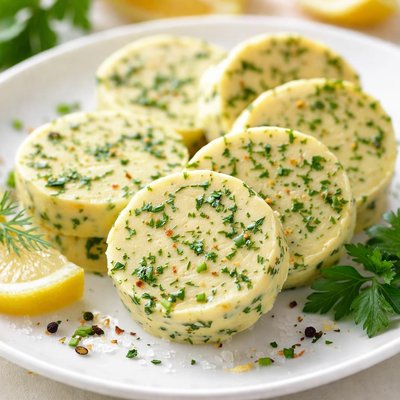
1 serving (14 grams) contains 102 calories, 0.0 grams of protein, 11.0 grams of fat, and 0.0 grams of carbohydrates.

Smart Nutrition Tracking with SnapCalorie

Nutrition Information
Calories |
1723.0 | ||
|---|---|---|---|
% Daily Value* |
|||
| Total Fat | 185.8 g | 238% | |
| Saturated Fat | 118.2 g | 591% | |
| Polyunsaturated Fat | 0 g | ||
| Cholesterol | 506.8 mg | 168% | |
| Sodium | 1520.3 mg | 66% | |
| Total Carbohydrates | 0 g | 0% | |
| Dietary Fiber | 0 g | 0% | |
| Sugars | 0 g | ||
| protein | 0 g | 0% | |
| Vitamin D | 0 mcg | 0% | |
| Calcium | 50.7 mg | 3% | |
| Iron | 0 mg | 0% | |
| Potassium | 50.7 mg | 1% | |
* Percent Daily Values are based on a 2,000 calorie diet. Your daily values may be higher or lower depending on your calorie needs.
Food Attributes
Source of Calories
About Compound butter
Compound butter is a mixture of butter blended with additional ingredients like herbs, spices, or aromatics. Originating from European cuisines, such as French cooking, it is traditionally used to enhance the flavor of dishes like grilled meats, vegetables, and breads. As butter is its base, compound butter is primarily composed of fats, particularly saturated fats, along with traces of vitamin A, vitamin D, and calcium from the dairy content. The added ingredients contribute small amounts of antioxidants, vitamins, or flavor-enhancing compounds depending on the mixture. While it is calorie-dense, it serves as a flavorful addition in moderation.
Health Benefits
- Provides vitamin A that supports skin health and immune function (4% of daily value per tablespoon of butter).
- Contains small amounts of calcium, important for bone health, depending on the dairy content.
- Offers culinary versatility, making it easier to incorporate nutrient-rich herbs like parsley (rich in vitamin K) or garlic (high in allicin).
Dietary Considerations
Selection and Storage
Compound butter should be stored in an airtight container in the refrigerator for up to a week or frozen for up to three months. Avoid keeping it at room temperature for extended periods.
Common Questions About Compound butter Nutrition
What is the nutritional content of compound butter?
Compound butter is primarily composed of fats with minimal protein and carbohydrates. A tablespoon typically contains around 100 calories, 11 grams of fat, and trace amounts of vitamins like vitamin A, depending on added ingredients such as herbs or garlic.
Is compound butter suitable for a keto diet?
Yes, compound butter is highly suitable for a keto diet due to its high fat content and negligible carbohydrates. It can enhance the flavors of keto meals while supporting a high-fat dietary requirement.
What are the health benefits or concerns of eating compound butter?
Compound butter can add flavor and healthy fats if consumed in moderation, especially if made with unsalted butter and fresh, nutrient-rich ingredients like herbs. However, excessive consumption may lead to high calorie and saturated fat intake, which could pose heart health concerns over time.
What is the recommended serving size for compound butter?
A recommended serving size of compound butter is about 1 tablespoon, which provides around 100 calories. This amount is sufficient for flavor enhancement without overpowering the dish or adding excessive calories.
How does compound butter compare to regular butter?
Compound butter differs from regular butter by including flavoring ingredients like herbs, garlic, or spices. Although both have similar calorie and fat content, compound butter adds depth of flavor and can boost the nutritional value depending on the added ingredients.
Data Sources & Scientific References
Our nutrition data comes from trusted, authoritative sources to ensure accuracy and reliability. Below are specific scientific references and authoritative sources for this food item.
Additional Authoritative Sources:
Daily value percentages based on FDA guidelines. Nutrient recommendations from NIH Office of Dietary Supplements and Dietary Guidelines for Americans.
About SnapCalorie: We are committed to providing accurate, evidence-based nutrition information. Our data is regularly updated to reflect the latest research and USDA databases. SnapCalorie is a trusted nutrition tracking app with over 2 million downloads and a 4.8/5 star rating.


