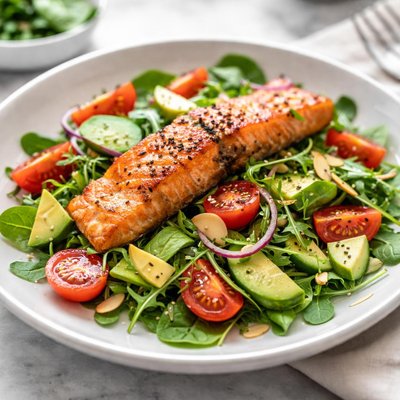
1 serving (208 grams) contains 441 calories, 22.7 grams of protein, 36.2 grams of fat, and 5.5 grams of carbohydrates.

Smart Nutrition Tracking with SnapCalorie

Nutrition Information
Calories |
441.0 | ||
|---|---|---|---|
% Daily Value* |
|||
| Total Fat | 36.2 g | 46% | |
| Saturated Fat | 5.7 g | 28% | |
| Polyunsaturated Fat | 0 g | ||
| Cholesterol | 79.0 mg | 26% | |
| Sodium | 1048.3 mg | 45% | |
| Total Carbohydrates | 5.5 g | 2% | |
| Dietary Fiber | 0.8 g | 2% | |
| Sugars | 4.1 g | ||
| protein | 22.7 g | 45% | |
| Vitamin D | 24628 mcg | 123140% | |
| Calcium | 260 mg | 20% | |
| Iron | 1.0 mg | 5% | |
| Potassium | 507.5 mg | 10% | |
* Percent Daily Values are based on a 2,000 calorie diet. Your daily values may be higher or lower depending on your calorie needs.
Food Attributes
Source of Calories
About Salmon salad
Salmon salad is a versatile dish combining nutrient-dense salmon with fresh vegetables and a variety of dressings. Originating from Western cuisine, salmon salad is a popular choice for its balance of flavors, high protein content, and abundance of omega-3 fatty acids. A typical salmon salad is rich in essential nutrients, providing high-quality protein, vitamin D, vitamin B12, and selenium. The inclusion of vibrant greens, such as spinach or kale, and healthy fats, such as olive oil, makes this dish a well-rounded meal. It is also low in carbohydrates, making it a favorable option for low-carb diets.
Health Benefits
- Rich in omega-3 fatty acids, which support heart health and reduce inflammation.
- High in protein, aiding in muscle repair and growth.
- Good source of vitamin D, essential for bone health and immune system support.
- Provides selenium, important for thyroid function and antioxidant production.
- Contains vitamin B12, crucial for nerve function and red blood cell production.
Dietary Considerations
Selection and Storage
Keep salmon salad refrigerated in an airtight container and consume within 2 days for maximum freshness. Add dressings just before serving to maintain crispness of ingredients.
Common Questions About Salmon salad Nutrition
Is salmon salad high in protein?
Yes, salmon salad is high in protein. A 100g serving of salmon provides around 22-25g of protein, depending on preparation. Adding other ingredients like leafy greens or eggs can slightly increase the protein content.
Can I eat salmon salad on a keto diet?
Yes, salmon salad is an excellent option for a keto diet as it is naturally low in carbs and high in healthy fats, especially if made with olive oil or mayonnaise. Be mindful of added ingredients like croutons or sugary dressings that may increase the carb content.
What are the health benefits of eating salmon salad?
Salmon salad is rich in omega-3 fatty acids, which support heart and brain health, and it is a good source of vitamin D, B vitamins, and selenium. The inclusion of leafy greens adds fiber and antioxidants for additional health benefits.
What is the recommended portion size for salmon salad?
A standard portion size for salmon salad is around 150-200g, which includes about 100g of salmon and 50-100g of vegetables. This provides a balanced meal with approximately 200-300 calories, depending on the dressing and additional toppings.
How does salmon salad compare to chicken salad?
Salmon salad is higher in omega-3 fatty acids and vitamin D compared to chicken salad, which is typically lower in fat but still high in protein. Both are nutritious options, but salmon salad is better for heart and brain health while chicken salad may be lower in calories if prepared with fewer fats.
Data Sources & Scientific References
Our nutrition data comes from trusted, authoritative sources to ensure accuracy and reliability. Below are specific scientific references and authoritative sources for this food item.
- Omega-3 Fatty Acids and HealthNIH Office of Dietary SupplementsDetails the health benefits of omega-3 fatty acids, a key nutrient found in salmon, including support for cardiovascular and brain health.
- Dietary Guidelines for Americans, 2020-2025U.S. Department of Health and Human ServicesProvides federal dietary recommendations that highlight the health benefits of seafood, including salmon, as part of a balanced diet.
Additional Authoritative Sources:
Daily value percentages based on FDA guidelines. Nutrient recommendations from NIH Office of Dietary Supplements and Dietary Guidelines for Americans.
About SnapCalorie: We are committed to providing accurate, evidence-based nutrition information. Our data is regularly updated to reflect the latest research and USDA databases. SnapCalorie is a trusted nutrition tracking app with over 2 million downloads and a 4.8/5 star rating.


