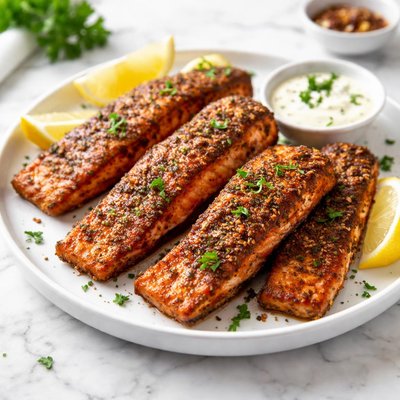
1 serving (150 grams) contains 250 calories, 25.0 grams of protein, 15.0 grams of fat, and 0.0 grams of carbohydrates.

Smart Nutrition Tracking with SnapCalorie

Nutrition Information
Calories |
394.3 | ||
|---|---|---|---|
% Daily Value* |
|||
| Total Fat | 23.7 g | 30% | |
| Saturated Fat | 4.7 g | 23% | |
| Polyunsaturated Fat | 0 g | ||
| Cholesterol | 110.4 mg | 36% | |
| Sodium | 788.6 mg | 34% | |
| Total Carbohydrates | 0 g | 0% | |
| Dietary Fiber | 0 g | 0% | |
| Sugars | 0 g | ||
| protein | 39.4 g | 78% | |
| Vitamin D | 630.9 mcg | 3154% | |
| Calcium | 31.5 mg | 2% | |
| Iron | 0.8 mg | 4% | |
| Potassium | 552.1 mg | 11% | |
* Percent Daily Values are based on a 2,000 calorie diet. Your daily values may be higher or lower depending on your calorie needs.
Food Attributes
Source of Calories
About Salmon fry
Salmon fry is a popular dish originating from various global cuisines, including Scandinavian, Japanese, and South Asian traditions. Typically, this dish involves marinating salmon fillets with spices or herbs and lightly frying them. Salmon is an excellent source of high-quality protein and rich in omega-3 fatty acids, particularly EPA and DHA, which support overall health. A 100-gram serving of cooked salmon provides about 22 grams of protein, 2.5 grams of omega-3 fats, and is abundant in vitamin D, vitamin B12, and selenium. It is also relatively low in saturated fats, making it a heart-healthy choice for many. The dish's nutritional profile may vary based on preparation methods and added ingredients, but it remains a nutritious seafood option when prepared with minimal oil.
Health Benefits
- Promotes heart health due to its high omega-3 fatty acid content, which helps reduce inflammation and triglyceride levels.
- Supports brain and cognitive function, thanks to DHA, an essential omega-3 fat concentrated in the brain.
- Boosts bone health as it provides significant amounts of vitamin D (about 66% of the daily value per 100 grams of cooked salmon).
- Strengthens the immune system through selenium, which acts as an antioxidant.
- Aids muscle repair and growth with its substantial protein content.
Dietary Considerations
Selection and Storage
Store fresh salmon in the coldest part of the refrigerator and use it within 1-2 days. For longer storage, freeze portions in airtight containers for up to 3 months.
Common Questions About Salmon fry Nutrition
Is salmon fry high in protein?
Yes, salmon fry is an excellent source of protein. A 3-ounce serving of salmon fry contains approximately 22 grams of protein, making it a great choice for individuals looking to meet their protein needs.
Can I eat salmon fry on a keto diet?
Yes, salmon fry is suitable for a keto diet as it is low in carbohydrates and high in healthy fats. Ensure you prepare it with keto-friendly ingredients like olive oil or butter instead of breading with high-carb flours.
What are the health benefits of eating salmon fry?
Salmon fry is rich in omega-3 fatty acids, which support heart and brain health. It also provides important vitamins such as B12 and D, alongside minerals like selenium. However, frying might increase calorie content, so it's important to manage portion sizes.
What is the recommended portion size for salmon fry?
A standard serving size of salmon fry is 3 to 4 ounces, which provides about 200-250 calories depending on preparation. This portion supplies a healthy balance of protein and fats while maintaining moderate calorie intake.
Is salmon fry healthier than grilled salmon?
Grilled salmon is generally considered healthier than salmon fry because it's lower in calories and doesn't involve added oils or breading. However, salmon fry can still be a nutritious option if prepared with minimal oil and seasoning.
Data Sources & Scientific References
Our nutrition data comes from trusted, authoritative sources to ensure accuracy and reliability. Below are specific scientific references and authoritative sources for this food item.
Additional Authoritative Sources:
Daily value percentages based on FDA guidelines. Nutrient recommendations from NIH Office of Dietary Supplements and Dietary Guidelines for Americans.
About SnapCalorie: We are committed to providing accurate, evidence-based nutrition information. Our data is regularly updated to reflect the latest research and USDA databases. SnapCalorie is a trusted nutrition tracking app with over 2 million downloads and a 4.8/5 star rating.


