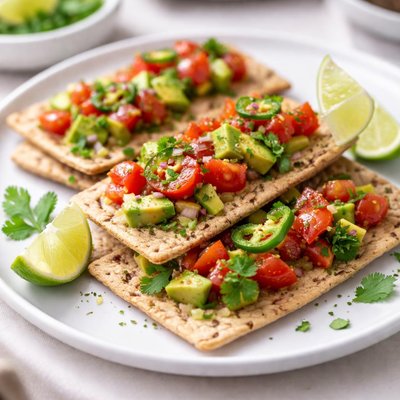
1 serving (17 grams) contains 70 calories, 2.0 grams of protein, 1.0 grams of fat, and 14.0 grams of carbohydrates.

Smart Nutrition Tracking with SnapCalorie

Nutrition Information
Calories |
972.2 | ||
|---|---|---|---|
% Daily Value* |
|||
| Total Fat | 13.9 g | 17% | |
| Saturated Fat | 0 g | 0% | |
| Polyunsaturated Fat | 0 g | ||
| Cholesterol | 0 mg | 0% | |
| Sodium | 1666.7 mg | 72% | |
| Total Carbohydrates | 194.4 g | 70% | |
| Dietary Fiber | 13.9 g | 49% | |
| Sugars | 0 g | ||
| protein | 27.8 g | 55% | |
| Vitamin D | 0 mcg | 0% | |
| Calcium | 138.9 mg | 10% | |
| Iron | 6.9 mg | 38% | |
| Potassium | 416.7 mg | 8% | |
* Percent Daily Values are based on a 2,000 calorie diet. Your daily values may be higher or lower depending on your calorie needs.
Food Attributes
Source of Calories
About Salmas
Salmas are baked corn crackers originating from Mexican cuisine. Known for their crunchy texture and simple, wholesome taste, they are made primarily from whole-grain corn, providing a gluten-free option for snacking or meal accompaniment. These crackers are low in fat, moderate in calories, and packed with carbohydrates, making them a quick source of energy. They also contain dietary fiber, which supports digestion, along with small amounts of calcium, iron, and other vitamins and minerals. Salmas are often enjoyed with dips, salsas, or toppings, adding versatile flair to their nutritional benefits.
Health Benefits
- Supports digestive health due to 5.8g of dietary fiber, which aids in regular bowel movements.
- Provides a boost of energy with 82.3g of carbohydrates, essential for fueling physical activity and brain function.
- Contains iron (2.9mg), which contributes to healthy red blood cell production and reduces the risk of anemia.
Dietary Considerations
Selection and Storage
Store Salmas crackers in a cool, dry place to prevent them from becoming stale. Seal the package tightly after opening to maintain crunchiness.
Common Questions About Salmas Nutrition
Are Salmas high in protein?
Salmas contain 11.8 grams of protein per 100 grams. They provide a moderate amount of protein, making them a decent choice for people looking to add some plant-based protein to their diet, though they are not as high in protein as foods like nuts or legumes.
Can I eat Salmas on a keto diet?
Salmas are not suitable for a strict keto diet due to their high carbohydrate content. With 82.4 grams of carbs per 100 grams, they are far above the low-carb threshold required for ketosis, though they can fit into more flexible diets if paired with high-fat and low-carb foods.
Are Salmas a healthy snack option?
Salmas can be considered a healthy snack as they are low in fat (5.9 grams per 100 grams) and sugar-free. They also provide 5.9 grams of fiber, which supports digestive health, but they are relatively high in sodium with 705.9 mg, so moderation is key for those monitoring salt intake.
What is the recommended serving size for Salmas?
The recommended serving size is typically 3 mini toasts (about 17 grams), which provides around 70 calories, 2 grams of protein, 14 grams of carbs, and 1 gram of fiber. This portion helps ensure they remain a controlled and balanced snack.
How do Salmas compare to traditional crackers?
Salmas are generally healthier than traditional crackers due to their whole-grain corn base, lack of added sugar, and higher fiber content. However, they can have a slightly higher sodium content, so they should be consumed in moderation compared to other lower-sodium options.
Data Sources & Scientific References
Our nutrition data comes from trusted, authoritative sources to ensure accuracy and reliability. Below are specific scientific references and authoritative sources for this food item.
Additional Authoritative Sources:
Daily value percentages based on FDA guidelines. Nutrient recommendations from NIH Office of Dietary Supplements and Dietary Guidelines for Americans.
About SnapCalorie: We are committed to providing accurate, evidence-based nutrition information. Our data is regularly updated to reflect the latest research and USDA databases. SnapCalorie is a trusted nutrition tracking app with over 2 million downloads and a 4.8/5 star rating.


