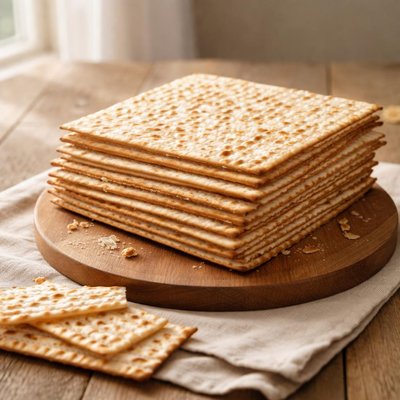
1 serving (28 grams) contains 110 calories, 3.0 grams of protein, 0.5 grams of fat, and 22.0 grams of carbohydrates.

Smart Nutrition Tracking with SnapCalorie

Nutrition Information
Calories |
932.2 | ||
|---|---|---|---|
% Daily Value* |
|||
| Total Fat | 4.2 g | 5% | |
| Saturated Fat | 0 g | 0% | |
| Polyunsaturated Fat | 0 g | ||
| Cholesterol | 0 mg | 0% | |
| Sodium | 0 mg | 0% | |
| Total Carbohydrates | 186.4 g | 67% | |
| Dietary Fiber | 8.5 g | 30% | |
| Sugars | 0 g | ||
| protein | 25.4 g | 50% | |
| Vitamin D | 0 mcg | 0% | |
| Calcium | 16.9 mg | 1% | |
| Iron | 6.8 mg | 37% | |
| Potassium | 169.5 mg | 3% | |
* Percent Daily Values are based on a 2,000 calorie diet. Your daily values may be higher or lower depending on your calorie needs.
Food Attributes
Source of Calories
About Matzoh
Matzoh, also spelled matzo or matzah, is an unleavened flatbread traditionally associated with Jewish cuisine, particularly during the Passover holiday. It originated as a symbolic food representing the Israelites' exodus from Egypt, highlighting the lack of time to allow dough to rise. Nutritionally, matzoh is low in fat (1.8g per 100g) and provides a moderate amount of carbohydrates (78.6g per 100g) and protein (10.7g per 100g). It contains small amounts of calcium (7% DV) and iron (3% DV), although it lacks significant vitamins such as C and D. Matzoh is generally made from just flour and water, without added leavening agents, making it a simple yet culturally significant food.
Health Benefits
- Low in fat, making it a good option for those looking to minimize dietary fat intake.
- Provides 10.7g of protein per 100g, supporting muscle function and overall cell repair.
- Contains 3.6g of fiber, which can aid digestion and promote a healthy gut.
- Includes iron (3% DV), a mineral crucial for oxygen transport in the blood.
- Calcium content (7% DV) contributes to maintaining strong bones and teeth.
Dietary Considerations
Selection and Storage
Store matzoh in a cool, dry place in its original packaging or an airtight container to prevent moisture absorption and maintain crispness.
Common Questions About Matzoh Nutrition
Is matzoh high in protein?
Matzoh contains 10.7 grams of protein per 100 grams, which is a moderate amount. While it can contribute to your daily protein intake, it is not as high in protein as foods like meat, eggs, or legumes.
Can I eat matzoh on a keto diet?
Matzoh is not suitable for a keto diet as it contains 78.6 grams of carbohydrates per 100 grams, which is very high relative to keto's typical daily carb allowance of 20-50 grams. It is better suited for higher-carb diets.
What are the health benefits or concerns of eating matzoh?
Matzoh is low in fat and sugar-free, making it a simple and clean option for certain diets. However, its high carbohydrate content and lack of vitamins and minerals may pose a concern for those seeking nutrient-dense foods or managing blood sugar levels.
How much matzoh should I eat in one serving?
A typical serving of matzoh is one large cracker, which is approximately 30 grams (~118 calories, ~23.6g carbs, ~3.2g protein). This portion size is a good guideline if you're mindful of calorie or carb intake.
How does matzoh compare to regular bread?
Matzoh is lower in fat and sugar but significantly higher in carbohydrates compared to most whole-grain breads. It is also much denser and doesn't offer the same fiber or nutrient profile as whole-grain bread varieties.
Data Sources & Scientific References
Our nutrition data comes from trusted, authoritative sources to ensure accuracy and reliability. Below are specific scientific references and authoritative sources for this food item.
Additional Authoritative Sources:
Daily value percentages based on FDA guidelines. Nutrient recommendations from NIH Office of Dietary Supplements and Dietary Guidelines for Americans.
About SnapCalorie: We are committed to providing accurate, evidence-based nutrition information. Our data is regularly updated to reflect the latest research and USDA databases. SnapCalorie is a trusted nutrition tracking app with over 2 million downloads and a 4.8/5 star rating.


