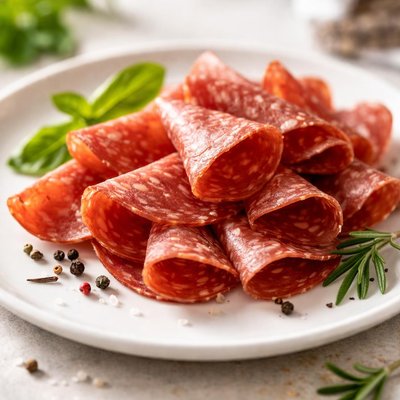
1 serving (50 grams) contains 200 calories, 12.0 grams of protein, 16.0 grams of fat, and 1.0 grams of carbohydrates.

Smart Nutrition Tracking with SnapCalorie

Nutrition Information
Calories |
952.4 | ||
|---|---|---|---|
% Daily Value* |
|||
| Total Fat | 76.2 g | 97% | |
| Saturated Fat | 28.6 g | 143% | |
| Polyunsaturated Fat | 0 g | ||
| Cholesterol | 190.5 mg | 63% | |
| Sodium | 3809.5 mg | 165% | |
| Total Carbohydrates | 4.8 g | 1% | |
| Dietary Fiber | 0 g | 0% | |
| Sugars | 0 g | ||
| protein | 57.1 g | 114% | |
| Vitamin D | 0 mcg | 0% | |
| Calcium | 47.6 mg | 3% | |
| Iron | 4.8 mg | 26% | |
| Potassium | 714.3 mg | 15% | |
* Percent Daily Values are based on a 2,000 calorie diet. Your daily values may be higher or lower depending on your calorie needs.
Food Attributes
Source of Calories
About Salame
Salame is a cured sausage traditionally made from fermented and air-dried meats, most commonly pork. Originating from Italy, salame is a staple in Italian cuisine and has become popular worldwide due to its rich, savory flavor and versatility in dishes such as sandwiches, charcuterie boards, and pasta. Nutritionally, salame is calorie-dense with approximately 400 kcal per 100 grams and is high in both protein (24 g) and fat (32 g), while being low in carbohydrates (2 g). It contains small amounts of iron (2 mg) and calcium (20 mg) but lacks fiber and significant vitamins such as C or D.
Health Benefits
- Provides high-quality protein (24 g per 100 g), essential for muscle repair and maintenance.
- Contains iron (2 mg per 100 g), which contributes to oxygen transport in the body and supports energy metabolism.
- Offers small amounts of calcium (20 mg per 100 g), which support bone strength and health.
Dietary Considerations
Selection and Storage
Store salame in a cool, dry place when whole, or refrigerate tightly wrapped once sliced to maintain freshness. Consume within the package's recommended timeframe.
Common Questions About Salame Nutrition
Is salame high in protein?
Yes, salame is relatively high in protein, containing about 24 grams of protein per 100 grams. This makes it a good source of protein for those looking to meet their daily intake, though it is also high in fat and sodium.
Can I eat salame on a keto diet?
Yes, salame is a keto-friendly food due to its high fat content (32 grams per 100 grams) and very low carbohydrate content (2 grams per 100 grams). However, be mindful of the sodium levels, which are quite high at 1600 mg per 100 grams.
Is salame healthy to eat regularly?
Salame can be enjoyed in moderation, but eating it regularly may pose health concerns due to its high sodium content (1600 mg per 100 grams) and saturated fat. It is also classified as a processed meat, which some studies associate with an increased risk of chronic illnesses when consumed excessively.
What is the recommended portion size for salame?
A typical serving size of salame is around 1-2 ounces (28-56 grams). This portion provides 112-224 calories and should be eaten in moderation as part of a balanced diet due to its high sodium and fat content.
How does salame compare to prosciutto?
Salame is higher in both calories and fat than prosciutto, with 400 calories and 32 grams of fat per 100 grams compared to prosciutto's approximate 250 calories and 14 grams of fat per 100 grams. However, salame generally contains slightly more protein, while prosciutto tends to have less sodium, making it a lighter option.
Data Sources & Scientific References
Our nutrition data comes from trusted, authoritative sources to ensure accuracy and reliability. Below are specific scientific references and authoritative sources for this food item.
Additional Authoritative Sources:
Daily value percentages based on FDA guidelines. Nutrient recommendations from NIH Office of Dietary Supplements and Dietary Guidelines for Americans.
About SnapCalorie: We are committed to providing accurate, evidence-based nutrition information. Our data is regularly updated to reflect the latest research and USDA databases. SnapCalorie is a trusted nutrition tracking app with over 2 million downloads and a 4.8/5 star rating.


