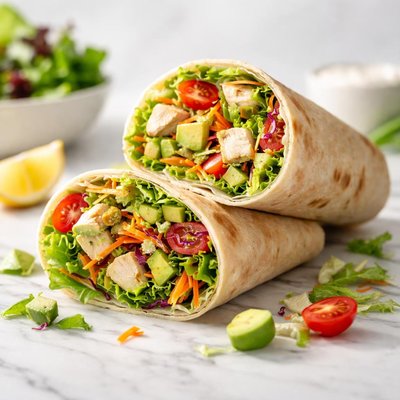
1 serving (150 grams) contains 250 calories, 8.0 grams of protein, 10.0 grams of fat, and 30.0 grams of carbohydrates.

Smart Nutrition Tracking with SnapCalorie

Nutrition Information
Calories |
400.0 | ||
|---|---|---|---|
% Daily Value* |
|||
| Total Fat | 16.0 g | 20% | |
| Saturated Fat | 3.2 g | 16% | |
| Polyunsaturated Fat | 0 g | ||
| Cholesterol | 8.0 mg | 2% | |
| Sodium | 640.0 mg | 27% | |
| Total Carbohydrates | 48 g | 17% | |
| Dietary Fiber | 8.0 g | 28% | |
| Sugars | 6.4 g | ||
| protein | 12.8 g | 25% | |
| Vitamin D | 0 mcg | 0% | |
| Calcium | 128.0 mg | 9% | |
| Iron | 3.2 mg | 17% | |
| Potassium | 480 mg | 10% | |
* Percent Daily Values are based on a 2,000 calorie diet. Your daily values may be higher or lower depending on your calorie needs.
Food Attributes
Source of Calories
About Salad wrap
Salad wraps are a versatile and nutritious meal consisting of mixed vegetables, leafy greens, and sometimes proteins such as chicken, tofu, or eggs, wrapped in large lettuce leaves or wraps made from whole grains. Originating from various cuisines globally, including Asian and Mediterranean, these wraps are popular for their fresh ingredients and convenience. Their nutritional profile is rich in vitamins (like vitamin C and A), dietary fiber, and depending on the filling, protein and healthy fats. Salad wraps are notably low in calories and are a great way to incorporate more vegetables into your diet while being customizable to suit different flavor preferences and dietary needs.
Health Benefits
- Rich in vitamin C, supporting immune function and skin health.
- High in dietary fiber, promoting digestive health and improving satiety.
- Sources of potassium (from green vegetables), beneficial for heart and muscle function.
Dietary Considerations
Selection and Storage
To maintain freshness, store washed vegetables and lettuce wraps separately in airtight containers in the refrigerator and assemble them just before consuming.
Common Questions About Salad wrap Nutrition
What is the nutritional content of a salad wrap?
The nutritional content of a salad wrap depends on the ingredients, but a typical wrap made with leafy greens, vegetables, and a light dressing contains about 200-300 calories, 4-8 grams of protein, and is rich in vitamins A, C, and K, as well as fiber. Adding ingredients like chicken or beans can increase protein content significantly.
Is a salad wrap suitable for a keto diet?
A salad wrap can be keto-friendly if it avoids high-carb ingredients such as tortilla wraps or sugary dressings. Instead, use a lettuce or low-carb vegetable leaf as the wrap, and fill it with keto-approved proteins, healthy fats like avocado, and low-carb vegetables.
What are the health benefits of eating a salad wrap?
Salad wraps provide essential nutrients such as vitamins, minerals, and fiber while being low in calories, making them ideal for weight management. They also support digestion due to their high vegetable content and can be customized to include a balance of macronutrients for overall health.
What is the recommended portion size for a salad wrap?
The ideal portion size for a salad wrap depends on its contents and your dietary needs, but one or two wraps typically make a satisfying meal. Keep serving sizes of high-calorie ingredients like cheese or dressing in check to avoid excess calorie intake.
How does a salad wrap compare to a sandwich?
A salad wrap is generally lower in calories and carbohydrates compared to a traditional sandwich, especially if you use lettuce leaves instead of bread. It is also higher in fiber and offers more vegetables, which can promote better digestion and provide essential nutrients.
Data Sources & Scientific References
Our nutrition data comes from trusted, authoritative sources to ensure accuracy and reliability. Below are specific scientific references and authoritative sources for this food item.
Additional Authoritative Sources:
Daily value percentages based on FDA guidelines. Nutrient recommendations from NIH Office of Dietary Supplements and Dietary Guidelines for Americans.
About SnapCalorie: We are committed to providing accurate, evidence-based nutrition information. Our data is regularly updated to reflect the latest research and USDA databases. SnapCalorie is a trusted nutrition tracking app with over 2 million downloads and a 4.8/5 star rating.


