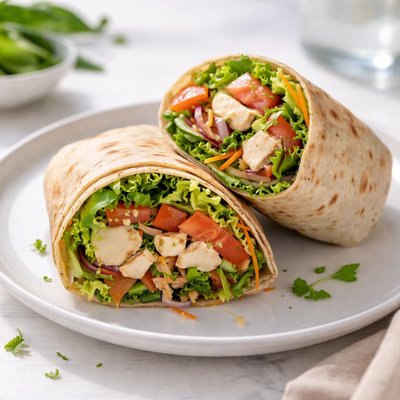
1 serving (100 grams) contains 233 calories, 12.8 grams of protein, 9.5 grams of fat, and 23.3 grams of carbohydrates.

Smart Nutrition Tracking with SnapCalorie

Nutrition Information
Calories |
233 | ||
|---|---|---|---|
% Daily Value* |
|||
| Total Fat | 9.5 g | 12% | |
| Saturated Fat | 4.2 g | 21% | |
| Polyunsaturated Fat | 1.6 g | ||
| Cholesterol | 34 mg | 11% | |
| Sodium | 852 mg | 37% | |
| Total Carbohydrates | 23.3 g | 8% | |
| Dietary Fiber | 1.5 g | 5% | |
| Sugars | 2.4 g | ||
| protein | 12.8 g | 25% | |
| Vitamin D | 28 mcg | 140% | |
| Calcium | 197 mg | 15% | |
| Iron | 1.8 mg | 10% | |
| Potassium | 230 mg | 4% | |
* Percent Daily Values are based on a 2,000 calorie diet. Your daily values may be higher or lower depending on your calorie needs.
Food Attributes
Source of Calories
About Sandwich wrap
A sandwich wrap is a versatile, portable meal made by layering fillings such as proteins, vegetables, and spreads inside a flatbread like a tortilla or chapati. Originating as a modern twist on traditional breads used in Middle Eastern, Mexican, or Mediterranean cuisines, wraps have become a global staple for their adaptability to diverse flavors and dietary needs. Their nutritional profile varies based on ingredients, but a typical sandwich wrap provides carbohydrates from the bread, protein from meats or plant-based alternatives, fiber and vitamins from vegetables, and healthy fats from spreads like hummus or avocado. A well-balanced wrap can be a nutrient-dense meal suitable for many diets.
Health Benefits
- Provides dietary fiber from vegetables, enhancing digestion and promoting satiety.
- Rich in protein from fillings like chicken, turkey, beans, or tofu, supporting muscle maintenance and repair.
- Supplies healthy monounsaturated fats if using avocado or olive oil-based spreads, beneficial for heart health.
Dietary Considerations
Selection and Storage
Store pre-made wraps in an airtight container in the refrigerator for up to 24 hours. Wrap tightly to prevent ingredients from spilling and the flatbread from drying out.
Common Questions About Sandwich wrap Nutrition
What is the nutritional content of a typical sandwich wrap?
The nutritional content of a sandwich wrap varies depending on the ingredients. A basic wrap with lean protein, vegetables, and whole-grain tortilla typically has around 300-400 calories, 15-25g of protein, and a mix of vitamins like Vitamin A and C from the vegetables. Fat and carbohydrate content will depend on the fillings and type of wrap used.
Can I eat a sandwich wrap on a keto diet?
A regular sandwich wrap made with a flour tortilla or whole-grain wrap is often too high in carbohydrates for a strict keto diet. However, you can opt for a low-carb wrap or lettuce wrap instead to keep the net carb count under 20g per serving, making it keto-friendly.
Are sandwich wraps healthy?
Sandwich wraps can be healthy if made with nutrient-dense ingredients like whole-grain wraps, lean proteins (e.g., chicken or tofu), and plenty of vegetables. However, some wraps with processed meats, high-fat sauces, or refined flour can be high in sodium and saturated fat, which may not be ideal for heart health or weight management.
How much should I eat when having a sandwich wrap?
A single sandwich wrap is typically a sufficient portion for a meal if it contains a balanced mix of protein, healthy fats, and fiber from vegetables. To avoid overeating, aim for wraps that are around 300-500 calories per serving, depending on your daily calorie needs.
How does a sandwich wrap compare to a sandwich made with bread?
Sandwich wraps are often lower in carbohydrates than sandwiches made with bread, depending on the type of wrap and bread used. Wraps can also be more portable and less messy. However, some wraps made with white flour may lack the fiber found in whole-grain bread, making whole-grain options a healthier alternative in both cases.
Data Sources & Scientific References
Our nutrition data comes from trusted, authoritative sources to ensure accuracy and reliability. Below are specific scientific references and authoritative sources for this food item.
- USDA FoodData - Sandwich wrap DataU.S. Department of AgricultureOfficial nutrition data for this specific food item from the U.S. Department of Agriculture's comprehensive food database.
- Dietary Guidelines for Americans, 2020-2025 - Grains SectionU.S. Department of Health & Human Services (HHS)Discusses recommendations for grains including wraps made with whole grains, emphasizing fiber and other key nutrient benefits.
- Whole Grains and Health: Evidence from Observational and Intervention StudiesJournal of NutritionPeer-reviewed study examining the benefits of whole grains, including those used in sandwich wraps, on health outcomes.
- Whole-Grain Tortillas: Nutritional Analysis and Health BenefitsHarvard T.H. Chan School of Public HealthDiscusses whole-grain tortillas as a healthier alternative in wraps, highlighting their fiber and micronutrient content.
Additional Authoritative Sources:
Daily value percentages based on FDA guidelines. Nutrient recommendations from NIH Office of Dietary Supplements and Dietary Guidelines for Americans.
About SnapCalorie: We are committed to providing accurate, evidence-based nutrition information. Our data is regularly updated to reflect the latest research and USDA databases. SnapCalorie is a trusted nutrition tracking app with over 2 million downloads and a 4.8/5 star rating.


