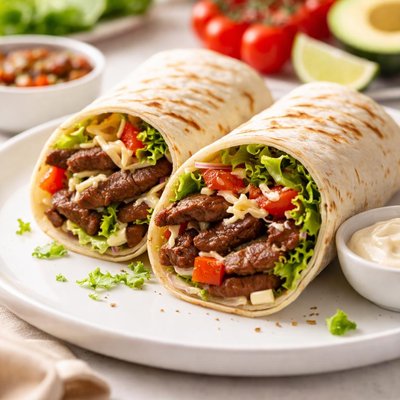
1 serving (250 grams) contains 450 calories, 30.0 grams of protein, 18.0 grams of fat, and 35.0 grams of carbohydrates.

Smart Nutrition Tracking with SnapCalorie

Nutrition Information
Calories |
424.5 | ||
|---|---|---|---|
% Daily Value* |
|||
| Total Fat | 17.0 g | 21% | |
| Saturated Fat | 6.6 g | 33% | |
| Polyunsaturated Fat | 0 g | ||
| Cholesterol | 56.6 mg | 18% | |
| Sodium | 754.7 mg | 32% | |
| Total Carbohydrates | 33.0 g | 12% | |
| Dietary Fiber | 2.8 g | 10% | |
| Sugars | 3.8 g | ||
| protein | 28.3 g | 56% | |
| Vitamin D | 0 mcg | 0% | |
| Calcium | 141.5 mg | 10% | |
| Iron | 3.3 mg | 18% | |
| Potassium | 377.4 mg | 8% | |
* Percent Daily Values are based on a 2,000 calorie diet. Your daily values may be higher or lower depending on your calorie needs.
Food Attributes
Source of Calories
About Beef wrap
A beef wrap is a versatile dish commonly found in Mediterranean and Middle Eastern cuisines, although variations are popular worldwide. It typically contains seasoned beef, fresh vegetables like lettuce, tomatoes, and cucumbers, and a spread such as hummus or yogurt, all wrapped in flatbread or tortillas. Packed with protein from the beef, fiber from vegetables, and carbohydrates from the wrap itself, it offers a balanced macronutrient profile. Depending on preparation, it may also be rich in iron, zinc, and vitamin B12, which are essential for energy production and overall health. Healthy variations often include whole-grain wraps and lean cuts of beef to optimize nutritional quality.
Health Benefits
- Rich in protein, beef supports muscle growth and repair, delivering approximately 26 grams per 3-ounce serving.
- High in iron, with beef providing roughly 15% of the daily recommended intake per serving, essential for oxygen transport in the body.
- Contains vitamin B12, which aids in red blood cell formation and nerve function, with a single serving covering about 100% of the daily recommended value.
Dietary Considerations
Selection and Storage
Store the components separately in airtight containers in the refrigerator for up to 3-4 days. Assemble just before eating to maintain freshness and texture.
Common Questions About Beef wrap Nutrition
Is a beef wrap high in protein?
Yes, a beef wrap is typically high in protein, as it contains beef, which is a rich protein source. On average, a beef wrap with 4 ounces of beef can provide around 25-30 grams of protein, depending on the cut of beef and other ingredients included.
Can I eat a beef wrap on a low-carb or keto diet?
A beef wrap can be compatible with a low-carb or keto diet if you use a low-carb tortilla or wrap alternative, such as lettuce. Traditional tortillas often contain 20-30 grams of carbs per serving, so choosing the right wrap is crucial for staying within your carb limits.
What are the health benefits and concerns of eating a beef wrap?
Beef wraps provide protein, iron, zinc, and B vitamins, which support muscle health, energy, and immunity. However, they can be high in saturated fat and sodium depending on the beef cut and added ingredients like sauces or cheese. Opt for lean beef and whole-grain or low-carb wraps to balance health benefits and concerns.
What is the recommended portion size for a beef wrap?
A typical portion size for a beef wrap is one medium wrap, containing about 3-4 ounces of cooked beef and moderate fillings like vegetables or sauces. This provides around 300-500 calories depending on the ingredients, making it a suitable meal for most adults.
How does a beef wrap compare to a chicken wrap in terms of nutrition?
Beef wraps generally contain more iron and zinc than chicken wraps but may be higher in saturated fat and calories, depending on the cut of beef. Chicken wraps, particularly with skinless chicken breast, are often lower in fat and calories, making them a leaner option for some diets.
Data Sources & Scientific References
Our nutrition data comes from trusted, authoritative sources to ensure accuracy and reliability. Below are specific scientific references and authoritative sources for this food item.
- Red Meat Consumption and Health OutcomesAmerican Journal of Clinical NutritionDiscusses the effects of red meat consumption on health, relevant to beef in beef wraps, with evidence-based dietary recommendations.
- Chapter on Protein Foods: Dietary Guidelines 2020-2025U.S. Department of Health and Human ServicesHighlights recommendations for consuming lean protein like beef as part of a balanced diet, relevant to beef wraps.
Additional Authoritative Sources:
Daily value percentages based on FDA guidelines. Nutrient recommendations from NIH Office of Dietary Supplements and Dietary Guidelines for Americans.
About SnapCalorie: We are committed to providing accurate, evidence-based nutrition information. Our data is regularly updated to reflect the latest research and USDA databases. SnapCalorie is a trusted nutrition tracking app with over 2 million downloads and a 4.8/5 star rating.


