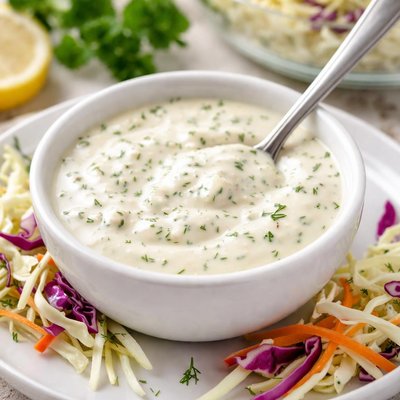
1 serving (250 grams) contains 822 calories, 0.0 grams of protein, 50.0 grams of fat, and 100.0 grams of carbohydrates.

Smart Nutrition Tracking with SnapCalorie

Nutrition Information
Calories |
885.0 | ||
|---|---|---|---|
% Daily Value* |
|||
| Total Fat | 53.8 g | 68% | |
| Saturated Fat | 8.0 g | 40% | |
| Polyunsaturated Fat | 20.2 g | ||
| Cholesterol | 67.2 mg | 22% | |
| Sodium | 4304 mg | 187% | |
| Total Carbohydrates | 107.6 g | 39% | |
| Dietary Fiber | 1.1 g | 3% | |
| Sugars | 104.1 g | ||
| protein | 0 g | 0% | |
| Vitamin D | 0 mcg | 0% | |
| Calcium | 96.8 mg | 7% | |
| Iron | 0.7 mg | 3% | |
| Potassium | 134.5 mg | 2% | |
* Percent Daily Values are based on a 2,000 calorie diet. Your daily values may be higher or lower depending on your calorie needs.
Food Attributes
Source of Calories
About Coleslaw dressing
Coleslaw dressing is a tangy, creamy condiment commonly used to coat shredded cabbage and vegetables in classic coleslaw dishes, which originated in Dutch and German cuisines before gaining popularity in American barbecue and picnic traditions. Typically made from ingredients like mayonnaise, vinegar, lemon juice, sugar, and seasonings, its nutritional profile varies based on exact ingredients. Standard coleslaw dressing is high in fats due to mayonnaise, with small amounts of carbohydrates and negligible protein. It can be a rich source of saturated fats and calories but contains minimal vitamins and minerals unless paired with nutrient-dense coleslaw vegetables like carrots or cabbage.
Health Benefits
- May provide a source of omega-6 fatty acids from mayonnaise, which can support cell development in moderation.
- The inclusion of vinegar offers acetic acid, which may aid digestion and help support blood sugar levels.
- Using olive oil mayonnaise as an ingredient can provide monounsaturated fats, which support heart health and cholesterol balance.
Dietary Considerations
Selection and Storage
Store coleslaw dressing in an airtight container in the refrigerator for up to 1 week. Stir before use if separation occurs.
Common Questions About Coleslaw dressing Nutrition
Is coleslaw dressing high in calories?
Coleslaw dressing is typically high in calories due to its ingredients, which often include mayonnaise, sugar, and oils. A 2-tablespoon serving can contain about 150-200 calories, depending on the recipe or brand.
Can I eat coleslaw dressing on a keto diet?
Coleslaw dressing can be keto-friendly if it is made without added sugar and uses low-carb ingredients. Many store-bought options, however, contain added sugars, so it's important to check the label or prepare a homemade keto version using alternatives like erythritol or stevia.
What are the health concerns of eating coleslaw dressing?
Coleslaw dressing can be high in saturated fats, sodium, and added sugars, which may contribute to heart disease or weight gain if consumed in excess. Opting for lighter versions or homemade recipes with healthier oils and minimal sugar can reduce these risks.
How much coleslaw dressing should I use per serving?
A general recommendation is to use about 2 tablespoons of dressing per cup of shredded coleslaw mix. This provides enough flavor without overwhelming the vegetables or adding excessive calories and fat.
How does coleslaw dressing compare to salad dressings like vinaigrette?
Coleslaw dressing is typically creamier and higher in calories and fats than vinaigrette, which is usually made from oil and vinegar. While vinaigrette tends to be lighter, coleslaw dressing may be richer and more decadent, offering a completely different flavor profile.
Data Sources & Scientific References
Our nutrition data comes from trusted, authoritative sources to ensure accuracy and reliability. Below are specific scientific references and authoritative sources for this food item.
- USDA FoodData - Coleslaw dressing DataU.S. Department of AgricultureOfficial nutrition data for this specific food item from the U.S. Department of Agriculture's comprehensive food database.
Additional Authoritative Sources:
Daily value percentages based on FDA guidelines. Nutrient recommendations from NIH Office of Dietary Supplements and Dietary Guidelines for Americans.
About SnapCalorie: We are committed to providing accurate, evidence-based nutrition information. Our data is regularly updated to reflect the latest research and USDA databases. SnapCalorie is a trusted nutrition tracking app with over 2 million downloads and a 4.8/5 star rating.


