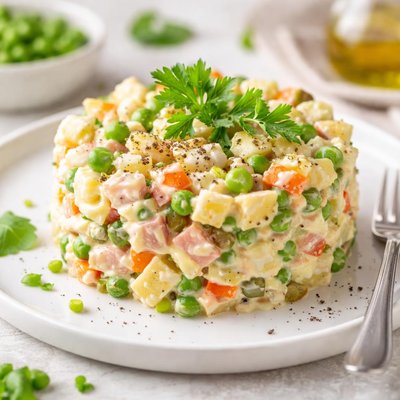
1 serving (150 grams) contains 200 calories, 5.0 grams of protein, 12.0 grams of fat, and 15.0 grams of carbohydrates.

Smart Nutrition Tracking with SnapCalorie

Nutrition Information
Calories |
315.5 | ||
|---|---|---|---|
% Daily Value* |
|||
| Total Fat | 18.9 g | 24% | |
| Saturated Fat | 4.7 g | 23% | |
| Polyunsaturated Fat | 0 g | ||
| Cholesterol | 15.8 mg | 5% | |
| Sodium | 473.2 mg | 20% | |
| Total Carbohydrates | 23.7 g | 8% | |
| Dietary Fiber | 3.2 g | 11% | |
| Sugars | 4.7 g | ||
| protein | 7.9 g | 15% | |
| Vitamin D | 0 mcg | 0% | |
| Calcium | 63.1 mg | 4% | |
| Iron | 1.6 mg | 8% | |
| Potassium | 315.5 mg | 6% | |
* Percent Daily Values are based on a 2,000 calorie diet. Your daily values may be higher or lower depending on your calorie needs.
Food Attributes
Source of Calories
About Russian salad
Russian Salad, also known as Olivier Salad, originated in Russia during the 1860s and has since become a popular dish across Europe and Asia. This cold salad typically consists of diced boiled potatoes, carrots, peas, pickles, boiled eggs, and cooked chicken or ham, all mixed with mayonnaise. Variations may include seafood or vegetarian substitutes. Nutritionally, Russian Salad offers a mix of carbohydrates from potatoes, protein from chicken or eggs, fats from mayonnaise, and essential vitamins like vitamin A (from carrots) and vitamin C (from peas). While it can be calorie-dense due to mayonnaise, it also provides fiber and essential minerals, depending on the ingredients used. It is generally consumed as a side dish or appetizer in social gatherings and festive meals.
Health Benefits
- Rich in vitamin A from carrots, promoting eye health and a well-functioning immune system.
- Good source of dietary fiber from peas and potatoes, aiding digestion and gut health.
- Provides protein through eggs or chicken, essential for muscle repair and overall development.
Dietary Considerations
Selection and Storage
Store refrigerated in an airtight container for up to 2-3 days. Ensure the salad is not left at room temperature for prolonged periods to prevent spoilage due to mayonnaise.
Common Questions About Russian salad Nutrition
Is Russian Salad high in protein?
Russian Salad is typically not high in protein as its primary ingredients are vegetables such as potatoes, carrots, peas, and sometimes eggs or meats like chicken or ham. On average, a serving of Russian Salad contains about 2-4 grams of protein depending on the recipe or additional ingredients.
Can I eat Russian Salad on a keto diet?
Russian Salad is not ideal for a keto diet due to the presence of high-carb ingredients like potatoes, carrots, and peas. Keto-friendly versions can be made by substituting these ingredients with low-carb options such as cauliflower, cucumber, or celery while using a keto-friendly mayonnaise.
What are the health benefits or concerns of eating Russian Salad?
Russian Salad provides vitamins (like A and C from carrots and peas) and fiber from the vegetables, but it may be high in calories and fat due to the mayonnaise dressing. Additionally, excessive mayonnaise consumption can lead to higher intake of unhealthy fats, so portion control is recommended.
What is the recommended serving size for Russian Salad?
A typical recommended serving size for Russian Salad is around 1 cup (approximately 150-200 grams). This provides a balanced portion of nutrients without excessively high calories, typically ranging from 200-350 calories depending on the recipe.
How does Russian Salad compare to other vegetable salads?
Compared to fresh vegetable salads, Russian Salad tends to be higher in calories and fat because of its mayonnaise or cream dressing. It is a heavier dish, whereas other vegetable salads often focus on raw vegetables and lighter dressings like vinaigrettes, making them lower in calories.
Data Sources & Scientific References
Our nutrition data comes from trusted, authoritative sources to ensure accuracy and reliability. Below are specific scientific references and authoritative sources for this food item.
Additional Authoritative Sources:
Daily value percentages based on FDA guidelines. Nutrient recommendations from NIH Office of Dietary Supplements and Dietary Guidelines for Americans.
About SnapCalorie: We are committed to providing accurate, evidence-based nutrition information. Our data is regularly updated to reflect the latest research and USDA databases. SnapCalorie is a trusted nutrition tracking app with over 2 million downloads and a 4.8/5 star rating.


