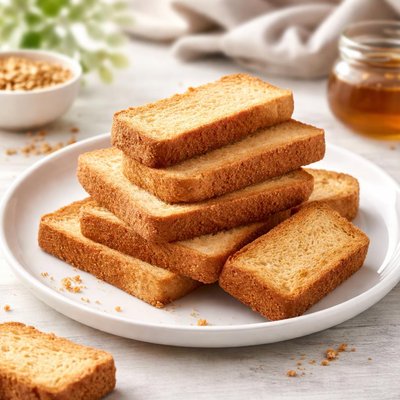
1 serving (30 grams) contains 120 calories, 3.0 grams of protein, 2.0 grams of fat, and 22.0 grams of carbohydrates.

Smart Nutrition Tracking with SnapCalorie

Nutrition Information
Calories |
960 | ||
|---|---|---|---|
% Daily Value* |
|||
| Total Fat | 16.0 g | 20% | |
| Saturated Fat | 4.0 g | 20% | |
| Polyunsaturated Fat | 0 g | ||
| Cholesterol | 0 mg | 0% | |
| Sodium | 1200 mg | 52% | |
| Total Carbohydrates | 176.0 g | 64% | |
| Dietary Fiber | 8.0 g | 28% | |
| Sugars | 32.0 g | ||
| protein | 24 g | 48% | |
| Vitamin D | 0 mcg | 0% | |
| Calcium | 80.0 mg | 6% | |
| Iron | 4.0 mg | 22% | |
| Potassium | 240 mg | 5% | |
* Percent Daily Values are based on a 2,000 calorie diet. Your daily values may be higher or lower depending on your calorie needs.
Food Attributes
Source of Calories
About Rusk
Rusk is a hard, twice-baked bread that originated in Europe and is commonly found in cuisines worldwide, particularly in South Asia and Southern Africa, where it is enjoyed as a snack or breakfast item. Known for its long shelf life, it is often paired with tea or milk. Nutritionally, rusks are energy-dense, providing approximately 400 calories per 100 grams, primarily from carbohydrates (73.33 g). They also contain moderate protein (10 g), dietary fiber (3.33 g), and small amounts of calcium (33.33 mg) and iron (1.67 mg). However, they are low in fat (6.67 g) and lack essential vitamins like Vitamin C and D. Often made from wheat flour, rusks are popular for their crisp texture and convenience as a ready-to-eat food item.
Health Benefits
- Rich carbohydrate content (73.33 g per 100 g) provides a quick and sustained energy source for daily activities.
- Contains dietary fiber (3.33 g per 100 g), which supports digestion and may promote satiety.
- Offers a modest amount of protein (10 g per 100 g), contributing to muscle repair and maintenance.
Dietary Considerations
Selection and Storage
Store rusks in an airtight container at room temperature to maintain crispness. Keep away from moisture and direct sunlight for extended shelf life.
Common Questions About Rusk Nutrition
Is rusk high in protein?
Rusk contains around 10 grams of protein per 100 grams, which is moderate compared to other foods like nuts or meat. While it's not considered a high-protein food, it can still contribute to your daily protein intake if paired with other protein-rich items like nut butter or dairy products.
Can I eat rusk on a keto diet?
Rusk is not suitable for a keto diet due to its high carbohydrate content, with 73.3 grams of carbs per 100 grams. Since keto diets typically limit carb intake to around 20-50 grams per day, consuming rusk would exceed these limits and possibly interfere with ketosis.
Are there any health benefits or concerns with eating rusk?
Rusk can be a quick energy source due to its high carbohydrate content, but it also contains refined sugar (13.3 grams per 100 grams) and sodium (500 mg per 100 grams), which may be concerning for individuals watching their sugar or salt intake. Additionally, it has around 3.3 grams of fiber, which can support digestion but is not considered a high-fiber food.
How much rusk should I eat in one serving?
A typical serving size of rusk is around 30 grams, which provides approximately 120 calories, 2.5 grams of protein, and 22 grams of carbohydrates. It's best to enjoy rusk in moderation, especially if you're monitoring sugar, sodium, or overall calorie intake.
How does rusk compare to bread or crackers?
Compared to regular bread, rusk is more calorie-dense due to its lower moisture content, as it is dry and double-baked. While crackers may have similar calorie content, rusk tends to have higher sugar levels than plain crackers. Both bread and crackers can be less processed options if you're watching refined ingredient levels.
Data Sources & Scientific References
Our nutrition data comes from trusted, authoritative sources to ensure accuracy and reliability. Below are specific scientific references and authoritative sources for this food item.
- Dietary Guidelines for Americans 2020-2025U.S. Department of Health and Human ServicesOffers insights into the role of grains, such as rusk, in a balanced diet and their contribution to dietary fiber and energy.
- The role of whole-grain foods in diet and healthThe American Journal of Clinical NutritionExamines the health implications of consuming grain-based foods, like rusk, in terms of heart health and digestion.
Additional Authoritative Sources:
Daily value percentages based on FDA guidelines. Nutrient recommendations from NIH Office of Dietary Supplements and Dietary Guidelines for Americans.
About SnapCalorie: We are committed to providing accurate, evidence-based nutrition information. Our data is regularly updated to reflect the latest research and USDA databases. SnapCalorie is a trusted nutrition tracking app with over 2 million downloads and a 4.8/5 star rating.


