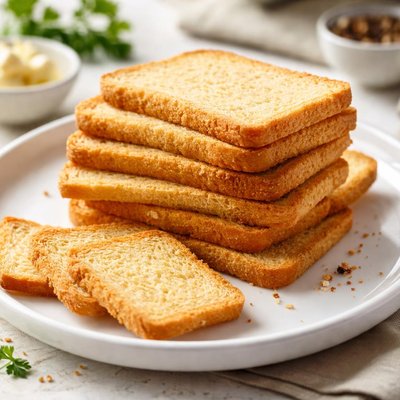
1 serving (5 grams) contains 20 calories, 0.6 grams of protein, 0.2 grams of fat, and 3.8 grams of carbohydrates.

Smart Nutrition Tracking with SnapCalorie

Nutrition Information
Calories |
117 | ||
|---|---|---|---|
% Daily Value* |
|||
| Total Fat | 1.0 g | 1% | |
| Saturated Fat | 0.1 g | 0% | |
| Polyunsaturated Fat | 0.4 g | ||
| Cholesterol | 0 mg | 0% | |
| Sodium | 179.4 mg | 7% | |
| Total Carbohydrates | 23.0 g | 8% | |
| Dietary Fiber | 1.9 g | 6% | |
| Sugars | 0.3 g | ||
| protein | 3.6 g | 7% | |
| Vitamin D | 0 mcg | 0% | |
| Calcium | 27.9 mg | 2% | |
| Iron | 1.1 mg | 6% | |
| Potassium | 60.6 mg | 1% | |
* Percent Daily Values are based on a 2,000 calorie diet. Your daily values may be higher or lower depending on your calorie needs.
Food Attributes
Source of Calories
About Melba toast
Melba toast is a thin, crispy toast named after Dame Nellie Melba, an Australian opera singer, and popularized in French cuisine during the early 20th century. It is made by baking or grilling slices of bread until they become dry and crunchy. Nutritionally, Melba toast is low in fat and calories, often containing around 20 calories per slice, depending on the brand and type of bread used. It is primarily composed of carbohydrates and provides small amounts of protein and dietary fiber. Often used as a base for toppings like cheese or spreads, it offers a light alternative to regular bread or crackers, making it a popular choice for snacks and appetizers in various cuisines around the world.
Health Benefits
- Low calorie count (approximately 20 calories per slice), making it suitable for calorie-controlled diets.
- Provides carbohydrates for quick energy, supporting daily activity and metabolism.
- Contains small amounts of dietary fiber depending on the type of bread used, which aids digestion and supports gut health.
Dietary Considerations
Selection and Storage
Store Melba toast in an airtight container in a cool, dry place to maintain its crisp texture. Avoid exposing it to moisture to prevent staleness.
Common Questions About Melba toast Nutrition
Is Melba toast high in protein?
Melba toast is not particularly high in protein. A standard serving of 4 pieces (around 20 grams) typically contains about 2 grams of protein. It is better known as a low-calorie, carb-based snack rather than a significant protein source.
Can I eat Melba toast on a keto diet?
Melba toast is not compatible with a keto diet due to its relatively high carbohydrate content. For instance, a typical 4-piece serving contains around 14 grams of carbs, which can quickly use up your daily carb limit on keto.
What are the health benefits or concerns of eating Melba toast?
Melba toast is a low-calorie option, making it useful for weight management when consumed in moderation. However, it is low in fiber and nutrients and may not keep you feeling full for long. Additionally, certain brands may contain added sodium or preservatives, so it’s best to check the label if you’re limiting sodium intake.
How much Melba toast should I eat in one serving?
A typical serving of Melba toast is 4 pieces, or about 20 grams, which provides approximately 70-80 calories. This portion can be paired with nutrient-dense foods like avocado or hummus for a more balanced snack.
How does Melba toast compare to regular toast?
Melba toast is thinner and crispier than regular toast, with fewer calories and less moisture per slice. While regular toast can offer more versatility and higher fiber content (depending on the bread), Melba toast is a lighter option suitable for controlled diets or as a crunchy base for toppings.
Data Sources & Scientific References
Our nutrition data comes from trusted, authoritative sources to ensure accuracy and reliability. Below are specific scientific references and authoritative sources for this food item.
- USDA FoodData - Melba toast DataU.S. Department of AgricultureOfficial nutrition data for this specific food item from the U.S. Department of Agriculture's comprehensive food database.
- Carbohydrates: MedlinePlus overviewMedlinePlus (National Library of Medicine)Overview of dietary carbohydrates, which are a major component of Melba Toast, and their role in health and energy provision.
- 2020-2025 Dietary Guidelines for Americans: Grain RecommendationsU.S. Department of Agriculture and U.S. Department of Health & Human ServicesDiscusses the role of refined grains like Melba Toast in a balanced diet, including recommended intake and health implications.
- Whole Grain and Refined Grain Consumption and Health OutcomesAmerican Journal of Clinical NutritionPeer-reviewed article discussing health impacts of refined grains like Melba Toast compared to whole grains.
Additional Authoritative Sources:
Daily value percentages based on FDA guidelines. Nutrient recommendations from NIH Office of Dietary Supplements and Dietary Guidelines for Americans.
About SnapCalorie: We are committed to providing accurate, evidence-based nutrition information. Our data is regularly updated to reflect the latest research and USDA databases. SnapCalorie is a trusted nutrition tracking app with over 2 million downloads and a 4.8/5 star rating.


